
Curated wellness reading path
Sleep Better
Start with sleep timing and regularity, then choose the caffeine, relaxation, or ingredient question that fits your routine.
What this goal means
Use this path to work out which sleep question to address first: timing, consistency, caffeine, or a specific supplement comparison. Start with the routine you can observe rather than choosing a bedtime ingredient before identifying the problem.
The Sleep category is the wider archive. This goal selects a sequence through that reporting, beginning with habits and moving to evidence about ingredients only when it matches your question. Persistent sleep difficulty deserves assessment; a reading path is not insomnia treatment.
Browse the full category when you want recent reporting rather than this starting sequence. Sleep archive.
Start here
- How to Improve Sleep Quality Naturally: What to Change First
A foundation for reviewing habits and the limits of self-directed changes.
- Why Sleep Regularity Matters: Is Going to Bed at the Same Time Important?
Understand consistency before changing the contents of a bedtime supplement.
- How Long Before Bed Should You Stop Drinking Caffeine? What the Research Says
Separate caffeine timing from total daily intake.

Sleep
How to Improve Sleep Quality Naturally: What to Change FirstTrouble settling, repeated awakenings, unrefreshing sleep, or weekend shifts? Identify the pattern and choose what to address first.
Planet Wellness Report · Sep 19, 2026

Sleep
Why Sleep Regularity Matters: Is Going to Bed at the Same Time Important?Sleep health is not only about how many hours you get. Growing evidence suggests that keeping your bedtime and wake time reasonably consistent may also support circadian health, sleep quality, and overall well-being.
Planet Wellness Report · Oct 3, 2026

Sleep
How Long Before Bed Should You Stop Drinking Caffeine? What the Research SaysThere is no single caffeine cutoff that works for everyone. Research suggests that timing, dose, metabolism, and individual sensitivity all influence how late caffeine can affect sleep.
Planet Wellness Report · Oct 4, 2026
Explore by topic
Build a repeatable evening
Translate the broader guidance into a routine.

Sleep
How to Build a Better Bedtime Routine for Deeper, More Consistent SleepA useful bedtime routine does not need to be elaborate. Learn how to combine consistent timing, lower stimulation, environmental preparation, and a few repeatable cues into an evening routine that fits your life.
Planet Wellness Report · Sep 20, 2026
Ask an ingredient question
These articles examine specific preparations and sleep outcomes rather than treating all bedtime products as equivalent.

Sleep
Magnesium for Sleep: Does It Really Help? What the Evidence SaysMagnesium may support sleep in some people, but current research remains mixed. Here is what clinical studies say about magnesium, sleep quality, dosage, food sources, and safety.
Planet Wellness Report · Sep 19, 2026
Sleep
Glycine for Sleep: What the Studies Show and What Remains UncertainGlycine has shown promising results in small sleep studies, but evidence remains limited. Learn what researchers measured, how they used it, and what is still unknown.
Planet Wellness Report · Oct 5, 2026

Sleep
L-Theanine for Sleep: Does It Actually Help?Learn what the research says about L-theanine for sleep, including relaxation, sleep quality, bedtime use, studied doses, safety, and how it differs from melatonin.
Planet Wellness Report · Sep 25, 2026
Sleep
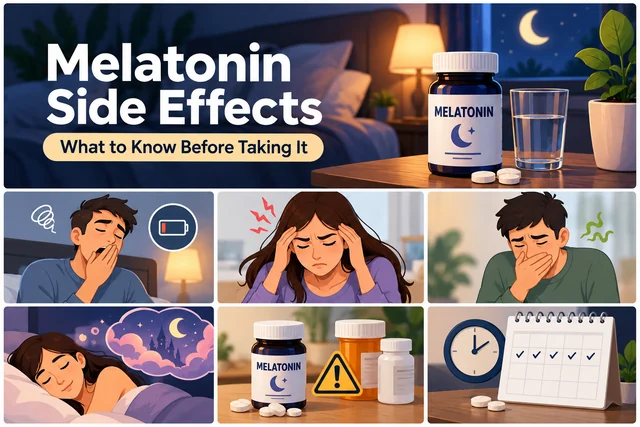
Melatonin Side Effects: What to Know Before Taking ItLearn about common melatonin side effects, next-day drowsiness, medication interactions, long-term safety, timing, and when it may be worth talking with a healthcare professional.
Planet Wellness Report · Sep 24, 2026
Compare formats and labels
Read the evidence question before the commercial formula review.
Sleep
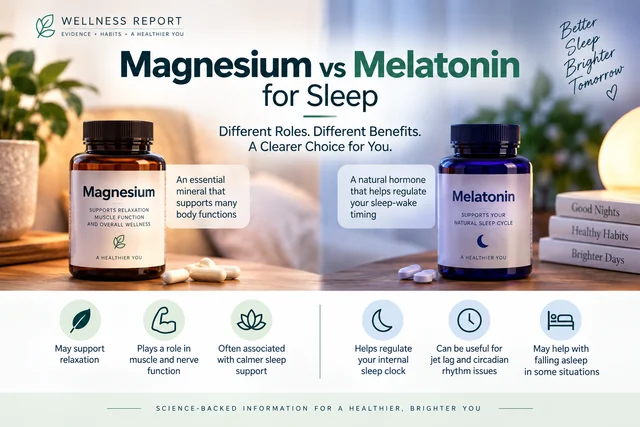
Magnesium vs Melatonin for Sleep: Which One Makes More Sense?Magnesium and melatonin are often treated as interchangeable sleep supplements, but they play very different biological roles. Compare their evidence, potential uses, limitations, and safety.
Planet Wellness Report · Sep 23, 2026
Sleep
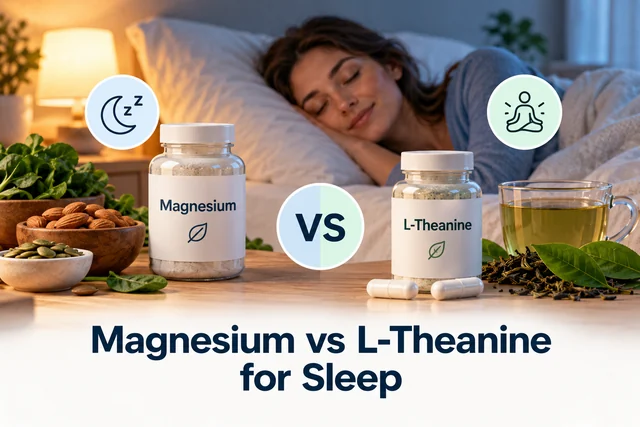
Magnesium vs L-Theanine for Sleep: Which One Makes More Sense?Compare magnesium vs L-theanine for sleep, including how they differ, what the evidence shows, their potential roles in relaxation and sleep quality, safety, and when each may make more sense.
Planet Wellness Report · Oct 1, 2026

Sleep
Magnesium Breakthrough Review: The 500 mg Decision Before the Seven FormsThe regular Magnesium Breakthrough label supplies 500 mg elemental magnesium per two capsules, above the U.S. adult supplemental/medication UL of 350 mg/day. The seven forms are named but their individual contributions are hidden. Dose suitability comes before paying for form variety, whose clinical superiority remains unverified.
Planet Wellness Report · Sep 22, 2026

Sleep
Yu Sleep Review: A Known Melatonin Dose Inside an Undisclosed BlendYu Sleep’s owner-confirmed formula provides 0.9 mg melatonin in a 2 mL serving, plus a 637 mg blend whose seven ingredient amounts are hidden. Its liquid format is a preference feature; the disclosure cannot establish how much magnesium, theanine, apigenin, GABA or other blend constituents a serving supplies.
Planet Wellness Report · Oct 2, 2026
Suggested reading order
Begin with habits and timing, choose the relevant ingredient article, then read a comparison or formula review if a purchase decision remains.
Related ingredients
Follow the ingredient definitions to compare roles and preparations, rather than treating them as interchangeable products.
More from this collection

Sleep
Why You Wake Up in the Middle of the Night—and What Helps You Fall Back AsleepFalling asleep easily does not guarantee an uninterrupted night. Learn how awakening triggers, worry, nighttime habits, and next-day choices can affect returning to sleep.
Planet Wellness Report · Oct 29, 2026
Sleep
GABA for Sleep: Does Oral GABA Actually Improve Sleep?Small oral GABA trials suggest possible sleep-onset effects, but other outcomes and brain-entry mechanisms remain uncertain.
Planet Wellness Report · Oct 19, 2026

Sleep
Apigenin for Sleep: What Human Research Actually ShowsApigenin’s sleep reputation draws heavily on chamomile and laboratory research. See what human studies tested, what remains uncertain, and how to read a blend label.
Planet Wellness Report · Oct 18, 2026
Sleep
The Sleep Reset Review: What It Includes, Evidence, and ValueA review of The Sleep Reset’s 14 audio sessions, one-time price, delivery and refund terms, component evidence, and practical fit as an optional wind-down tool.
Planet Wellness Report · Oct 12, 2026

Sleep
How Long Should It Take to Fall Asleep? What Sleep Research SuggestsLearn what sleep latency means, why typical ranges are not diagnostic cutoffs, and how to interpret patterns alongside sleep opportunity and daytime functioning.
Planet Wellness Report · Oct 12, 2026
Related products
- Magnesium Breakthrough
Regular seven-form magnesium capsule supplement: 500 mg elemental magnesium per two capsules, with individual form contributions undisclosed. Dose suitability and other magnesium sources matter more than the number of forms.
- The Sleep Reset
A 14-night downloadable audio program combining guided relaxation, music, self-hypnosis techniques, and binaural beats to support a calmer bedtime routine.
- Yu Sleep
Liquid formula with owner-confirmed 0.9 mg melatonin per 2 mL serving and a 637 mg proprietary blend. The individual amounts of its seven blend ingredients are undisclosed.