
ARTICLE
Why You Wake Up in the Middle of the Night—and What Helps You Fall Back Asleep
Separate what wakes you from what keeps you awake, then choose a response that fits the pattern.
By Planet Wellness Report · Oct 29, 2026 · 9 min read
Editorial review and publication: Felipe Lopes, Publisher & Editor. This is an editorial review, not a medical review.
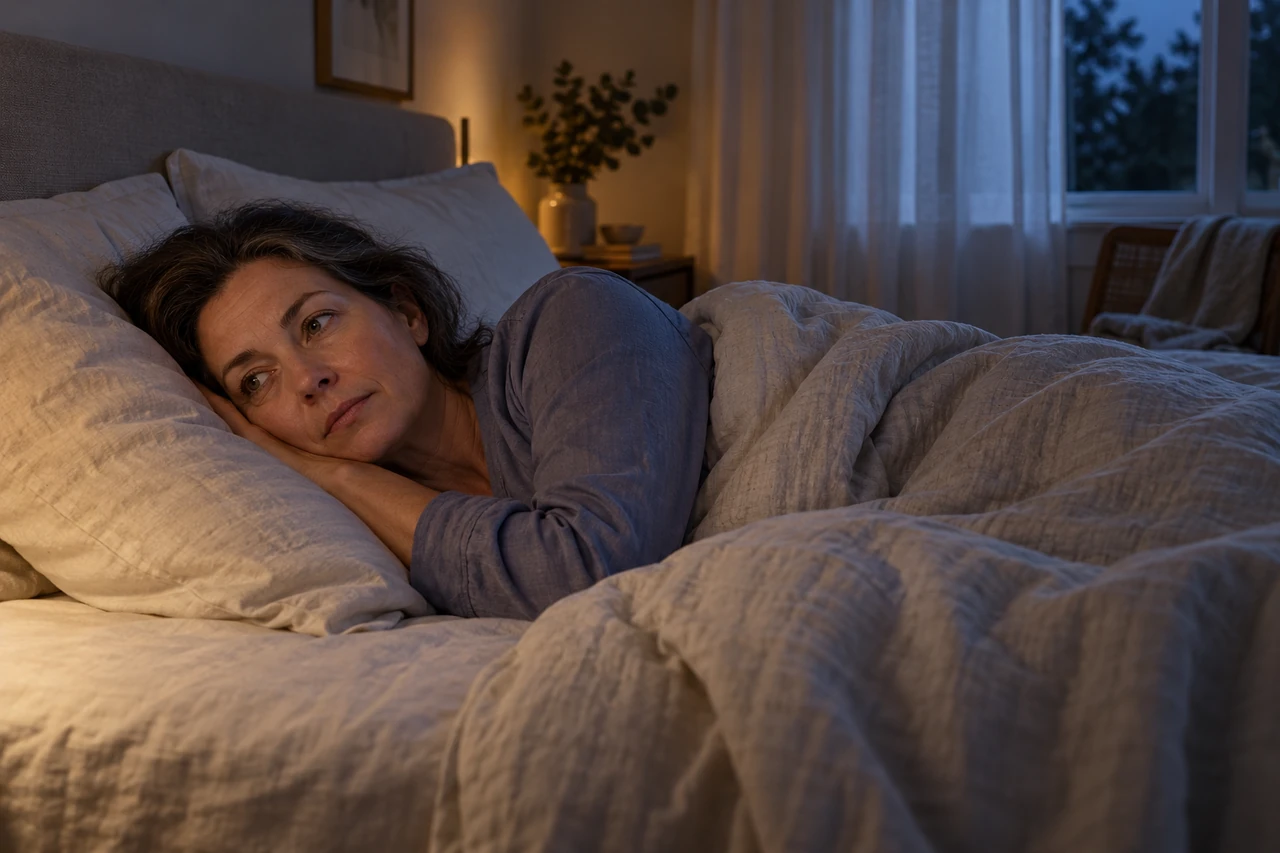
You fall asleep without much trouble, then wake in the middle of the night. Sometimes the interruption passes quickly; other times you start calculating how little sleep remains. Those are different experiences. Falling asleep is sleep onset; staying asleep and returning to sleep after an interruption are questions of sleep maintenance.
The useful distinction is between what woke you and what keeps you awake afterward. A noise may start the interruption, while checking the time and worrying about tomorrow prolong it. Addressing both parts can be more useful than adding another general sleep habit. This guide focuses on wakefulness after initial sleep; our sleep-quality guide covers the broader picture.
Brief awakenings are different from a disruptive pattern
Sleep cycles through non-REM and REM phases, with deeper non-REM sleep generally more prominent earlier and more REM later. Brief awakenings can occur, including between cycles. This does not mean every awakening occurs at a cycle boundary, or that remembering one proves something is wrong. Sleep is not an unchanging block of unconsciousness. [1]
What matters is the pattern: how often awakenings happen, roughly how long you remain awake, whether you have enough opportunity to sleep, and the consequences during the day. Several short interruptions followed by easy sleep are different from repeatedly lying awake and struggling at work or while driving. An awakening count or a watch score cannot diagnose insomnia. [2]
What probably woke you up? Look for a specific clue
Start with the experience around the interruption: a passing truck, a partner moving, a child needing you, uncomfortable warmth, or light entering the room. An observable disturbance gives you something concrete to address. For example, changing bedding makes sense when you repeatedly wake overheated; it is less informative when the main clue is gasping. Noise, light, temperature and caregiving interruptions are recognized sleep disruptors. [3]
Noticing a sensation after waking does not establish that it caused the awakening. Sometimes there is no identifiable trigger. Avoid turning every unexplained interruption into a search for a hidden hormone problem or a supplement deficiency. The aim is to collect useful clues, not to solve your entire sleep history at night.
Alcohol can make you sleepy without protecting the rest of the night
Alcohol’s initial sedating effect can be misleading. NHLBI guidance notes that it can make falling asleep easier while leaving sleep lighter and making awakenings more likely. Faster onset and good continuity are separate outcomes; a drink is not a dependable strategy for either staying asleep or returning to sleep. [12]
A 2025 systematic review and meta-analysis of 27 studies in healthy adults found delayed and reduced REM sleep, with greater disruption at higher doses. Shorter sleep onset appeared at high doses. The pooled effects on whole-night wakefulness after sleep onset, sleep efficiency and total sleep time remained uncertain. That distinction matters: an effect on REM does not establish a predictable number of later-night awakenings for every drinker. [4]
When awakenings seem to follow evening drinking, note both amount and timing rather than treating easy initial sleep as reassurance. The evidence does not provide one universally safe bedtime interval. Reducing reliance on alcohol as a sleep cue is a more useful direction than trying to counter its effects with a sleep supplement.
Caffeine can still matter when falling asleep feels easy
Caffeine research includes effects on sleep continuity, not only time to fall asleep. Its half-life describes the time for the body to eliminate half a dose, rather than a point when its effects suddenly switch off. Clearance and sensitivity vary, so an afternoon serving can remain relevant later even if you fall asleep promptly. [5] [6]
Review the size and timing of your later servings, including tea, energy drinks and pre-workout products. If caffeine is a plausible contributor, moving it earlier is one manageable variable to observe. Use our caffeine-before-bed guide for the detailed timing discussion; a single cutoff does not fit every person or dose.
Bathroom trips, breathing and physical discomfort need different questions
With nighttime urination, ask whether a strong need to urinate woke you or whether you were already awake and decided to go. Both experiences are real, but the second does not establish that the bladder caused the sleep interruption. The Canadian Urological Association describes nocturia as multifactorial and includes sleep habits, urinary symptoms, fluid timing and medications in assessment. [7]
If bathroom trips are persistent, increasingly disruptive or accompanied by new urinary symptoms, discuss them with a clinician. Do not infer a cause from the trip alone, severely restrict fluids, or change prescribed medication timing based on this article. This distinction helps describe the problem; it is not a nocturia treatment plan.
Habitual loud snoring, witnessed breathing pauses or waking gasping deserve particular attention, especially with marked daytime sleepiness. Headaches on waking can add context but are nonspecific. These observations warrant assessment for a possible breathing-related sleep problem; neither a quiet bedroom nor a supplement rules one out. [8]
Pain or recurrent reflux symptoms are also worth describing rather than labeling every interruption poor sleep hygiene. During the menopausal transition, hot flashes, night sweats and sleep disruption may occur together, but their timing does not always show a simple one-way cause. Bring recurrent symptoms and relevant medication changes to an assessment instead of trying to identify a condition from an awakening alone. [2] [9]
What keeps you awake after the trigger has passed?
The room may be quiet again while your mind is doing arithmetic: hours until the alarm, tomorrow’s workload, the consequences of another poor night. Repeated clock-checking can feed that worry. Bright light or a long phone session can add stimulation. These responses are understandable, but they can turn a brief interruption into an extended period of alertness. [3] [15]
Trying harder can become part of the problem. Monitoring whether a technique is working, getting frustrated, and repeatedly attempting to force sleep can strengthen the association between bed and wakeful effort. This is sometimes called conditioned arousal. It does not mean the original trigger was imaginary or that you caused the difficulty; it describes a process that can continue after the trigger ends. [10]
A practical response when you cannot get back to sleep
First, attend to an immediate need safely: use the bathroom if necessary, adjust uncomfortable bedding, or respond to caregiving responsibilities. Keep enough light to move safely while avoiding unnecessary brightness. A brief, drowsy awakening does not require a technique, a timer or getting out of bed just because you noticed it.
If you are clearly awake for a prolonged stretch and becoming frustrated, consider leaving bed for a quiet activity, then returning when sleepy. Read a paper book in a chair or choose another comfortable, undemanding activity. The principle is to reduce prolonged wakeful struggle in bed, not to perform an activity that guarantees sleep. [10] [12]

Avoid repeatedly checking the clock to decide whether you have met an exact minute threshold. Stimulus-control instructions vary; clinical implementation guidance discusses using awareness of sustained alertness or frustration rather than encouraging clock-watching. Return when sleepiness comes back, rather than turning reading into another test you must pass. If getting up creates a fall risk or is otherwise impractical, ask for an adapted plan. [10]
Keep the phone from becoming the main event. If you use audio, prepare something familiar so you do not spend the awakening searching, scrolling or answering messages. Choose an activity you can put down easily; work and emotionally charged content can make it harder to disengage. Do not add alcohol or automatically take another sleep-aid dose to force the night back on track.
These suggestions draw on stimulus control, one component of cognitive behavioral therapy for insomnia (CBT-I). They are not a complete CBT-I course. The AASM strongly recommends multicomponent CBT-I for chronic insomnia and advises against sleep hygiene as its only treatment. Persistent difficulty deserves access to appropriate care, not an increasingly elaborate nighttime ritual. [11]
The next morning can influence the next night
After a broken night, sleeping in, taking a long or late nap, using extra late-day caffeine and going to bed much earlier may feel compensatory. They can also change sleep timing or reduce the pressure for sleep that builds during waking hours. The result may be more wakefulness at the next intended bedtime. A steadier morning rise time is part of stimulus-control guidance. [10] [15]
This is not an instruction to push through dangerous sleepiness or deliberately stay sleep-deprived. Protect a realistic opportunity for sleep, account for shift work and caregiving, and adapt demanding activities if you are impaired. Avoid turning one difficult night into large automatic schedule changes. Our sleep-regularity guide explains timing in more depth. Do not start an aggressive sleep-restriction schedule from a general article.
Three questions after a nighttime awakening
This is an editorial decision framework, not a validated clinical instrument. Use it briefly, preferably when reflecting the next morning rather than repeatedly analyzing yourself in bed: 1. What probably woke me? 2. What is keeping me awake now? 3. Is tomorrow’s response likely to make the next night easier or harder?
For example, a noisy delivery wakes you, the noise stops, but you check the clock and rehearse tomorrow’s presentation. A later long nap then leaves you less sleepy at bedtime. That example contains three separate decisions: address a recurring noise if feasible, interrupt the clock-and-worry loop, and reconsider the compensatory schedule change. None of those three decisions is automatically solved by adding a sleep supplement.
If useful, make a short morning note of the likely trigger, approximate wakefulness, daytime effects, naps, and caffeine or alcohol timing. Estimates are enough. A sleep diary can help a clinician understand the pattern, but you need not finish a tracking period before seeking help. Simplify the record if it increases preoccupation. [2]
Melatonin and magnesium do not answer every maintenance problem
Melatonin participates in circadian timing; evidence about falling asleep or shifting sleep timing is not interchangeable with evidence about staying asleep. NCCIH describes some benefit for onset in an insomnia review, without corresponding improvement in time awake during the night. Repeated waking is not an automatic reason to add or increase it. Our melatonin safety guide covers timing, interactions and other cautions. [13]
Magnesium evidence also has limits. A systematic review in older adults with insomnia included only three randomized trials and judged the evidence low to very low quality. It does not establish magnesium as a general solution for repeated awakenings or validate a multi-ingredient sleep blend. The magnesium-for-sleep guide examines that evidence separately. [14]
When repeated awakenings deserve professional assessment
Seek advice when difficulty staying asleep persists, causes significant distress or affects daytime functioning despite adequate opportunity for sleep. Tell the clinician about pain, reflux symptoms, urinary changes, mood changes, medications and the timing of awakenings. Assessment considers the whole history; there is no home awakening count or minute cutoff that establishes the cause. [2]
Seek assessment sooner for witnessed breathing pauses, recurrent gasping, loud habitual snoring with substantial sleepiness, or sleepiness that creates a safety problem. Morning headaches can be relevant alongside that pattern. Do not drive or operate machinery when you are struggling to stay awake. New or worsening pain, significantly disruptive bathroom trips, or major mood or mental-health changes also warrant timely attention. [7] [8]
A more useful goal than never noticing an awakening is to understand a disruptive pattern and respond proportionately. Identify a plausible trigger, reduce the struggle that can follow it, and consider how the next morning affects the next night. When the pattern persists, affects daytime function or raises safety concerns, appropriate assessment becomes the next practical step.
Was this article helpful?
Your anonymous response helps improve our editorial coverage.
Loading feedback options…
Share
Share this article
More from Planet Wellness Report
Continue Reading

Sleep
How to Improve Sleep Quality Naturally: What to Change First
Trouble settling, repeated awakenings, unrefreshing sleep, or weekend shifts? Identify the pattern and choose what to address first.
6 min read

Sleep
How to Build a Better Bedtime Routine for Deeper, More Consistent Sleep
A useful bedtime routine does not need to be elaborate. Learn how to combine consistent timing, lower stimulation, environmental preparation, and a few repeatable cues into an evening routine that fits your life.
9 min read

Sleep
L-Theanine for Sleep: Does It Actually Help?
Learn what the research says about L-theanine for sleep, including relaxation, sleep quality, bedtime use, studied doses, safety, and how it differs from melatonin.
13 min read
Evidence
Sources
- How Sleep Works: Sleep Phases and Stages — NHLBI / NIH (Mar 24, 2022)
- National Heart, Lung, and Blood Institute. Insomnia: Diagnosis — National Heart, Lung, and Blood Institute
- Insomnia: Causes and Risk Factors — NHLBI / NIH (Mar 24, 2022)
- Carissa Gardiner; Jonathon Weakley; Louise M. Burke; Gregory D. Roach; Charli Sargent; Nirav Maniar; Minh Huynh; Dean J. Miller; Andrew Townshend; Shona L. Halson. The effect of alcohol on subsequent sleep in healthy adults: A systematic review and meta-analysis — Sleep Medicine Reviews · DOI
- The Effect of Caffeine on Subsequent Sleep: A Systematic Review and Meta-Analysis — Sleep Medicine Reviews (Jun 1, 2023) · DOI
- Caffeine & Long Work Hours — NIOSH / CDC
- Laura N. Nguyen; Harkanwal Randhawa; Geneviève Nadeau; Ashley Cox; Duane Hickling; Lysanne Campeau; Juliana Li; Blayne Welk; Kevin Carlson. Canadian Urological Association best practice report: Diagnosis and management of nocturia — Canadian Urological Association Journal (May 10, 2022) · DOI
- Sleep Apnea: Symptoms — NHLBI / NIH
- Sleep Problems and Menopause: What Can I Do? — National Institute on Aging / NIH
- Leisha J. Cuddihy; Michael A. Grandner; Sara Nowakowski. Implementation of Stimulus Control and Sleep Restriction Therapy for Insomnia: Standard Definitions and Best Practices — Journal of Behavioral and Cognitive Therapy (Jul 30, 2025) · DOI
- Jack D. Edinger; J. Todd Arnedt; Suzanne M. Bertisch; et al.. Behavioral and psychological treatments for chronic insomnia disorder in adults: an American Academy of Sleep Medicine clinical practice guideline — Journal of Clinical Sleep Medicine / American Academy of Sleep Medicine (Feb 1, 2021) · DOI
- Insomnia: Treatment — National Heart, Lung, and Blood Institute (NHLBI), NIH (Mar 24, 2022)
- Melatonin: What You Need To Know — National Center for Complementary and Integrative Health (NCCIH), National Institutes of Health
- Jasmine Mah, Tyler Pitre. Oral magnesium supplementation for insomnia in older adults: a Systematic Review & Meta-Analysis — BMC Complementary Medicine and Therapies (Apr 17, 2021) · DOI
- Healthy Sleep Habits — National Heart, Lung, and Blood Institute (NHLBI), NIH (Mar 24, 2022)