
ARTICLE
L-Theanine for Sleep: Does It Actually Help?
L-theanine may support relaxation and some aspects of perceived sleep quality, but it does not act like a conventional sedative and the evidence is still developing.
By Planet Wellness Report · Sep 25, 2026 · 13 min read
Editorial review and publication: Felipe Lopes, Publisher & Editor. This is an editorial review, not a medical review.

L-Theanine for Sleep: The Short Answer
L-theanine may help some people feel more relaxed and may modestly improve certain subjective measures of sleep, but it is not best understood as a direct sedative.
A 2025 systematic review and meta-analysis found modest improvements in subjective sleep onset latency, daytime dysfunction, and overall subjective sleep quality. However, objective measures of sleep duration, sleep efficiency, and sleep onset were less consistently improved.
That distinction matters. L-theanine may make it easier to wind down or feel that sleep is better without necessarily producing a strong measurable change in how long someone sleeps.
What Is L-Theanine?
L-theanine is an amino acid found naturally in tea leaves, especially green tea. Unlike most amino acids, it is not primarily used by the body to build proteins.
Research has focused on its possible effects on relaxation, stress responses, attention, and sleep-related outcomes.
Importantly, L-theanine is not the same as melatonin. Melatonin is a hormone involved in circadian timing, while L-theanine is studied more for its possible calming and stress-related effects.

Does L-Theanine Actually Help With Sleep?
The best current evidence suggests a possible benefit, but the effect is modest and not equally strong across all sleep outcomes.
The 2025 meta-analysis included 19 studies and 897 participants. It found improvements in some subjective sleep outcomes, including how long participants felt it took them to fall asleep and their overall perception of sleep quality.
At the same time, objective measurements did not consistently show meaningful improvements in sleep onset, total sleep time, or sleep efficiency.
This suggests that L-theanine may influence how relaxed, rested, or comfortable sleep feels more reliably than it changes the basic architecture or duration of sleep.
L-Theanine May Support Relaxation Rather Than Sedation
One of the most useful ways to think about L-theanine is as a relaxation-support ingredient rather than a sleeping pill.
A systematic review of L-theanine and stress found that doses in the range of 200 to 400 milligrams per day may reduce stress and anxiety responses in people exposed to stressful conditions, although the researchers emphasized the need for larger and longer studies.
For someone whose sleep difficulty is closely tied to feeling mentally activated, tense, or unable to wind down, this calming effect could be relevant.
That does not mean L-theanine treats anxiety disorders or insomnia. It means that reduced perceived stress may be one pathway through which sleep feels easier for some people.
Does L-Theanine Make You Sleepy?
L-theanine is not generally described as a strong sedative, and feeling relaxed is not the same as feeling drowsy.
Some people may feel calmer after taking it, but current evidence does not support treating L-theanine as a reliable way to force sleep.
This may actually be one reason people are interested in it: the goal is often to reduce mental tension without creating the heavy sedation associated with some sleep medications.
Can L-Theanine Help You Fall Asleep Faster?
There is some evidence that L-theanine may improve subjective sleep onset latency, meaning people may feel that they fall asleep more easily.
However, objective measurements have not shown equally consistent improvements. That means it would be too strong to say that L-theanine reliably shortens the time it takes to fall asleep for everyone.
The more defensible conclusion is that some people may perceive an easier transition into sleep, potentially because they feel more relaxed.
Can L-Theanine Improve Sleep Quality?
Perceived sleep quality is one of the areas where current research is somewhat more encouraging.
The recent meta-analysis found modest improvement in overall subjective sleep quality and daytime dysfunction.
Subjective sleep quality matters because how rested a person feels influences daily functioning. At the same time, subjective improvement should not be presented as proof that sleep duration or sleep architecture objectively improved.
How Much L-Theanine Has Been Studied for Sleep?
Studies of L-theanine have used different doses, populations, durations, and combinations, which makes it difficult to identify one ideal amount for sleep.
Research on stress and relaxation has commonly examined daily doses in the range of 200 to 400 milligrams, while sleep studies have used varied protocols.
Those study ranges should not be interpreted as personalized dosing advice. The amount used in research does not automatically become the appropriate dose for every person.
When Should You Take L-Theanine for Sleep?
There is no single bedtime timing strategy that has been established as optimal for everyone.
Because L-theanine is generally used for relaxation rather than as a circadian signal, it is often included in evening routines. However, study protocols vary, so claims that it must be taken at one exact interval before bed would go beyond the current evidence.
If someone chooses to use it, the broader bedtime routine still matters. Consistent sleep timing, adequate sleep opportunity, appropriate evening light exposure, and a calm sleep environment remain more foundational.
L-Theanine vs. Melatonin for Sleep
L-theanine and melatonin are not interchangeable.
Melatonin is a hormone involved in circadian timing and the sleep-wake cycle. L-theanine is an amino acid studied more for relaxation, stress responses, and some subjective sleep outcomes.
For a person dealing with circadian timing issues, melatonin may be more biologically relevant. For someone whose main issue is difficulty relaxing in the evening, L-theanine may make more conceptual sense, although individual response and evidence remain variable.
Neither should be treated as a universal solution for chronic insomnia.
Can You Take L-Theanine With Melatonin?
L-theanine and melatonin are sometimes combined in sleep supplements, but combination use is not the same as evidence that everyone needs both.
Because combination products make it harder to know which ingredient caused an effect or side effect, it is useful to evaluate each ingredient separately.
People taking medications, managing health conditions, or using multiple sleep-related supplements should discuss combinations with a healthcare professional.
Is L-Theanine Safe?
L-theanine has generally been well tolerated in the available human studies, but the evidence base is not large enough to assume that it is risk-free in every population or at every dose.
Research has typically focused on relatively short-term use, and long-term safety data are more limited.
Individual responses can also differ, especially when supplements are combined with medications or other ingredients that affect alertness, blood pressure, or sleep.
Who Should Be More Cautious?
People who are pregnant or breastfeeding, taking regular medications, managing chronic health conditions, or using multiple calming or sleep-related products should be more cautious about adding L-theanine without professional guidance.
Anyone experiencing persistent insomnia, significant daytime sleepiness, or symptoms that interfere with daily functioning should also look beyond supplements and consider a broader sleep evaluation.
L-Theanine Does Not Replace Good Sleep Habits
Even if L-theanine helps someone feel calmer, it cannot compensate for consistently short sleep, irregular schedules, excessive evening stimulation, or an environment that makes sleep difficult.
Evidence-based sleep habits include maintaining a consistent schedule, allowing enough time for sleep, reducing disruptive light and stimulation in the evening, and creating a comfortable sleep environment.
Supplements make the most sense as an optional layer on top of these fundamentals, not as a replacement for them.
Who Might Find L-Theanine Most Relevant?
L-theanine may be most relevant to people who are primarily interested in relaxation and who notice that stress or mental activation makes it harder to wind down before bed.
It may be less compelling for someone looking for a strong sedative effect, a treatment for persistent insomnia, or a way to correct an underlying circadian rhythm disorder.
Matching the intervention to the actual sleep problem is more useful than assuming every sleep supplement works through the same mechanism.
The Bottom Line
L-theanine may modestly improve some subjective aspects of sleep, particularly perceived sleep onset, overall sleep quality, and daytime functioning.
Its effects appear to fit better with relaxation and stress reduction than with direct sedation. Objective sleep outcomes have not improved as consistently as subjective measures, and study designs remain heterogeneous.
So L-theanine may be useful for some people as part of a broader wind-down routine, but it should not be presented as a proven treatment for insomnia or as a guaranteed way to fall asleep faster.
For readers comparing sleep-oriented supplements, the selections below offer different formulas and formats. Some include L-theanine as part of a broader blend; review the label and dose disclosure to decide whether that approach fits your nighttime routine and circumstances.
Was this article helpful?
Your anonymous response helps improve our editorial coverage.
Loading feedback options…
Share
Share this article
Selected references
Recommended products
 The Sleep Reset
A 14-night downloadable audio program combining guided relaxation, music, self-hypnosis techniques, and binaural beats to support a calmer bedtime routine.
View product details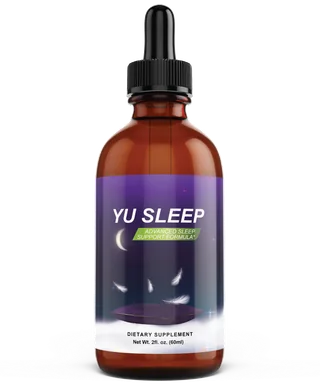 Yu Sleep
Liquid formula with owner-confirmed 0.9 mg melatonin per 2 mL serving and a 637 mg proprietary blend. The individual amounts of its seven blend ingredients are undisclosed.
View product details
More from Planet Wellness Report
Continue Reading

Sleep
How to Improve Sleep Quality Naturally: What to Change First
Trouble settling, repeated awakenings, unrefreshing sleep, or weekend shifts? Identify the pattern and choose what to address first.
6 min read
Sleep
Yu Sleep Review: A Known Melatonin Dose Inside an Undisclosed Blend
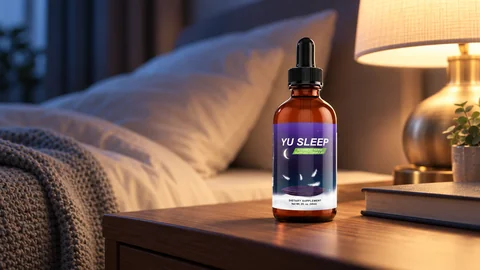
Yu Sleep’s owner-confirmed formula provides 0.9 mg melatonin in a 2 mL serving, plus a 637 mg blend whose seven ingredient amounts are hidden. Its liquid format is a preference feature; the disclosure cannot establish how much magnesium, theanine, apigenin, GABA or other blend constituents a serving supplies.
10 min read
Sleep
Magnesium vs L-Theanine for Sleep: Which One Makes More Sense?
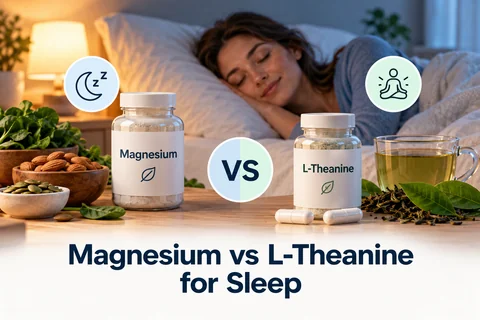
Compare magnesium vs L-theanine for sleep, including how they differ, what the evidence shows, their potential roles in relaxation and sleep quality, safety, and when each may make more sense.
13 min read
Evidence
Sources
- Amanda Bulman, Nathan M. D'Cunha, Wolfgang Marx, Murray Turner, Andrew McKune, Nenad Naumovski. The effects of L-theanine consumption on sleep outcomes: A systematic review and meta-analysis — Sleep Medicine Reviews (Jun 1, 2025) · DOI
- Jack Cotter, Charlotte E. Caddick, Jessica L. Harper, James K. Ebajemito. Examining the effect of L-theanine on sleep: a systematic review of dietary supplementation trials — Nutritional Neuroscience (Feb 1, 2026) · DOI
- Jackson L. Williams, Julian M. Everett, Nathan M. D'Cunha, Domenico Sergi, Ekavi N. Georgousopoulou, Richard J. Keegan, Andrew J. McKune, Duane D. Mellor, Nicola Anstice, Nenad Naumovski. The Effects of Green Tea Amino Acid L-Theanine Consumption on the Ability to Manage Stress and Anxiety Levels: a Systematic Review — Plant Foods for Human Nutrition (Mar 1, 2020) · DOI
- Healthy Sleep Habits — National Heart, Lung, and Blood Institute (NHLBI), NIH (Mar 24, 2022)
- Yusun Bin et al.. Sleep Hygiene - What Do We Mean? A Bibliographic Review — Sleep Medicine Reviews / Elsevier (Jun 1, 2024) · DOI