
COMPARISON
Magnesium vs L-Theanine for Sleep: Which One Makes More Sense?
Magnesium and L-theanine are both used for sleep and relaxation, but they are very different compounds with different biological roles and different levels of evidence.
By Planet Wellness Report · Oct 1, 2026 · 13 min read
Editorial review and publication: Felipe Lopes, Publisher & Editor. This is an editorial review, not a medical review.
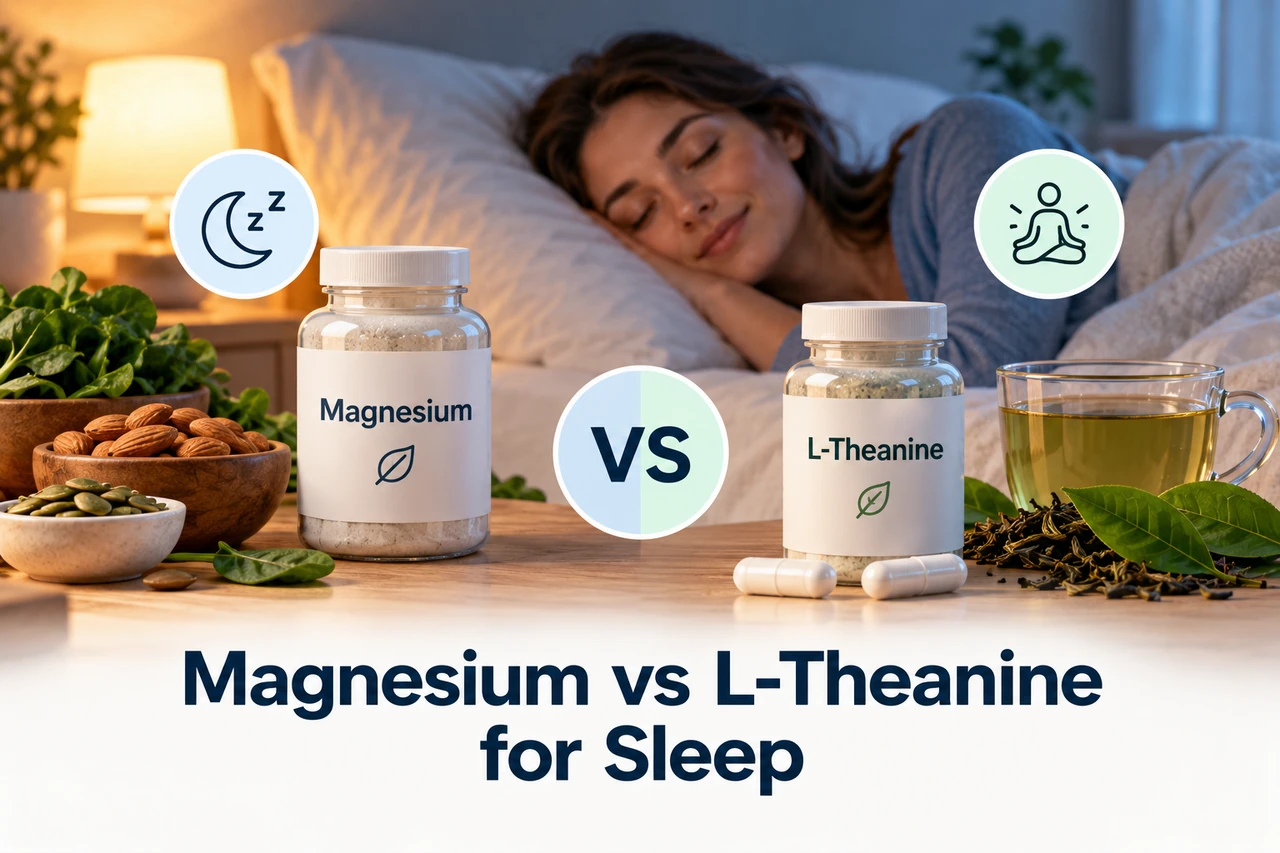
Side by side
Quick comparison
INGREDIENT
- Magnesium
An essential mineral involved in muscle and nerve function, energy production, and many processes related to relaxation and sleep.
- L-Theanine
An amino acid naturally found in tea that is commonly studied for relaxation, stress response, and calmness without strong sedation.
Magnesium and L-theanine are often grouped together in conversations about sleep, stress, and nighttime relaxation. That can make them sound like two versions of the same type of sleep aid. They are not.
Magnesium is an essential mineral required for many physiological processes throughout the body. L-theanine is an amino acid naturally found in tea and studied primarily for its potential effects on relaxation, stress, attention, and sleep quality.
Neither should be viewed as a universal treatment for insomnia. The more useful question is what problem you are trying to solve: inadequate magnesium intake, difficulty winding down, stress-related sleep disruption, or a persistent sleep problem that may require a different approach entirely.
Magnesium vs L-Theanine for Sleep: The Short Answer
Magnesium may make more sense when someone has inadequate magnesium intake or a reason to suspect low magnesium status, although research on magnesium supplementation for sleep remains mixed and does not support treating it as a reliable sleep medication.
L-theanine may make more sense when the goal is relaxation or reducing the sense of mental tension around bedtime. Recent systematic reviews suggest modest potential benefits for some sleep-related outcomes, but the evidence remains limited and does not show that L-theanine works like a conventional sedative.
For chronic insomnia, persistent nighttime awakenings, severe daytime sleepiness, or other ongoing sleep problems, neither supplement should replace appropriate evaluation and evidence-based sleep treatment.
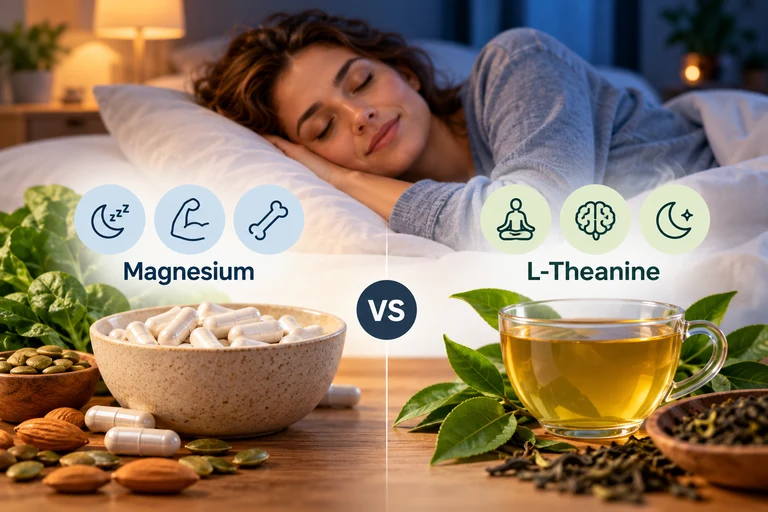
Magnesium and L-Theanine Are Not the Same Type of Compound
Magnesium is a mineral the body requires for normal nerve and muscle function, energy metabolism, bone health, blood glucose regulation, and hundreds of enzyme-related processes. It is obtained from foods such as leafy greens, legumes, nuts, seeds, and whole grains.
L-theanine is different. It is a non-protein amino acid found naturally in tea, particularly green tea. It is not an essential nutrient and there is no established daily requirement for L-theanine.
This distinction matters because magnesium supplementation can correct inadequate magnesium intake, while L-theanine supplementation is generally being used for a potential functional effect such as relaxation rather than to correct an established nutritional requirement.
How Magnesium May Relate to Sleep
Magnesium participates in nervous system and muscle function and is involved in biological processes that are relevant to relaxation and sleep. That biological plausibility has made magnesium a popular sleep supplement.
Biological plausibility, however, is not the same as proof that taking additional magnesium improves sleep in everyone.
A 2026 systematic review of randomized controlled trials found that magnesium supplementation may improve some subjective sleep outcomes in certain populations, but the evidence was heterogeneous and not strong enough to support broad claims that magnesium reliably improves sleep for all adults.
Does Magnesium Help You Fall Asleep?
Some studies suggest possible improvements in sleep quality or insomnia-related measures, particularly in specific groups, but findings are inconsistent.
A systematic review and meta-analysis in older adults found that oral magnesium supplementation reduced sleep-onset latency in the included trials, but the evidence base was small and considered low quality.
A more recent randomized placebo-controlled trial of magnesium bisglycinate in adults reporting poor sleep found a modest improvement in subjective insomnia severity. The effect was statistically significant but relatively small, reinforcing the idea that magnesium is not a dramatic or universally effective sleep intervention.
Does the Form of Magnesium Matter?
Different magnesium supplements use different chemical forms, such as citrate, glycinate, oxide, malate, and others. These forms differ in elemental magnesium content, absorption, gastrointestinal tolerance, cost, and marketing.
There is not strong clinical evidence showing that one magnesium form is clearly superior specifically for sleep. Claims that magnesium glycinate, for example, is uniquely effective for sleep should be treated cautiously unless supported by direct comparative trials.
The total amount of elemental magnesium, the person's baseline magnesium status, tolerability, and the reason for supplementation are generally more important than assuming a particular form has a guaranteed sleep effect.
How L-Theanine May Relate to Sleep
L-theanine is usually discussed in relation to relaxation rather than sedation. It does not appear to act like a conventional sleeping pill, and people should not expect it to force sleep.
Research has examined L-theanine for stress, anxiety-related symptoms, relaxation, attention, and sleep. One proposed explanation is that reducing mental or physiological tension may indirectly make it easier for some people to settle into sleep.
That distinction is important. An intervention that helps someone feel calmer before bed is not automatically the same as an intervention that directly reduces sleep latency or prevents nighttime awakenings.
What Does the Evidence Say About L-Theanine and Sleep?
Recent systematic reviews provide some evidence that L-theanine may modestly improve certain subjective sleep outcomes.
A 2025 systematic review and meta-analysis found improvements in some measures related to subjective sleep quality. However, studies varied in dose, duration, populations, and whether L-theanine was given alone or in combination with other ingredients.
A separate systematic review of supplementation trials similarly concluded that L-theanine shows potential for supporting sleep, but the available evidence remains limited and more rigorous trials are needed.
This makes L-theanine promising enough to discuss, but not strong enough to describe as an established treatment for insomnia.
Which Is Better for Relaxation?
If the main problem is feeling mentally keyed up, stressed, or unable to wind down, L-theanine has a more direct research connection to relaxation and stress-related outcomes.
A systematic review examining L-theanine and stress or anxiety found evidence suggesting potential benefits in stressful situations, although the number and quality of studies were limited.
Magnesium is also frequently marketed for relaxation, but its role is broader because it is an essential mineral rather than a compound primarily studied for a calming effect.
Which Is Better for Falling Asleep?
Neither supplement has strong enough evidence to say it reliably helps everyone fall asleep faster.
Magnesium has some evidence for reduced sleep-onset latency in older adults, but the trials are small and the quality of evidence is limited. L-theanine may support relaxation and subjective sleep quality, but it has not been established as a consistently effective sleep-onset treatment.
If difficulty falling asleep is persistent, the cause matters more than choosing between two supplements. Caffeine timing, irregular sleep schedules, stress, light exposure, medications, sleep disorders, and behavioral insomnia can all contribute.
Which Is Better for Staying Asleep?
Evidence is even less clear for nighttime awakenings. Neither magnesium nor L-theanine has strong evidence showing that it consistently prevents waking during the night.
Frequent nighttime awakenings can be related to sleep apnea, alcohol, medications, pain, menopause, environmental disruption, stress, urinary symptoms, or other factors. A supplement should not be expected to solve these problems without addressing the cause.
Magnesium vs L-Theanine: Side-by-Side
What they are
Magnesium is an essential mineral required for normal physiological function. L-theanine is a naturally occurring amino acid found primarily in tea and is not an essential nutrient.
Main sleep-related rationale
Magnesium is usually considered in relation to mineral adequacy, nervous system function, and muscle relaxation. L-theanine is usually considered in relation to relaxation, stress reduction, and subjective sleep quality.
Evidence strength
Both have limited but emerging evidence for sleep-related outcomes. Neither has evidence strong enough to support a universal claim that it treats insomnia.
Who may have the clearest reason to consider it
Magnesium has the clearest nutritional rationale when dietary intake is inadequate or deficiency is present. L-theanine may have a more intuitive rationale when relaxation and mental tension are the main concerns, although evidence remains limited.
Safety and Side Effects
Magnesium from food is generally safe for healthy people. Supplemental magnesium can cause diarrhea, nausea, and abdominal cramping, particularly at higher supplemental doses or with forms that have stronger laxative effects.
People with impaired kidney function may be at greater risk from excessive magnesium because the kidneys normally help regulate magnesium levels. Magnesium supplements can also interact with certain medications, including some antibiotics and osteoporosis medications.
L-theanine appears to be generally well tolerated in the doses used in clinical research, but long-term safety data are more limited than for an essential dietary nutrient such as magnesium. Anyone taking medications, managing a chronic condition, or using multiple supplements should discuss potential interactions with an appropriate healthcare professional.
Can You Take Magnesium and L-Theanine Together?
Magnesium and L-theanine are sometimes combined in nighttime supplements because they have different biological roles. However, combining two ingredients does not automatically make the combination more effective.
The available research primarily evaluates these compounds individually or in varied formulations. There is not strong evidence showing that magnesium plus L-theanine is consistently superior to either one alone for sleep.
Using multiple ingredients can also make it harder to determine which one is helping, doing nothing, or causing a side effect.
Who May Not Need Either Supplement?
Someone with adequate magnesium intake, manageable stress, and no clear deficiency or sleep-related reason for supplementation may not gain much from adding either product.
Sleep problems are often better addressed by looking first at sleep opportunity, schedule regularity, caffeine and alcohol timing, evening light, bedroom environment, stress, medications, and possible sleep disorders.
Supplements should be optional additions to a sound sleep routine, not substitutes for the fundamentals.
What About Chronic Insomnia?
Chronic insomnia is different from occasionally having trouble winding down. When difficulty falling asleep, staying asleep, or waking too early occurs repeatedly and causes daytime impairment, a supplement comparison is no longer the most important question.
Persistent insomnia can involve behavioral, psychological, circadian, medication-related, or medical factors. Evidence-based insomnia care and appropriate clinical evaluation are more relevant than repeatedly switching between over-the-counter supplements.
So Which One Makes More Sense?
Magnesium makes more sense when the question begins with nutrition: Is magnesium intake adequate? Is there a reason to suspect deficiency or low intake? Is supplementation otherwise appropriate?
L-theanine makes more sense when the question begins with relaxation: Is mental tension or difficulty winding down a major part of the bedtime problem?
Even then, neither choice guarantees better sleep. Both should be viewed as optional tools with modest and still-developing evidence rather than as replacements for good sleep habits or treatment of an underlying sleep disorder.
Bottom Line
Magnesium and L-theanine are not interchangeable sleep supplements. Magnesium is an essential mineral with a clear nutritional role and limited evidence for improving some sleep outcomes. L-theanine is a tea-derived amino acid with emerging evidence related to relaxation and subjective sleep quality.
Current research does not establish either one as a universally effective treatment for insomnia, and there is no strong evidence that one is consistently better than the other for every type of sleep problem.
The better choice depends on the reason for considering supplementation. If magnesium intake is inadequate, correcting that has a clear nutritional rationale. If mental tension and relaxation are the main concerns, L-theanine may be the more relevant option. If sleep problems are persistent or significantly affect daytime functioning, identifying the underlying cause matters more than choosing between supplements.
Was this article helpful?
Your anonymous response helps improve our editorial coverage.
Loading feedback options…
Share
Share this article
Selected references
Recommended products
 Magnesium Breakthrough
Regular seven-form magnesium capsule supplement: 500 mg elemental magnesium per two capsules, with individual form contributions undisclosed. Dose suitability and other magnesium sources matter more than the number of forms.
View product details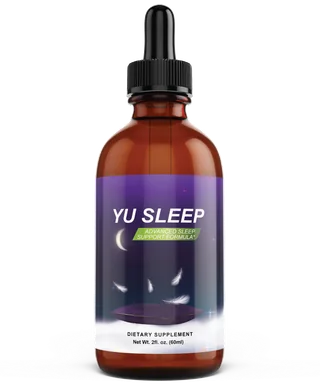 Yu Sleep
Liquid formula with owner-confirmed 0.9 mg melatonin per 2 mL serving and a 637 mg proprietary blend. The individual amounts of its seven blend ingredients are undisclosed.
View product details
More from Planet Wellness Report
Continue Reading
Sleep
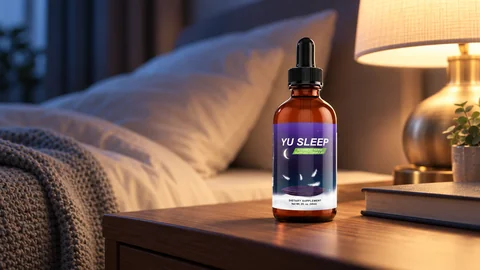
Yu Sleep Review: A Known Melatonin Dose Inside an Undisclosed Blend
Yu Sleep’s owner-confirmed formula provides 0.9 mg melatonin in a 2 mL serving, plus a 637 mg blend whose seven ingredient amounts are hidden. Its liquid format is a preference feature; the disclosure cannot establish how much magnesium, theanine, apigenin, GABA or other blend constituents a serving supplies.
10 min read

Sleep
How to Improve Sleep Quality Naturally: What to Change First
Trouble settling, repeated awakenings, unrefreshing sleep, or weekend shifts? Identify the pattern and choose what to address first.
6 min read

Sleep
L-Theanine for Sleep: Does It Actually Help?
Learn what the research says about L-theanine for sleep, including relaxation, sleep quality, bedtime use, studied doses, safety, and how it differs from melatonin.
13 min read
Evidence
Sources
- Magnesium — Health Professional Fact Sheet — NIH Office of Dietary Supplements (Jan 6, 2026)
- Adrian L. Lopresti, Stephen J. Smith, Peter D. Drummond. Magnesium Supplementation for Sleep in Adults: A Systematic Review of Randomized Controlled Trials — Journal of Dietary Supplements / Taylor & Francis (Aug 28, 2026) · DOI
- Magnesium Bisglycinate Supplementation in Healthy Adults Reporting Poor Sleep: A Randomized, Placebo-Controlled Trial — Nature and Science of Sleep (Jan 2, 2025)
- Jasmine Mah, Tyler Pitre. Oral magnesium supplementation for insomnia in older adults: a Systematic Review & Meta-Analysis — BMC Complementary Medicine and Therapies (Apr 17, 2021) · DOI
- Amanda Bulman, Nathan M. D'Cunha, Wolfgang Marx, Murray Turner, Andrew McKune, Nenad Naumovski. The effects of L-theanine consumption on sleep outcomes: A systematic review and meta-analysis — Sleep Medicine Reviews (Jun 1, 2025) · DOI
- Jack Cotter, Charlotte E. Caddick, Jessica L. Harper, James K. Ebajemito. Examining the effect of L-theanine on sleep: a systematic review of dietary supplementation trials — Nutritional Neuroscience (Feb 1, 2026) · DOI
- Jackson L. Williams, Julian M. Everett, Nathan M. D'Cunha, Domenico Sergi, Ekavi N. Georgousopoulou, Richard J. Keegan, Andrew J. McKune, Duane D. Mellor, Nicola Anstice, Nenad Naumovski. The Effects of Green Tea Amino Acid L-Theanine Consumption on the Ability to Manage Stress and Anxiety Levels: a Systematic Review — Plant Foods for Human Nutrition (Mar 1, 2020) · DOI
- Healthy Sleep Habits — National Heart, Lung, and Blood Institute (NHLBI), NIH (Mar 24, 2022)