
REVIEW
Yu Sleep Review: A Known Melatonin Dose Inside an Undisclosed Blend
Yu Sleep declares 0.9 mg melatonin but hides seven blend amounts. Compare the liquid preference with dose control, medication cautions, and package-cost uncertainty.
By Planet Wellness Report · Oct 2, 2026 · 10 min read
Editorial review and publication: Felipe Lopes, Publisher & Editor. This is an editorial review, not a medical review.
At a glance
Review summary
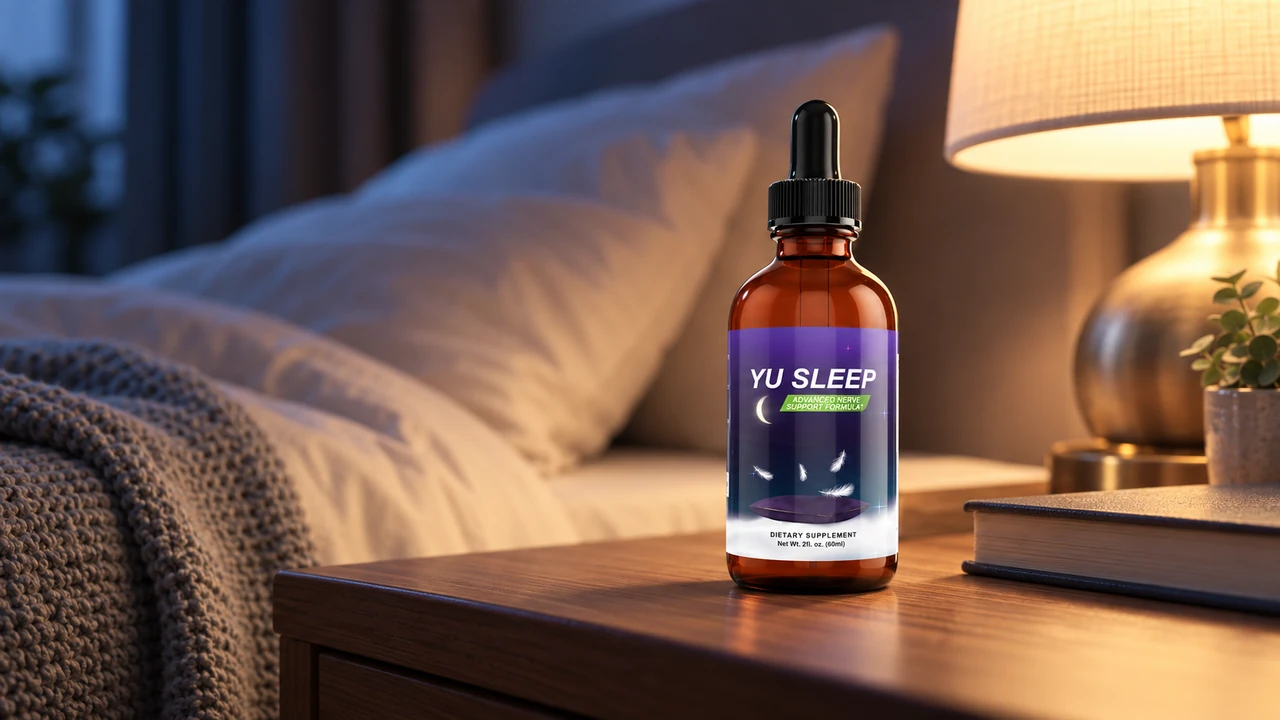
Liquid formula with owner-confirmed 0.9 mg melatonin per 2 mL serving and a 637 mg proprietary blend. The individual amounts of its seven blend ingredients are undisclosed.
Check current pricingYu Sleep may appeal to adults who prefer a fixed liquid sleep-oriented formula with a known melatonin amount. Its owner-confirmed 2 mL serving provides 0.9 mg melatonin, an ingredient with evidence in specific sleep and circadian situations. The 637 mg co-ingredient blend leaves seven amounts undisclosed, so its contribution and advantage over melatonin alone remain unverified; 5-HTP also makes medication compatibility important.
Documentary review of product information and research; no personal use or testing is claimed. How we review supplements.
Verdict: The clearest fit is an adult for whom melatonin is appropriate and who prefers this combined liquid to capsules, accepts unknown co-ingredient quantities and has checked medication compatibility, particularly for 5-HTP. A declared 0.9 mg melatonin serving gives that choice a concrete basis without proving an added benefit from the blend. A simpler, fully specified product better fits someone seeking control of one ingredient or avoiding co-ingredients. Confirm bottle count and delivered cost; superiority or savings were not established.
Yu Sleep offers a concrete option for someone who prefers a fixed liquid formula with a known melatonin amount. The owner-confirmed serving declares 0.9 mg melatonin per 2 mL alongside a 637 mg proprietary blend. Melatonin has evidence in specific sleep and circadian situations; the buying trade-off is accepting seven unknown co-ingredient quantities rather than selecting and adjusting each ingredient independently. [12]
One combined liquid may suit a deliberate format preference when the full ingredient list is appropriate for the user. It is not evidence that the combination works better than one ingredient selected for a specific sleep question. We did not use the drops or measure sleep, and did not independently retrieve a current Supplement Facts panel.
Composition is based on the publication owner’s October 18 confirmation, reaffirmed for this update. Current official offer material was checked separately for commercial terms. The evidence and purchase conclusions below keep those sources distinct. [12]
The trade-off starts with dose control
Choosing Yu Sleep means accepting one declared melatonin amount together with seven additional ingredients whose individual quantities cannot be selected from the label.
A person who wants this exact liquid mixture may accept that constraint. Someone testing the usefulness or tolerability of one ingredient has a clearer reason to prefer a fully specified simpler formula.
The 637 mg total cannot be read as the magnesium-glycinate, apigenin, theanine or GABA dose, and it is not a separately declared elemental-magnesium amount.
Neither the product format nor ingredient research establishes the additional benefit of the mixture.
One fixed serving, two kinds of disclosure
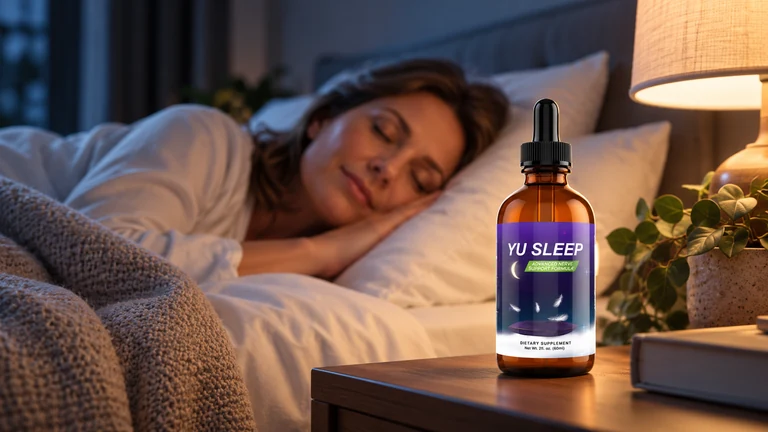
The stated serving is 2 mL, described as two full droppers, with 30 servings per container. “Dropper” is the supplied-label description, not a universal volume for every dropper. Follow the current physical product instructions. [12]
The liquid may be preferred to capsules. We have no comparative absorption or clinical-outcome evidence establishing that liquid Yu Sleep performs better.
Persistent insomnia, suspected breathing-related sleep problems or substantial daytime impairment need assessment; choosing between liquid and capsule supplements does not address those questions.
The declared amounts and the hidden seven
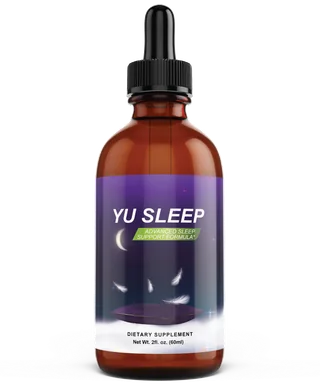
Per owner-confirmed 2 mL serving: vitamin B2 0.5 mg, vitamin B6 0.5 mg and melatonin 0.9 mg; 30 servings per container. These are the quantities that can be read individually. This remains owner-confirmed composition, not independent visual inspection of a current panel. [12]
The proprietary blend totals 637 mg and lists, in the declared order: tart cherry concentrate, magnesium glycinate, apigenin, lemon balm, 5-HTP, L-theanine and GABA. No individual amount is disclosed. A total blend weight cannot establish each ingredient’s trial match. [12]
The practical consequence is limited dose control: changing the serving to change one ingredient also changes all the others. Do not increase servings to imitate a dose from an ingredient trial.
Melatonin: 0.9 mg per Serving
The 0.9 mg melatonin amount is explicit. That makes it more inspectable than the proprietary ingredients; it does not establish that this amount is appropriate for every person or sleep problem. [1] [2]
Melatonin is a hormone involved in circadian timing. Clinical research supports its usefulness in specific sleep and circadian situations, but effectiveness depends on factors such as timing, dose, and the underlying sleep problem.
The declared 0.9 mg melatonin serving differs from products with higher labeled amounts. Suitability depends on timing and circumstances; the amount alone does not establish that the complete formula improves sleep.
Magnesium Glycinate
Magnesium is an essential mineral involved in normal nerve and muscle function and many other physiological processes. Magnesium glycinate is frequently chosen for nighttime supplements because it is generally marketed as a well-tolerated form.
Research on magnesium supplementation and sleep is promising in some populations but remains mixed overall. Recent systematic reviews have found possible improvements in certain subjective sleep outcomes without establishing magnesium as a universally effective sleep aid.
Neither the magnesium-glycinate quantity nor an elemental-magnesium amount is individually stated. This prevents a sleep-trial comparison and makes Yu Sleep unsuitable as a precisely quantified magnesium-replacement plan. [3] [12]
L-Theanine
L-theanine is an amino acid naturally found in tea and is one of the more interesting ingredients in the formula from a relaxation perspective.
Recent systematic reviews suggest that L-theanine may modestly improve certain subjective sleep outcomes and may also support relaxation or stress management. It is not a conventional sedative and should not be expected to force sleep.
The label gives no theanine amount. Even favorable theanine trials cannot tell us whether the portion in these drops resembles their preparations or exposure. [5] [6] [12]
Tart Cherry Extract
Tart cherry has attracted attention in sleep research because cherries naturally contain several compounds relevant to sleep and circadian biology.
A recent systematic review of intervention studies found some positive results for sleep duration, efficiency, or sleep onset, but the evidence was heterogeneous. Studies differed substantially in formulation, population, amount, and duration.
Different tart-cherry juices, concentrates and protocols cannot be treated as equivalent to an undisclosed concentrate quantity here. [8]
Lemon Balm and Apigenin
Lemon balm has a long history of traditional use for calming and relaxation, and modern research has examined its potential effects on stress, mood, and sleep.
Recent reviews describe encouraging signals for sleep and relaxation, although the evidence base remains smaller and less standardized than it is for more extensively studied sleep interventions.
Apigenin is found in plants including chamomile, but tea or whole-extract evidence is not an apigenin-isolate trial. Its amount in Yu Sleep is unknown. Our apigenin evidence article separates those questions.
GABA
GABA is an inhibitory neurotransmitter involved in regulating nervous-system activity, which makes it an intuitive ingredient for relaxation-oriented products.
A systematic review of oral GABA found sleep evidence very limited. GABA’s role inside the nervous system does not establish that a supplement increases brain GABA usefully; peripheral hypotheses are separate from measured sleep outcomes. [14]
The GABA article explains that distinction. An undisclosed GABA amount does not provide evidence for or against the complete Yu Sleep mixture.
What About 5-HTP?
5-HTP is a precursor involved in serotonin synthesis and appears in a variety of mood and sleep supplements. Its inclusion provides another mechanistic angle to the formula, but it also makes medication history more relevant.
People who use prescription medications, particularly medications that affect serotonin or the central nervous system, should discuss a multi-ingredient supplement containing 5-HTP with an appropriate healthcare professional before using it.
5-HTP warrants special review with serotonergic medicines because of serotonin-syndrome risk. The unknown quantity is not reassurance that an interaction is impossible. This is an ingredient-level warning, not a measured adverse-event rate for Yu Sleep. [13]
The ingredient theme does not settle the combination question
Most listed ingredients have a connection to sleep or relaxation research, although the strength of human evidence differs. That connection explains the formula’s theme; undisclosed amounts prevent a complete comparison with studied preparations.
No independent controlled efficacy trial of this exact current Yu Sleep mixture was verified in the literature checked for this review. Ingredient studies cannot establish whether the added blend improves on melatonin alone.
A direct comparison would need the current labeled formula, a relevant population and sleep outcomes—not merely a discussion of several relaxation pathways.
The Main Limitation: Ingredient Dose Transparency
The biggest limitation in our evaluation is straightforward: individual amounts for several of the formula's most interesting ingredients are not disclosed separately.
Hidden amounts are not proof that every ingredient is ineffective; they prevent a reliable quantitative comparison.
Full disclosure of the seven amounts, preparation identities and elemental magnesium would improve that comparison.
Those changes would improve interpretability without by themselves proving efficacy.
Liquid preference is not an absorption result
The liquid is an actual format difference from tablets or capsules.
It may meet a personal preference for drops, but no personal-use assessment of taste, measuring ease or tolerability was conducted here.
No price saving or superior clinical outcome follows simply from putting ingredients into one liquid.
How Do You Take Yu Sleep?
The owner-confirmed serving is 2 mL, described as 2 full droppers, with 30 servings per container. The manufacturer’s directions cited for this review say to take the serving approximately 30 minutes before bedtime. Follow the label supplied with your product.
Because the formula contains melatonin and several other sleep-oriented compounds, it is intended for nighttime use. Users should follow the current product label rather than assuming that taking more will produce stronger results.
The buyer who accepts a fixed mixture
Consider it only if you specifically want the combined liquid, accept unknown individual blend amounts and have checked the complete ingredient list against medication and health circumstances.
Its declared melatonin amount helps that comparison, but does not tell you the balance of the other seven constituents.
Skip it if your objective is a measured amount of magnesium, GABA, theanine or another single ingredient, or if you want to avoid ingredients with no clear role in your own decision.
Who Should Be More Cautious?
People who take prescription medications, have chronic health conditions, are pregnant or breastfeeding, or already use other sleep supplements should discuss Yu Sleep with an appropriate healthcare professional before adding it to their routine.
The formula contains several active compounds rather than one isolated nutrient, so checking for ingredient overlap and medication interactions is sensible.
Persistent insomnia, loud snoring with breathing pauses, severe daytime sleepiness, or repeated nighttime awakenings also deserve evaluation rather than indefinite self-treatment with supplements.
Package duration is not a per-bottle unit
On October 19, 2026, the official page showed packages described as two-, three- and six-month supplies with package totals, but this update did not independently confirm their checkout bottle counts and delivered terms. A package duration must not be assigned to one bottle: the owner-confirmed container supplies 30 labeled servings. We therefore do not present a verified current per-bottle or per-serving price. [12]
Once the offer confirms B bottles and total delivered cost P, cost per bottle is P/B and cost per labeled serving is P/(30 × B). Include shipping and tax, distinguish recurring from one-time charges, and do not substitute a promotional per-bottle figure for the package total.
The current official offer advertises a 60-day guarantee. Confirm the actual order’s window, return conditions and refund exclusions; no refund or delivery experience was tested. [12]
The decision hinges on control, not ingredient count
A preference the product can satisfy
One liquid combines a stated melatonin quantity with seven other listed ingredients. This describes its format; it does not establish that purchasing all seven serves a clinical need.
A limitation a buyer cannot calculate away
The missing amounts prevent reconstructing the mixture or comparing equivalent-dose separate products. No economic advantage for the combination was demonstrated.
What would justify a stronger assessment
Full individual-dose disclosure and an independently obtainable current panel would resolve important specification gaps.
A controlled trial comparing the current mixture with a relevant simpler option could test whether the added ingredients matter.
A verified bottle count and delivered total would allow a price comparison, but a lower price would not establish a better sleep outcome.
Until those facts are available, the case is a conditional liquid preference, not a demonstrated combination advantage.
Keep the declared melatonin; accept or reject the rest deliberately
The useful strength is the explicit 0.9 mg melatonin serving in a liquid format.
The decisive weakness is that the other active amounts cannot be compared or individually adjusted.
For transparent standalone dosing or avoiding unnecessary co-ingredients, this fixed blend is the less direct choice. A product with fewer disclosed ingredients can be easier to evaluate without being a proven better treatment.
For someone who deliberately wants these drops and accepts the disclosure limits after a suitability check, the main product link remains available. Persistent sleep impairment takes priority over further supplement selection; the sleep-quality guide helps identify the next question.
Update, October 19, 2026 — Felipe Lopes, Publisher & Editor: consolidated the owner-confirmed serving and blend information and corrected the ambiguous bottle-versus-package price description. Individual blend doses remain undisclosed; current prices were not independently reverified.
Editorial update, October 19, 2026: Separated the owner-confirmed individual quantities from the blend, added the relevant 5-HTP/GABA sources, and removed unsupported combination-value endorsements. Earlier bottle/package correction retained. This is a documentary reassessment; no personal use or clinical product test is claimed.
Was this article helpful?
Your anonymous response helps improve our editorial coverage.
Loading feedback options…
Share
Share this article
Selected references
Recommended products
More from Planet Wellness Report
Continue Reading

Sleep
How to Improve Sleep Quality Naturally: What to Change First
Trouble settling, repeated awakenings, unrefreshing sleep, or weekend shifts? Identify the pattern and choose what to address first.
6 min read
Sleep
Magnesium vs L-Theanine for Sleep: Which One Makes More Sense?
Compare magnesium vs L-theanine for sleep, including how they differ, what the evidence shows, their potential roles in relaxation and sleep quality, safety, and when each may make more sense.
13 min read

Sleep
L-Theanine for Sleep: Does It Actually Help?
Learn what the research says about L-theanine for sleep, including relaxation, sleep quality, bedtime use, studied doses, safety, and how it differs from melatonin.
13 min read
Evidence
Sources
- Melatonin: What You Need To Know — National Center for Complementary and Integrative Health (NCCIH), National Institutes of Health
- Francy Cruz-Sanabria, Simone Bruno, Alessio Crippa, Paolo Frumento, Marco Scarselli, Debra J. Skene, Ugo Faraguna. Optimizing the Time and Dose of Melatonin as a Sleep-Promoting Drug: A Systematic Review of Randomized Controlled Trials and Dose-Response Meta-Analysis — Journal of Pineal Research (Aug 1, 2024) · DOI
- Magnesium — Health Professional Fact Sheet — NIH Office of Dietary Supplements (Jan 6, 2026)
- Adrian L. Lopresti, Stephen J. Smith, Peter D. Drummond. Magnesium Supplementation for Sleep in Adults: A Systematic Review of Randomized Controlled Trials — Journal of Dietary Supplements / Taylor & Francis (Aug 28, 2026) · DOI
- Amanda Bulman, Nathan M. D'Cunha, Wolfgang Marx, Murray Turner, Andrew McKune, Nenad Naumovski. The effects of L-theanine consumption on sleep outcomes: A systematic review and meta-analysis — Sleep Medicine Reviews (Jun 1, 2025) · DOI
- Jack Cotter, Charlotte E. Caddick, Jessica L. Harper, James K. Ebajemito. Examining the effect of L-theanine on sleep: a systematic review of dietary supplementation trials — Nutritional Neuroscience (Feb 1, 2026) · DOI
- Jackson L. Williams, Julian M. Everett, Nathan M. D'Cunha, Domenico Sergi, Ekavi N. Georgousopoulou, Richard J. Keegan, Andrew J. McKune, Duane D. Mellor, Nicola Anstice, Nenad Naumovski. The Effects of Green Tea Amino Acid L-Theanine Consumption on the Ability to Manage Stress and Anxiety Levels: a Systematic Review — Plant Foods for Human Nutrition (Mar 1, 2020) · DOI
- Fateme Barforoush, Sara Ebrahimi, Maryam Karimian Abdar, Shabnam Khademi, Nava Morshedzadeh. The Effect of Tart Cherry on Sleep Quality and Sleep Disorders: A Systematic Review — Food Science & Nutrition (Sep 16, 2025) · DOI
- Unraveling the Effects of Melissa officinalis L. on Cognition and Sleep Quality: A Narrative Review — International Journal of Molecular Sciences (Oct 30, 2025) · DOI
- Progress in Research on the Mechanism of GABA in Improving Sleep (Nov 1, 2025)
- Healthy Sleep Habits — National Heart, Lung, and Blood Institute (NHLBI), NIH (Mar 24, 2022)
- Yu Sleep. Yu Sleep — Current Formula and Supplement Facts (owner-confirmed) — Yu Sleep — Owner-confirmed composition; current offer inspected separately, no independent current panel retrieval.
- Memorial Sloan Kettering Cancer Center. 5-HTP — Memorial Sloan Kettering Cancer Center
- Hepsomali P, Groeger JA, Nishihira J, Scholey A.. Effects of Oral Gamma-Aminobutyric Acid (GABA) Administration on Stress and Sleep in Humans: A Systematic Review — Frontiers in neuroscience (Sep 17, 2020) · DOI