
ARTICLE
Apigenin for Sleep: What Human Research Actually Shows
By Planet Wellness Report · Oct 18, 2026 · 9 min read
Editorial review and publication: Felipe Lopes, Publisher & Editor. This is an editorial review, not a medical review.

Apigenin has a plausible sleep-related mechanism, but its reputation runs ahead of direct human evidence. Searches through October 18, 2026 did not identify a randomized sleep trial testing apigenin alone against placebo. Human research on chamomile and formulas containing apigenin is relevant context, but it cannot establish what purified apigenin does by itself.
That distinction also matters when reading a supplement label. A product can contain apigenin without disclosing its individual amount, and can include several other sleep-oriented ingredients. Neither the presence of the compound nor a positive chamomile study proves that the finished formula improves sleep.
What apigenin is, and why the preparation matters
Apigenin is a flavonoid, a family of plant compounds, found in chamomile and foods such as parsley and celery. In plants it can occur in forms linked to sugars, called glycosides. A purified compound, a standardized chamomile extract, a cup of chamomile tea, and a multi-ingredient supplement are different exposures.
Standardization can specify an amount of a constituent, but it does not remove every other constituent from a plant extract. A trial using an extract standardized for apigenin is still an extract trial unless the design isolates apigenin. Tea preparation introduces further differences in plant material, steeping, serving volume, and chemical composition.
Human pharmacokinetic work published in 2022 found that apigenin and its glycosides from different preparations produced different metabolite-excretion patterns and timing. This shows that the preparation can affect exposure. It was not a sleep-efficacy trial, and urinary recovery is not a direct measurement of how much reaches the brain or a prediction of sleep benefit.
What the receptor and animal research actually shows
The GABA system helps regulate inhibitory signaling in the brain. Apigenin has been investigated in relation to benzodiazepine-associated receptor sites, one reason it appears in discussions of calming compounds. A 1995 laboratory and mouse study reported receptor binding and anxiety-related behavioral effects, with mild sedation at a higher tested dose. These were not human bedtime outcomes.
The pharmacology is more complicated than saying apigenin simply turns up GABA. A later cell-and-rat study reported different effects on GABA-activated currents and suggested that reduced movement could involve other systems. Receptor binding, decreased animal activity, and normal restorative human sleep should not be treated as interchangeable findings.
A 2026 study of apigenin plus magnesium reported sleep-related effects in normal and experimentally disturbed mice. This is preclinical combination research. Its use of the word synergy does not establish clinical synergy in humans, identify a human sleep dose, or validate a commercial blend containing a different magnesium preparation and other ingredients.
Direct human apigenin evidence remains limited
No isolated-apigenin sleep RCT was located in the PubMed and Europe PMC searches used for this article. That is a statement about the research identified, rather than proof that no study could exist. Human absorption studies do exist; they answer a different question from whether a supplement reduces insomnia symptoms.
A convincing direct trial would need to identify the compound and formulation, compare it with an appropriate control, and measure sleep outcomes in a defined population. Dose, duration, baseline sleep problems, adverse events, and the size of any benefit would all matter. The available evidence does not establish a universal effective bedtime dose for isolated apigenin.

A recent human combination trial does not isolate apigenin
An October 2026 randomized trial enrolled 103 healthy, physically active adults into four groups testing morning adaptogens, an evening blend, both, or placebo. The evening preparation contained 50 mg apigenin, 200 mg L-theanine, and 2 g magnesium L-threonate, providing 145 mg magnesium. Supplementation lasted two weeks within a four-week protocol.
The clearest reported benefits concerned the morning adaptogen group. The study did not find significant effects on several wearable-derived measures, including sleep efficiency, latency, duration, and total sleep time. Technical problems caused missing wearable data, and the short intervention and relatively healthy sample limit interpretation.
This is human evidence about a particular combination, not evidence for apigenin alone. The trial amount is not a recommended dose, is not the amount disclosed by Yu Sleep, and should not be used to infer how much apigenin is in that product. The preparations also differ in other ingredients.
What chamomile research can — and cannot — tell us about apigenin
Chamomile contains multiple constituents. A positive chamomile trial could reflect the whole preparation, an interaction among constituents, the context of taking it, or a combination of factors. Without an appropriate isolated-compound comparison, the trial cannot assign a benefit specifically to apigenin.
A 2024 review included ten clinical studies with 772 participants. Pooled subjective sleep-quality scores improved, but the studies differed substantially. Results did not show corresponding improvements in sleep duration, efficiency, or daytime functioning. Findings for getting to sleep and awakenings varied across studies and were not all pooled.
A 2019 review similarly distinguished improved sleep-quality scores from the much thinner insomnia evidence. These reviews draw on overlapping literature, so they should not be counted as independent sets of new trials. Their results support cautious investigation of chamomile, rather than a claim that purified apigenin is an established insomnia treatment.
The insomnia pilot was small and did not establish a benefit
A double-blind pilot randomized 34 adults with chronic primary insomnia to standardized chamomile extract, 270 mg twice daily, or placebo for 28 days. There were no significant between-group differences in the primary sleep-diary outcomes of total sleep time and efficiency, or in the other diary measures.
Some exploratory effect sizes favored chamomile for latency and awakenings, while total sleep time favored placebo. Those patterns can help plan a larger trial; they do not turn a nonsignificant pilot into proof of efficacy. Measurements were subjective, and the preparation was chamomile extract containing several constituents, not isolated apigenin.
Older adults and postpartum tea studies need their own context
A single-blind trial in 60 older nursing-home residents reported improved Pittsburgh Sleep Quality Index scores after 28 days of chamomile extract compared with wheat-flour capsules. That is a subjective sleep-quality finding in a specific setting. It does not establish the same result for younger adults, purified apigenin, or objective sleep architecture.
In another trial, 80 postpartum women with disturbed sleep received chamomile tea for two weeks or usual postpartum care. Some symptom-related sleep scores improved initially, but group differences were absent at the later four-week assessment. The control was usual care rather than an indistinguishable placebo tea, and postpartum sleep circumstances differ from those of the general adult population.
A 2025 review of chamomile in pregnancy and postpartum settings found the evidence insufficient for clinical practice recommendations during pregnancy. A postpartum tea study should therefore not be converted into a safety endorsement for concentrated apigenin or multi-ingredient sleep products during pregnancy or breastfeeding.
Better sleep needs a specific outcome
Sleep latency is the time taken to fall asleep. Total sleep time is time actually asleep; sleep efficiency relates sleep time to time in bed. The number of awakenings and the time awake after falling asleep are also different measures. A study can improve one without improving the others.
Subjective sleep quality describes a person’s experience, while an insomnia scale assesses a broader symptom pattern. Daytime sleepiness and fatigue are related but distinct, and feeling calmer does not automatically establish improved sleep. A sleep diary, research-grade recording, and consumer wearable also have different measurement limits.
Look for an actual between-group result and its uncertainty, rather than only a before-and-after change or a favorable biomarker. For the separate question of typical time to fall asleep, see how long sleep onset should take.
Safety: distinguish chamomile, apigenin, and the full formula
Chamomile safety cannot simply be transferred to concentrated apigenin. NCCIH describes uncommon nausea, dizziness, and allergic reactions with chamomile, including occasional serious reactions. People allergic to related plants such as ragweed or daisies may be more susceptible. This is a botanical-allergy caution, not evidence that every purified apigenin preparation carries the same plant-allergen exposure.
NCCIH also notes reported interactions involving chamomile, warfarin, and some medicines metabolized by the liver, with theoretical concerns about sedatives. Apigenin pharmacokinetic reviews discuss possible drug-interaction pathways, but laboratory enzyme effects do not quantify a clinical interaction at an unspecified supplement dose. A pharmacist should review medication use rather than assuming either universal compatibility or a particular effect.
Long-term safety and pregnancy or breastfeeding safety of isolated apigenin remain insufficiently characterized. Potential sedation also deserves attention when several sleep-oriented ingredients are combined. Avoid driving or hazardous activity when drowsy, and review sedating medicines and alcohol use with a clinician before adding a nighttime blend.
Other ingredients add their own considerations. Melatonin can cause drowsiness, and long-term safety information is limited. MSK cautions against adding 5-HTP to serotonergic medicines, including certain antidepressants, without treating-clinician supervision because of potential serotonin toxicity. This is a 5-HTP consideration, not an established apigenin-specific interaction.
Where Yu Sleep fits, and what its label cannot establish
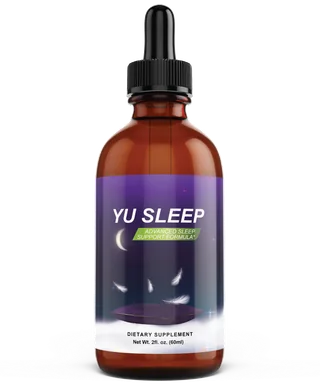
For an adult already considering a liquid sleep-support blend, Yu Sleep is a relevant optional product reference because it includes apigenin and other nighttime ingredients. It is a multi-ingredient formula, not an isolated apigenin supplement. Yu Sleep contains apigenin as part of a 637 mg proprietary blend, but the label does not disclose the individual amount of apigenin.
The current Supplement Facts supplied for this review lists 2 mL, or two full droppers, per serving and 30 servings per container. Separately declared amounts are vitamin B2 0.5 mg, vitamin B6 0.5 mg, and melatonin 0.9 mg. The 637 mg blend lists red tart cherry concentrate, magnesium glycinate, apigenin, lemon balm extract, 5-HTP, L-theanine, and GABA in that order.
The ingredient order does not establish the amount or effectiveness of apigenin. Neither the blend total nor the serving volume can be used to match it to a research dose. Studies of chamomile or isolated apigenin do not demonstrate the finished formula’s efficacy, and any observed formula effect cannot be attributed to apigenin alone without direct evidence. No controlled trial of this complete labeled Yu Sleep formula was verified for this article.
The melatonin and 5-HTP also make a full medication and supplement review relevant before use. If you prefer to examine product-specific convenience, transparency, and other considerations, see the Yu Sleep review. This ingredient guide does not provide a personalized dose or a reason to increase the labeled serving.
How to use this evidence when comparing options
First identify what was tested: pure compound, plant extract, tea, or a blend. Then ask who participated, what changed compared with the control, and how long the result lasted. A disclosed ingredient is a composition fact; a meaningful sleep benefit requires outcome evidence.
Adjacent supplements have their own evidence and limitations. Our guides to glycine for sleep, magnesium for sleep, and L-theanine for sleep address those separate questions. Their results cannot be added together to predict the effect of a stack.
Apigenin remains an interesting research candidate, with limited direct human sleep evidence and mixed indirect findings. Persistent insomnia or daytime impairment deserves assessment rather than repeated supplement escalation. The most defensible conclusion is that biological plausibility and chamomile research have not yet established an isolated-apigenin sleep benefit or the efficacy of a particular commercial blend.
Was this article helpful?
Your anonymous response helps improve our editorial coverage.
Loading feedback options…
Share
Share this article
Selected references
Recommended products
More from Planet Wellness Report
Continue Reading

Sleep
GABA for Sleep: Does Oral GABA Actually Improve Sleep?
Small oral GABA trials suggest possible sleep-onset effects, but other outcomes and brain-entry mechanisms remain uncertain.
8 min read

Sleep
The Sleep Reset Review: What It Includes, Evidence, and Value
A review of The Sleep Reset’s 14 audio sessions, one-time price, delivery and refund terms, component evidence, and practical fit as an optional wind-down tool.
8 min read

Sleep
How Long Should It Take to Fall Asleep? What Sleep Research Suggests
Learn what sleep latency means, why typical ranges are not diagnostic cutoffs, and how to interpret patterns alongside sleep opportunity and daytime functioning.
7 min read
Evidence
Sources
- Kazemi A, Shojaei-Zarghani S, Eskandarzadeh P, Hashempur MH.. Effects of chamomile (Matricaria chamomilla L.) on sleep: A systematic review and meta-analysis of clinical trials — Complementary therapies in medicine (Aug 4, 2024) · DOI
- Hieu TH, Dibas M, Surya Dila KA, Sherif NA, Hashmi MU, Mahmoud M, Trang NTT, Abdullah L, Nghia TLB, Y MN, Hirayama K, Huy NT.. Therapeutic efficacy and safety of chamomile for state anxiety, generalized anxiety disorder, insomnia, and sleep quality: A systematic review and meta-analysis of randomized trials and quasi-randomized trials — Phytotherapy research : PTR (Apr 21, 2019) · DOI
- Zick SM, Wright BD, Sen A, Arnedt JT.. Preliminary examination of the efficacy and safety of a standardized chamomile extract for chronic primary insomnia: a randomized placebo-controlled pilot study — BMC complementary and alternative medicine (Sep 22, 2011) · DOI
- Adib-Hajbaghery M, Mousavi SN.. The effects of chamomile extract on sleep quality among elderly people: A clinical trial — Complementary therapies in medicine (Oct 13, 2017) · DOI
- Chang SM, Chen CH.. Effects of an intervention with drinking chamomile tea on sleep quality and depression in sleep disturbed postnatal women: a randomized controlled trial — Journal of advanced nursing (Oct 20, 2015) · DOI
- Viola H, Wasowski C, Levi de Stein M, Wolfman C, Silveira R, Dajas F, Medina JH, Paladini AC.. Apigenin, a component of Matricaria recutita flowers, is a central benzodiazepine receptors-ligand with anxiolytic effects — Planta medica (Jun 1, 1995) · DOI
- Avallone R, Zanoli P, Puia G, Kleinschnitz M, Schreier P, Baraldi M.. Pharmacological profile of apigenin, a flavonoid isolated from Matricaria chamomilla — Biochemical pharmacology (Jun 1, 2000) · DOI
- Borges G, Fong RY, Ensunsa JL, Kimball J, Medici V, Ottaviani JI, Crozier A.. Absorption, distribution, metabolism and excretion of apigenin and its glycosides in healthy male adults — Free radical biology & medicine (Apr 20, 2022) · DOI
- Wong WY, Chan BD, Zhou H, Leung TC, Tai WC.. Synergistic sleep-promoting effects of magnesium and apigenin in normal and insomnia mouse models — Food & function (Mar 9, 2026) · DOI
- Mastrofini GF, Romersi RF, Lombardi MG, Persaud KT, Ryan MM, Hirsch KR, Fraley AL, Dawes JJ, Stray-Gundersen SO, Hardin JW, Arent SM.. Modulating stress and sleep through a multi-compound dietary supplement: a randomized, double-blind, placebo-controlled trial — Journal of the International Society of Sports Nutrition (Oct 4, 2026) · DOI
- Ferguson T, Gordon B.. The Efficacy and Safety of Using Chamomile Products During Pregnancy and the Postpartum Period — Cureus (Mar 31, 2025) · DOI
- Tang D, Chen K, Huang L, Li J.. Pharmacokinetic properties and drug interactions of apigenin, a natural flavone — Expert opinion on drug metabolism & toxicology (Nov 2, 2016) · DOI
- NCCIH. Chamomile: Usefulness and Safety — National Center for Complementary and Integrative Health
- Melatonin: What You Need To Know — National Center for Complementary and Integrative Health (NCCIH), National Institutes of Health
- Memorial Sloan Kettering Cancer Center. 5-HTP — Memorial Sloan Kettering Cancer Center
- Yu Sleep. Yu Sleep — Current Formula and Supplement Facts (owner-confirmed) — Yu Sleep