
ARTICLE
Glycine for Sleep: What the Studies Show and What Remains Uncertain
A closer look at small human trials, the 3-gram research dose, and the limits of current evidence.
By Planet Wellness Report · Oct 5, 2026 · 6 min read
Editorial review and publication: Felipe Lopes, Publisher & Editor. This is an editorial review, not a medical review.
Glycine for sleep has attracted attention because a few small human trials reported better morning feelings or improvements in certain sleep-related measures. The findings are promising, but they do not establish glycine as a reliable treatment for insomnia. The most useful question is what improved in those studies, and how much confidence those results deserve.
What is glycine, and why is it studied for sleep?
Glycine is an amino acid used in proteins and involved in nervous system signaling. The body can produce it, and it also comes from food. It is usually described as nonessential, although requirements can depend on physiological circumstances. Its role in the body does not mean that everyone needs a glycine supplement.
Researchers have proposed links between glycine, temperature regulation, and signaling through glycine and N-methyl-D-aspartate (NMDA) pathways. These mechanisms offer a reason to investigate sleep effects. A plausible mechanism, particularly one explored in animals, does not establish that a bedtime supplement will improve a person's sleep.
What have human glycine sleep studies found?
Morning sleep ratings in the 2006 trial
Inagawa and colleagues used a randomized, double-blind crossover design in volunteers who were unhappy with their sleep. Participants took 3 grams of glycine or placebo before bed. The researchers reported improvements in selected morning ratings, including fatigue and feeling clearheaded. These were subjective experiences, rather than laboratory measurements showing that every aspect of sleep improved.
Sleep laboratory measures in the 2007 study
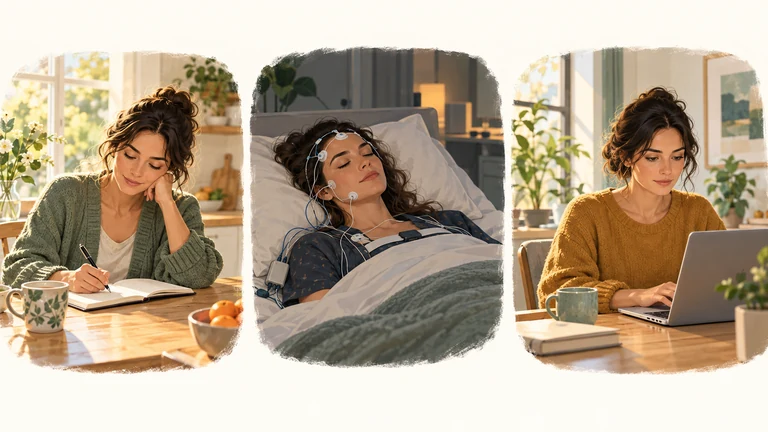
Yamadera and colleagues also studied 3 grams before bedtime in volunteers with ongoing complaints about sleep quality. They reported improved subjective sleep quality and sleep efficiency, along with shorter times to sleep onset and slow-wave sleep on polysomnography, a laboratory method that records sleep. Overall sleep architecture did not change. Reaching slow-wave sleep sooner is different from proving that a person gets more deep sleep throughout the night.
This study included objective measurements, which makes it useful alongside questionnaire-based research. However, a small early study cannot establish a dependable benefit for chronic insomnia, frequent nighttime awakenings, or all adult age groups. Its results also do not show that glycine is equivalent to prescribed sleep medication.
Next-day performance under sleep restriction in 2012
A randomized, single-blind crossover trial by Bannai and colleagues analyzed seven men without sleep complaints. For three nights, time in bed was reduced by 25%. Participants took 3 grams of glycine or placebo 30 minutes before bedtime. Fatigue ratings improved on the first day, but the subjective benefit was not maintained on the third. Reaction time on a vigilance task improved on both test days; other performance tasks did not show significant differences.
This was a very small, short experiment about daytime functioning after restricted sleep. It does not show that glycine restores lost sleep or allows someone to safely sleep less. Some researchers in this and the earlier trials were affiliated with Ajinomoto. That context reinforces the need for larger independent replications, alongside careful attention to study design.
How strong is the overall evidence?
A broad systematic review published online in 2023 in GeroScience judged sleep-related research in healthy adults to have small samples and a high overall risk of bias. It was not a sleep-specific meta-analysis providing a pooled estimate of benefit. That matters when interpreting a positive headline from an individual experiment.
A September 2026 scoping review searched the literature through July 9, 2026 and identified three trials of supplemental glycine with sleep-related outcomes. Each reported a benefit on at least one outcome. A scoping review maps the available literature; it does not by itself establish how large, consistent, or clinically meaningful the effect is. The review called for larger mechanistic trials with standardized sleep measures.
These are intervention studies, so they test a supplement rather than simply observing associations. Even so, the narrow populations, brief exposure, and methodological limitations constrain causal conclusions and generalization. The reasonable reading is preliminary promise, with substantial uncertainty.
What dose and timing have researchers used?
The often-quoted 3-gram amount comes from the small trials discussed here. The 2012 study used it 30 minutes before bedtime. This describes a research protocol, not a recommended dose for every reader. The trials do not establish an optimal amount, show that more works better, or determine how long someone should use glycine.
Is glycine the same as magnesium glycinate or collagen?
No. Free glycine, a magnesium compound bound to glycine, and collagen peptides are different preparations. A magnesium glycinate serving should not be assumed to reproduce a free-glycine trial. Likewise, evidence from a combined sleep formula cannot identify which ingredient caused a reported effect.
The 2026 scoping review also evaluated glycine availability from supplements and sleep-related research on collagen. Collagen contains glycine, but the authors noted that glycine's role in any collagen-related sleep effects had not been directly tested. Increased circulating glycine is a biological measurement, not proof of better sleep. Results for collagen therefore should not be treated as interchangeable with the free-glycine trials.
What should you consider before taking it?
The short sleep studies cannot establish the safety of nightly supplementation for months or years. They also do not provide a sufficient basis for self-directed use in children, pregnancy, breastfeeding, or people with significant health conditions. If you take medication or have a medical condition, discuss the specific product and amount with a clinician or pharmacist. Check the full label: a multi-ingredient blend requires a separate assessment.
Start by identifying the sleep problem you want to address. A brief sleep diary can help you describe bedtime, awakenings, and how you feel the following day. If you notice improvement after starting a supplement, that experience is useful to discuss, but it does not isolate the cause: schedule changes, expectations, and normal variation can also influence a night's sleep.
Keep glycine in perspective within sleep care
The National Heart, Lung, and Blood Institute recommends consistent sleep schedules, a quiet and comfortable sleep environment, and avoiding late caffeine and bright light before bed. These habits give you practical factors to review before focusing on a supplement. Glycine should not be used as a reason to shorten your sleep opportunity.
Persistent difficulty falling or staying asleep deserves assessment rather than an endless search for another bedtime ingredient. For chronic insomnia in adults, the American Academy of Sleep Medicine strongly recommends multicomponent cognitive behavioral therapy for insomnia (CBT-I). It advises against using sleep hygiene alone as the treatment. Glycine has not earned a comparable place in insomnia care.
The practical takeaway on glycine for sleep
Glycine is a reasonable subject for further sleep research. Current findings are too limited to promise better sleep, more deep sleep, or reliable relief from insomnia. Treat the studied dose as research context, consider the uncertainty around ongoing use, and keep established sleep care at the center of decisions about persistent symptoms.
Was this article helpful?
Your anonymous response helps improve our editorial coverage.
Loading feedback options…
Share
Share this article
Selected references
Recommended products

More from Planet Wellness Report
Continue Reading

Sleep
How to Improve Sleep Quality Naturally: What to Change First
Trouble settling, repeated awakenings, unrefreshing sleep, or weekend shifts? Identify the pattern and choose what to address first.
6 min read

Sleep
GABA for Sleep: Does Oral GABA Actually Improve Sleep?
Small oral GABA trials suggest possible sleep-onset effects, but other outcomes and brain-entry mechanisms remain uncertain.
8 min read

Sleep
Apigenin for Sleep: What Human Research Actually Shows
Apigenin’s sleep reputation draws heavily on chamomile and laboratory research. See what human studies tested, what remains uncertain, and how to read a blend label.
9 min read
Evidence
Sources
- Janjira Soh; Shivaanishaa Raventhiran; Jasinda H. Lee; Zi Xiang Lim; Jorming Goh; Brian K. Kennedy; Andrea B. Maier. The effect of glycine administration on the characteristics of physiological systems in human adults: A systematic review — GeroScience (Oct 18, 2023) · DOI
- Zhongqi Fan; John M. Nelson; Taylor C. Wallace. Glycine Bioavailability and Sleep-Related Outcomes Following Oral Glycine and Collagen Supplementation-A Scoping Review — Journal of Dietary Supplements (Sep 2, 2026) · DOI
- Kentaro Inagawa; Takenori Hiraoka; Tohru Kohda; Wataru Yamadera; Michio Takahashi. Subjective effects of glycine ingestion before bedtime on sleep quality — Sleep and Biological Rhythms (Feb 9, 2006) · DOI
- Wataru Yamadera; Kentaro Inagawa; Shintaro Chiba; Makoto Bannai; Michio Takahashi; Kazuhiko Nakayama. Glycine ingestion improves subjective sleep quality in human volunteers, correlating with polysomnographic changes — Sleep and Biological Rhythms (Mar 27, 2007) · DOI
- Makoto Bannai; Nobuhiro Kawai; Kaori Ono; Keiko Nakahara; Noboru Murakami. The Effects of Glycine on Subjective Daytime Performance in Partially Sleep-Restricted Healthy Volunteers — Frontiers in Neurology (Apr 18, 2012) · DOI
- Healthy Sleep Habits — National Heart, Lung, and Blood Institute (NHLBI), NIH (Mar 24, 2022)
- Jack D. Edinger; J. Todd Arnedt; Suzanne M. Bertisch; et al.. Behavioral and psychological treatments for chronic insomnia disorder in adults: an American Academy of Sleep Medicine clinical practice guideline — Journal of Clinical Sleep Medicine / American Academy of Sleep Medicine (Feb 1, 2021) · DOI