
COMPARISON
Magnesium vs Melatonin for Sleep: Which One Makes More Sense?
Magnesium and melatonin are both marketed for sleep, but they work differently, have different evidence, and make sense in different situations.
By Planet Wellness Report · Sep 23, 2026 · 13 min read
Editorial review and publication: Felipe Lopes, Publisher & Editor. This is an editorial review, not a medical review.
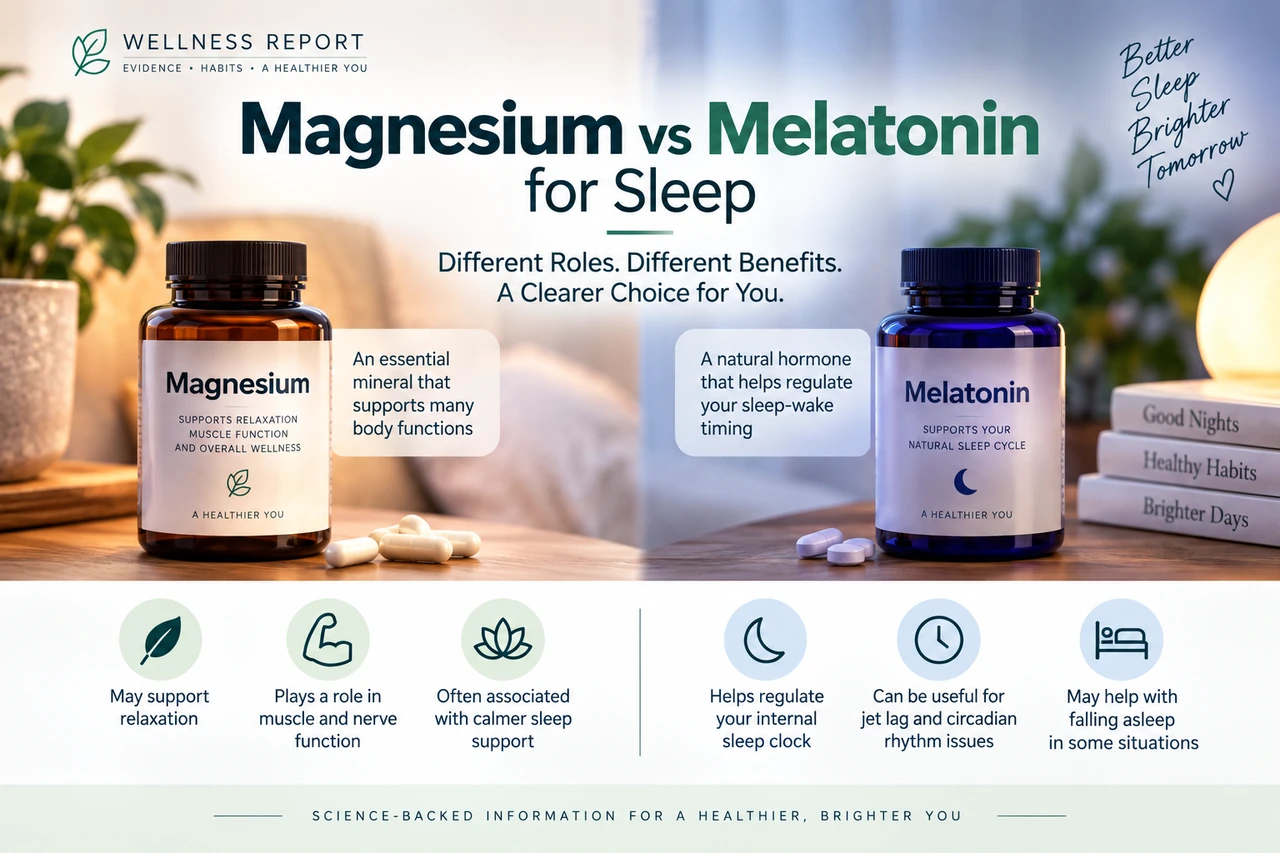
Side by side
Quick comparison
INGREDIENT
- Magnesium
An essential mineral involved in muscle and nerve function, energy production, and many processes related to relaxation and sleep.
- Melatonin
A naturally occurring hormone that helps regulate the sleep-wake cycle and signals to the body when it is time to prepare for sleep.
Magnesium vs Melatonin for Sleep: The Short Answer
Magnesium and melatonin are often sold for the same goal, but they are not two versions of the same sleep aid. Magnesium is an essential mineral involved in hundreds of physiological processes, including normal nerve and muscle function. Melatonin is a hormone that helps signal biological night and regulate circadian timing.
If circadian timing is part of the problem, such as jet lag or certain sleep-wake timing issues, melatonin has a clearer biological rationale and a more specific evidence base. Magnesium may help in some circumstances, particularly when intake or magnesium status is inadequate, but clinical trials of magnesium supplementation for sleep have produced mixed results.
Neither should be treated as a universal treatment for chronic insomnia. The better question is not which supplement is stronger, but what sleep problem you are actually trying to solve.
They Are Not Two Versions of the Same Sleep Aid
The most important difference between magnesium and melatonin starts with what they are. Magnesium is a mineral required for normal physiology throughout the body. Melatonin is a hormone produced by the body that communicates information about biological timing.
That distinction matters because a nutrient that participates in processes related to sleep is not automatically equivalent to a hormone whose primary physiological role includes signaling the sleep-wake cycle. Marketing often places both products on the same shelf, but their mechanisms and best-supported uses are different.
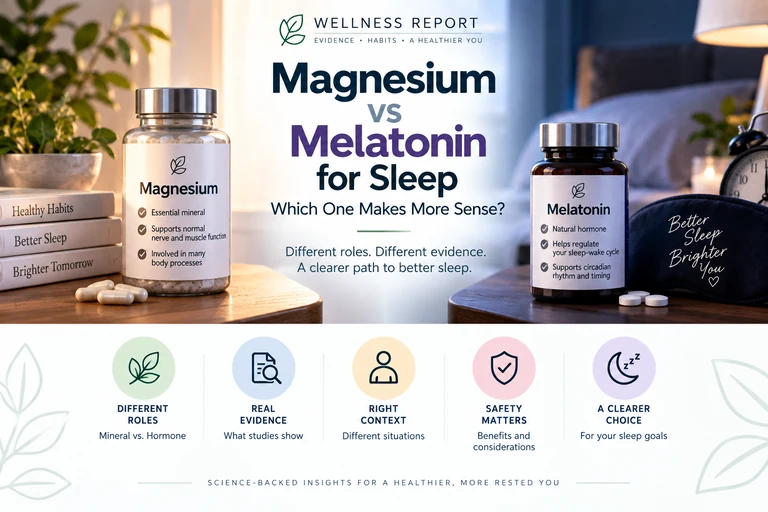
How Magnesium Relates to Sleep
Magnesium participates in normal nerve signaling, muscle function, energy metabolism, and many enzymatic reactions. Because these systems are involved in relaxation, neurological activity, and normal physiology, researchers have investigated whether magnesium supplementation can improve sleep.
The biological plausibility is real, but plausible does not mean proven. A 2026 systematic review of randomized controlled trials found inconsistent effects of oral magnesium supplementation on sleep outcomes, with overall certainty of evidence remaining low or very low for several measures.
Earlier research in older adults also suggested that magnesium might shorten the time it takes to fall asleep, but the evidence came from a small number of trials and participants. These findings are interesting, but they do not establish magnesium as a reliable treatment for insomnia in the general population.
Does Magnesium Help You Fall Asleep?
Possibly in some people, but the evidence is not strong enough to make that a general promise. Some trials have reported improvements in subjective sleep measures or sleep onset, while others have not found meaningful differences. Differences in magnesium form, dose, participant age, baseline magnesium status, and sleep problems make the literature difficult to generalize.
Does the Type of Magnesium Matter?
Different magnesium salts vary in elemental magnesium content, absorption characteristics, gastrointestinal tolerance, and formulation. However, claims that one particular form is universally superior for sleep often go beyond direct clinical evidence.
A study showing that magnesium glycinate, citrate, or another form is absorbed differently does not automatically prove that it produces better sleep. Bioavailability and sleep efficacy are related questions, but they are not the same question.
How Melatonin Relates to Sleep
Melatonin is fundamentally different. It is a hormone produced largely at night in response to the body's circadian system and environmental light-dark signals. Rather than simply sedating the brain, melatonin helps communicate that biological night has begun.
This is why timing matters so much. Taking melatonin at the wrong biological time can produce a different circadian effect than taking it at an appropriate time. The correct timing therefore depends partly on what the person is trying to accomplish.
Can Melatonin Help You Fall Asleep?
A systematic review and dose-response meta-analysis of randomized trials found that melatonin can reduce sleep onset latency and modestly increase total sleep time in studied populations. The effects varied with both dose and timing.
That is evidence of an effect, but not evidence that everyone with difficulty sleeping should take melatonin. Sleep-onset problems can arise from many causes, including insufficient sleep opportunity, stress, medications, sleep disorders, irregular schedules, and chronic insomnia.
Melatonin Makes the Most Sense When Timing Matters
Melatonin has a particularly clear role when the problem involves circadian timing. Jet lag is an obvious example. The CDC Yellow Book discusses carefully timed melatonin as one tool for shifting the circadian system during travel across time zones.
The same guidance also highlights an important limitation: melatonin taken at the wrong time can push the circadian system in an unwanted direction. That is one reason generic advice to take melatonin a fixed number of minutes before bed is not appropriate for every circadian problem.
Which Has Better Evidence for Falling Asleep?
For reducing the time it takes to fall asleep, melatonin currently has a clearer clinical evidence base than magnesium. Meta-analyses of melatonin trials have identified modest reductions in sleep onset latency, whereas magnesium trials have been fewer and more inconsistent.
However, a statistically measurable average effect is not the same as a dramatic effect for every individual. If difficulty falling asleep is caused by chronic insomnia, anxiety, sleep apnea, restless legs, medication effects, or an unsuitable sleep schedule, neither supplement necessarily addresses the underlying problem.
Which Is Better for Staying Asleep?
Neither magnesium nor standard immediate-release melatonin has strong enough evidence to be presented as a reliable universal solution for repeated nighttime awakenings. Maintaining sleep can be affected by many factors, including sleep disorders, alcohol, pain, medications, room conditions, stress, aging, and circadian timing.
If frequent awakenings are persistent, repeatedly adding supplements is less useful than identifying why sleep is being interrupted.
What About Chronic Insomnia?
This is where the comparison needs the most context. Chronic insomnia is not simply occasional difficulty sleeping. It is a clinical condition with established diagnostic criteria and evidence-based treatments.
The American Academy of Sleep Medicine guideline gives a weak recommendation against using melatonin for sleep-onset or sleep-maintenance insomnia in adults based on the evidence it reviewed. That does not mean melatonin has no biological effect or no legitimate uses. It means the evidence did not support recommending it as a treatment for chronic insomnia in that context.
Magnesium has even less consistent evidence for routine insomnia treatment. For persistent insomnia, behavioral approaches such as cognitive behavioral therapy for insomnia and appropriate clinical evaluation generally deserve more attention than choosing between supplements.
Magnesium vs Melatonin for Jet Lag
Melatonin is the more relevant option when the goal is circadian adjustment associated with jet lag. Its physiological role directly relates to biological timing, and travel-medicine guidance includes appropriately timed melatonin as part of jet-lag management.
Magnesium does not have an equivalent evidence base for shifting the circadian clock. Taking magnesium after crossing time zones may contribute to normal magnesium intake, but that is not the same as using a circadian signal to influence timing.
Magnesium vs Melatonin: Side-by-Side
What They Are
Magnesium: an essential mineral required for numerous normal physiological functions. Melatonin: a hormone involved in signaling circadian night and regulating sleep-wake timing.
Evidence for General Sleep Improvement
Magnesium: limited and inconsistent clinical evidence, with low certainty for several sleep outcomes. Melatonin: more randomized-trial evidence for modest effects on sleep onset and total sleep time, although results depend on context, dose, and timing.
Circadian Timing and Jet Lag
Magnesium: no established role as a circadian phase-shifting intervention. Melatonin: directly relevant to circadian timing and used in appropriately timed strategies for jet lag and some circadian sleep-wake situations.
Chronic Insomnia
Neither should be presented as a first-line universal treatment. Evidence for magnesium remains insufficient for routine insomnia treatment, and the AASM guideline does not recommend melatonin for chronic sleep-onset or sleep-maintenance insomnia in adults.
Safety and Side Effects
Magnesium from food is generally safe in healthy people. Supplemental magnesium can cause diarrhea, nausea, and abdominal cramping, particularly at higher supplemental doses or with forms that have stronger gastrointestinal effects. People with impaired kidney function can be at greater risk of accumulating excessive magnesium.
Magnesium supplements can also interact with certain medications, including some antibiotics and osteoporosis medications, because they can interfere with absorption when taken too close together.
Melatonin may cause effects such as daytime drowsiness, headache, dizziness, or vivid dreams in some people. It can also interact with medications and may not be appropriate for everyone. Product quality and actual melatonin content can vary among dietary supplements.
Pregnancy, breastfeeding, chronic medical conditions, kidney disease, use of prescription medications, and use in children are situations where individualized professional guidance becomes particularly important.
Can You Take Magnesium and Melatonin Together?
There is no general biological rule that makes magnesium and melatonin incompatible, and some commercial sleep products combine them. But combining two ingredients does not prove that the combination works better than either one alone.
Whether taking both makes sense depends on why each ingredient is being used, the doses, other medications or supplements, underlying health conditions, and the sleep problem itself. If melatonin is being used for circadian timing, adding magnesium does not automatically improve that circadian effect.
Who May Not Need Either?
Many occasional sleep problems are better addressed by changing the circumstances around sleep. Irregular schedules, late caffeine, alcohol, excessive evening stimulation, insufficient sleep opportunity, stress, and an uncomfortable sleep environment can all interfere with sleep without requiring a supplement.
If the problem is simply that you are not allowing enough time for sleep, neither magnesium nor melatonin can replace those missing hours. Likewise, repeatedly adding supplements to persistent insomnia can delay recognition of a sleep disorder or another underlying problem.
So Which One Makes More Sense?
For a clearly circadian problem, melatonin generally makes more sense because its physiological role directly involves sleep-wake timing. For someone with inadequate magnesium intake or deficiency, correcting magnesium status makes nutritional sense, although that is different from using magnesium as a general sleep treatment.
For ordinary chronic insomnia, neither supplement should automatically be the starting point. Understanding the sleep pattern, schedule, behaviors, medical history, and possible sleep disorders is more important than choosing which bottle has the stronger sleep marketing.
The Bottom Line
Magnesium and melatonin can both be connected to sleep, but for very different reasons. Magnesium is an essential nutrient with plausible links to sleep physiology and some positive clinical findings, yet supplementation evidence remains inconsistent. Melatonin is a circadian hormone with clearer evidence for influencing sleep timing and modest effects on sleep onset in some contexts.
That does not make melatonin universally better. It makes it more specifically suited to certain problems, particularly those involving timing. If sleep problems are persistent, severe, or unexplained, identifying the cause is more useful than repeatedly switching between sleep supplements.
Was this article helpful?
Your anonymous response helps improve our editorial coverage.
Loading feedback options…
Share
Share this article
Selected references
Recommended products
 Magnesium Breakthrough
Regular seven-form magnesium capsule supplement: 500 mg elemental magnesium per two capsules, with individual form contributions undisclosed. Dose suitability and other magnesium sources matter more than the number of forms.
View product details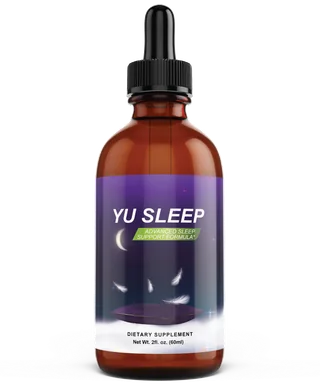 Yu Sleep
Liquid formula with owner-confirmed 0.9 mg melatonin per 2 mL serving and a 637 mg proprietary blend. The individual amounts of its seven blend ingredients are undisclosed.
View product details
More from Planet Wellness Report
Continue Reading

Sleep
How to Improve Sleep Quality Naturally: What to Change First
Trouble settling, repeated awakenings, unrefreshing sleep, or weekend shifts? Identify the pattern and choose what to address first.
6 min read

Sleep
Yu Sleep Review: A Known Melatonin Dose Inside an Undisclosed Blend
Yu Sleep’s owner-confirmed formula provides 0.9 mg melatonin in a 2 mL serving, plus a 637 mg blend whose seven ingredient amounts are hidden. Its liquid format is a preference feature; the disclosure cannot establish how much magnesium, theanine, apigenin, GABA or other blend constituents a serving supplies.
10 min read
Sleep
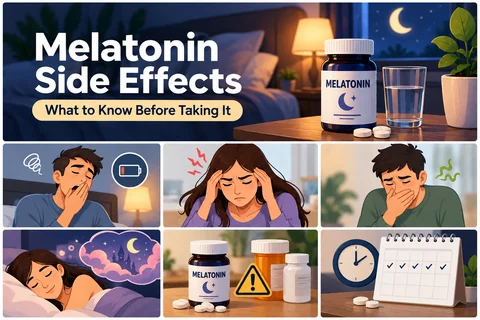
Melatonin Side Effects: What to Know Before Taking It
Learn about common melatonin side effects, next-day drowsiness, medication interactions, long-term safety, timing, and when it may be worth talking with a healthcare professional.
13 min read
Evidence
Sources
- Adrian L. Lopresti, Stephen J. Smith, Peter D. Drummond. Magnesium Supplementation for Sleep in Adults: A Systematic Review of Randomized Controlled Trials — Journal of Dietary Supplements / Taylor & Francis (Aug 28, 2026) · DOI
- Jasmine Mah, Tyler Pitre. Oral magnesium supplementation for insomnia in older adults: a Systematic Review & Meta-Analysis — BMC Complementary Medicine and Therapies (Apr 17, 2021) · DOI
- Magnesium Bisglycinate Supplementation in Healthy Adults Reporting Poor Sleep: A Randomized, Placebo-Controlled Trial — Nature and Science of Sleep (Jan 2, 2025)
- Magnesium — Health Professional Fact Sheet — NIH Office of Dietary Supplements (Jan 6, 2026)
- Healthy Sleep Habits — National Heart, Lung, and Blood Institute (NHLBI), NIH (Mar 24, 2022)
- Tracey L. Sletten, Matthew D. Weaver, Russell G. Foster, David Gozal, Elizabeth B. Klerman, Shantha M. W. Rajaratnam, Till Roenneberg, Joseph S. Takahashi, Fred W. Turek, Michael V. Vitiello, Michael W. Young, Charles A. Czeisler. The Importance of Sleep Regularity: A Consensus Statement of the National Sleep Foundation Sleep Timing and Variability Panel — Sleep Health / Elsevier (Dec 1, 2023) · DOI
- Francy Cruz-Sanabria, Simone Bruno, Alessio Crippa, Paolo Frumento, Marco Scarselli, Debra J. Skene, Ugo Faraguna. Optimizing the Time and Dose of Melatonin as a Sleep-Promoting Drug: A Systematic Review of Randomized Controlled Trials and Dose-Response Meta-Analysis — Journal of Pineal Research (Aug 1, 2024) · DOI
- Michael J. Sateia, Daniel J. Buysse, Andrew D. Krystal, David N. Neubauer, Jonathan L. Heald. Clinical Practice Guideline for the Pharmacologic Treatment of Chronic Insomnia in Adults: An American Academy of Sleep Medicine Clinical Practice Guideline — Journal of Clinical Sleep Medicine / American Academy of Sleep Medicine (Feb 15, 2017) · DOI
- Jet Lag Disorder — Centers for Disease Control and Prevention (CDC) Yellow Book