
COMPARISON
Plant Protein vs Animal Protein for Muscle: Amino Acids, Digestibility, and Real-World Results
A source-by-source look at composition, short-term synthesis and training outcomes, without assigning a universal winner.
By Planet Wellness Report · Oct 15, 2026 · 9 min read
Editorial review and publication: Felipe Lopes, Publisher & Editor. This is an editorial review, not a medical review.
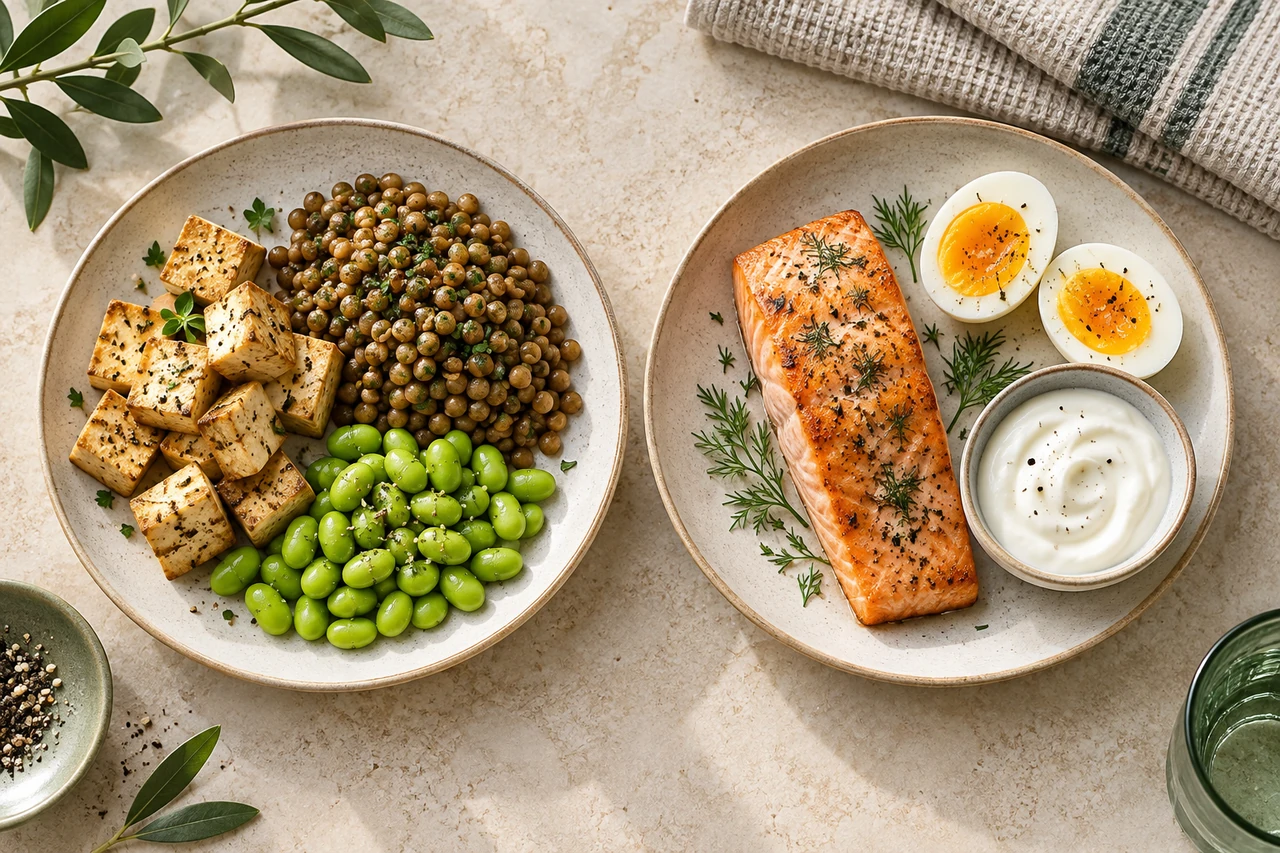
Side by side
Quick comparison
Editorial concepts
- Plant Protein
Protein from plant-based foods and ingredients, including legumes, grains, soy, peas, nuts, seeds, isolates, and blends.
- Animal Protein
Protein from animal-derived foods and ingredients, including dairy, eggs, meat, and fish.
Plant and animal protein sources can both support muscle. The useful comparison is not a single winner: it is how much protein and indispensable amino acids a food delivers, how well those amino acids are digested, and what human studies show under particular training and dietary conditions.
Some evidence favors animal proteins for certain muscle outcomes, while other studies find similar responses with soy, pea or formulated plant blends. The differences depend on the source, dose, population and outcome. Neither a higher protein-quality score nor a larger response over a few hours automatically proves greater muscle growth over months.
Quick comparison: the criteria that matter
Essential amino-acid profile: many commonly eaten animal proteins provide a favorable balance relative to human requirements. Plant sources vary widely; a relatively low amount of one amino acid can be addressed through source selection, quantity and complementary foods. Most plant proteins contain all nine EAAs, so incomplete should not be used as a binary synonym for missing amino acids.
Leucine: whey is a concentrated source, but plant proteins also supply leucine. Equal grams of two proteins need not supply equal leucine or equal total EAAs. Matching protein dose, matching leucine and matching all digestible EAAs are three different experimental comparisons.
Digestibility and food matrix: dairy proteins and many other animal proteins are well digested; whole plant foods may have structural features that affect access to protein. Isolates, concentrates and cooking change that comparison. A pea isolate should not be treated as nutritionally identical to a bowl of whole peas.
Typical volume: whole legumes, grains, nuts and seeds can require more food volume or accompanying energy to supply the same protein as a concentrated source. Tofu, other soy foods and isolates offer different options. Animal foods also vary in protein density; cheese, fish, eggs and yogurt are not equivalent portions.
Fiber and micronutrients: whole plant foods often bring fiber, while animal foods bring a different nutrient package. An isolated powder does not reproduce either whole-food matrix. These differences matter to diet planning, but they do not determine a muscle-study result by themselves.
Convenience and dietary suitability: plant powders and dairy powders can both make a protein-containing meal easier to assemble. Plant options suit vegan diets; dairy, eggs, fish and meat suit dietary patterns that include them. Taste, tolerability, allergies, budget and cultural preferences influence which approach can be sustained.
Acute MPS evidence: several studies find similar responses from selected plant isolates or blends and dairy proteins at the studied doses; others favor dairy under particular conditions. Training evidence: some pooled muscle-mass results favor animal protein slightly, but strength findings and adequately supported training studies do not justify one universal ranking.
What counts as plant protein—and animal protein?
Plant protein includes whole legumes such as lentils and beans, soy foods, peas, grains, nuts and seeds, as well as extracted isolates and blends. These sources differ in amino-acid composition, digestibility, energy density and serving practicality. A blend can be formulated to complement amino-acid patterns, but the word blend does not establish what it supplies.
Animal protein includes whey and casein from dairy, eggs, meat and fish. They also differ in digestion, food matrix and nutrients beyond protein. Even the animal category has exceptions: collagen is not an interchangeable muscle-building substitute for a protein supplying a balanced indispensable amino-acid pattern. Category labels are a starting point, not a complete nutritional analysis.
Amino acids and digestibility: compare what is delivered
Muscle protein synthesis requires amino-acid building materials. Leucine contributes to the signaling response, but it cannot replace the other EAAs. The combination of amount, composition and availability matters more than a plant or animal label. For the mechanism in detail, see leucine and muscle protein synthesis.
Protein-quality scores help characterize that supply, but are not hypertrophy scores. PDCAAS uses an overall fecal digestibility correction; DIAAS uses indispensable amino-acid-specific ileal digestibility. Read protein quality explained for reference patterns, limiting amino acids and why the two numbers cannot be exchanged.
Whole meals require particular care in interpretation. Food structure and processing influence digestion, and multiple proteins can contribute complementary amino acids. A study of a single powder in water answers a narrower question than a study of a varied dietary pattern. More protein or a different blend may change an experimental result; it does not create a universal dose adjustment for every plant-based eater.
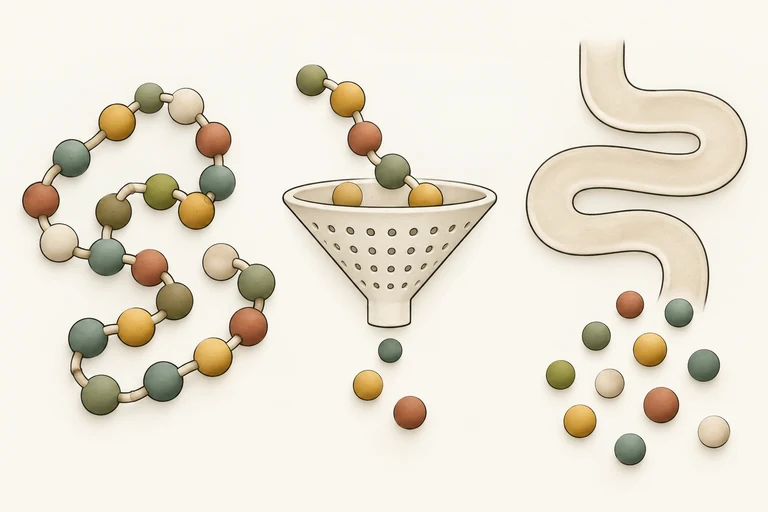
Acute muscle protein synthesis: what recent studies show
A 2026 systematic review by Mendes and colleagues included 12 studies of plant versus animal protein and MPS. The overall point estimate slightly favored animal proteins, but the credible interval included no difference and uncertainty was substantial. Most animal-protein data came from milk-based sources. The review searched through October 2024, so its publication date should not be mistaken for evidence that it included every later experiment.
In a 2024 trial by Pinckaers and colleagues, 24 young men received 30 grams of pea-derived or milk-derived protein. Milk produced greater circulating EAA availability, but the investigators did not detect a difference in MPS during the five-hour observation period. This demonstrates why a blood amino-acid response and a muscle synthesis response should not be assumed to be interchangeable.
A separate 2024 crossover study by van der Heijden and colleagues tested 32 grams of whey against a pea, brown-rice and canola protein blend in 10 resistance-trained young adults after exercise. Both increased myofibrillar protein synthesis, with no detected difference over four hours, despite greater plasma EAA availability with whey. The blend’s formulation and studied dose matter; this is not proof that every plant powder works identically.
These are small studies of selected participants, with measurements over hours. No detected difference does not establish exact equivalence for every dose, age or food. Neither study measured months of hypertrophy. The tested gram amounts describe the experiments and are not personal serving recommendations.
Muscle mass and strength over time: a more mixed picture
Reid-McCann and colleagues’ 2025 review found 43 eligible randomized trials, with 30 contributing to the muscle-mass meta-analysis. Pooled results showed a small advantage for animal protein for muscle mass. The soy-versus-milk subgroup did not show a clear difference; some non-soy and dietary-pattern subgroups favored animal sources. Strength and physical performance did not show significant pooled differences.
Those results should neither be erased by a favorable individual plant-protein trial nor expanded into a rule that all animal foods outperform all plant foods. The sources, populations and protocols varied, and the review did not establish prevention or treatment of sarcopenia as a trial outcome. Small source subgroups are less secure foundations for broad advice.
A 2026 meta-analysis by Yimam and colleagues focused on supplementation lasting at least six months. It included 18 trials and 1,893 adults, with plant interventions largely based on soy. It found no statistically significant pooled differences in lean body mass, strength or physical performance compared with animal supplementation. Heterogeneity and the emphasis on soy limit generalization to other plant proteins. Several authors had Danone research affiliations, which should be considered alongside the methods and results.
The reviews ask different questions: a broad set of muscle-health interventions is not the same as longer-duration, mostly soy supplementation. They support a nuanced conclusion, rather than canceling each other out. A null pooled result does not prove that every source and dietary pattern is equivalent.
What happens when protein intake and training are supported?
In a 12-week study by Hevia-Larraín and colleagues, 19 habitual vegans and 19 omnivores completed supervised resistance training with total protein adjusted to about 1.6 grams per kilogram per day using soy or whey supplements. Both groups improved, without detected between-group differences in the measured muscle and strength outcomes. Importantly, people were grouped by habitual diet; the dietary pattern itself was not randomly assigned.
The finding shows that a carefully supported plant-based pattern can work in young, previously untrained men. It does not prove that matching total protein automatically erases all source differences, or that everyone needs the research intake. In comparisons, check whether total protein, energy, training adherence and amino-acid supply were actually matched instead of assuming they were.
For muscle gain, progressive resistance training and sufficient overall nutrition remain the foundation. Protein source is one contributor to that system. Our daily protein guide covers quantity, and protein timing and muscle recovery explains why a precise clock does not replace adequate intake.
Older adults need a separate look
Older muscle can be less responsive to a given protein feeding, a pattern called anabolic resistance. Low appetite and limited food volume can also make adequate intake harder. The 2026 MPS review found a modest animal-protein advantage in adults aged 65 and older, although limited studies and imprecision constrain the conclusion. That surrogate result is not proof of superior long-term strength or mass.
A 2024 trial in 31 older men compared a baseline controlled diet with a week of additional whey, pea or collagen protein. Integrated myofibrillar synthesis increased from baseline with whey and pea, but not collagen. This was a short synthesis study, not a hypertrophy trial, and it compared supplementation with the preceding dietary phase. It reinforces the need to examine the particular amino-acid supply rather than treat every animal or plant protein as identical.
Total intake, per-meal protein and EAA availability may therefore deserve more deliberate attention in later life. These considerations do not justify a single dose for all older readers. Frailty, kidney disease, swallowing difficulties or unintended weight loss call for individualized nutrition advice.
Complementary plant proteins without rigid meal rules
A varied plant-based diet can combine amino-acid contributions across foods. Legumes and grains often complement one another; soy foods and suitable isolates can provide concentrated options. For healthy adults with adequate energy and varied intake, complementary proteins do not always have to be paired at the same meal. A low-intake or highly restricted pattern requires more attention than this general principle implies.
You can still build a muscle-focused meal deliberately without following a mandatory rice-and-beans rule. The practical issue is whether meals and the overall diet supply enough usable protein. Free-form EAA supplements are a separate format and do not replace a complete dietary pattern; see protein vs. essential amino acids.
Which approach makes more sense for you?
If you eat an omnivorous diet, choose a sustainable mix of protein-containing foods and consider what the whole diet supplies. There is no need to replace every plant source with whey or meat because of a laboratory score. If you eat mostly plant-based, pay attention to protein-rich foods, variety and a practical volume of food rather than relying only on small portions of nuts or grains.
If convenience matters, an isolate or powder can help fill a real gap. Check the protein per serving, ingredients, allergen information and whether the product fits your eating pattern. Dairy allergy, soy allergy and digestive tolerance can change the choice. An animal-versus-plant label does not substitute for those checks.
If muscle gain is the goal, use an approach you can sustain alongside consistent training and adequate energy. This comparison concerns muscle and nutritional practicality; it does not rank diets for mortality, cardiovascular disease or sustainability. Those questions require separate evidence.
A practical conclusion without a universal winner
Animal sources often offer concentrated, well-digested EAAs, while well-chosen plant foods and isolates can also support muscle-related outcomes. Some pooled muscle-mass evidence favors animal protein slightly; other longer-term and source-specific comparisons find no clear difference. Choose and evaluate the particular food, formulation and dietary context. Acute MPS, lean mass and strength each answer a different question.
Was this article helpful?
Your anonymous response helps improve our editorial coverage.
Loading feedback options…
Share
Share this article
Selected references
Recommended products
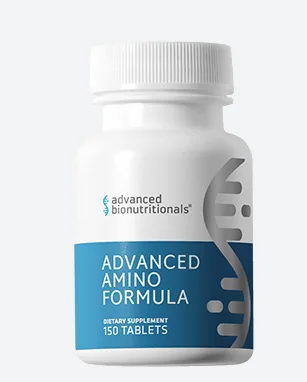 Advanced Amino Formula
A dietary supplement from Advanced Bionutritionals combining eight essential amino acids to support protein intake, muscle health, physical performance, and recovery.
View product details Advanced Muscle Plus
A formula containing DL185 dileucine, calcium HMB monohydrate (myHMB), vitamin D, and calcium, marketed for muscle health and recovery. Ingredient research and manufacturer claims are distinct from finished-product evidence.
View product details
More from Planet Wellness Report
Continue Reading
Nutrition
Advanced Amino Formula Review: Ingredients, Evidence, and Value
Advanced Amino Formula reviewed: five-tablet serving, eight-amino-acid blend, undisclosed leucine dose, missing histidine, research context, and purchase value.
8 min read

Nutrition
Leucine and Muscle Protein Synthesis: What the Research Actually Shows
Leucine helps regulate muscle protein synthesis. Learn what human trials show about thresholds, protein context, exercise, age, and long-term outcomes.
6 min read

Nutrition
BCAA vs. EAA: Comparing Muscle Protein Synthesis, Recovery, and Practical Use
BCAAs are part of the EAA family. Compare amino acid completeness, muscle protein synthesis, soreness, and practical use without assuming a universal winner.
7 min read
Evidence
Sources
- Reid-McCann RJ, Brennan SF, Ward NA, Logan D, McKinley MC, McEvoy CT.. Effect of Plant Versus Animal Protein on Muscle Mass, Strength, Physical Performance, and Sarcopenia: A Systematic Review and Meta-analysis of Randomized Controlled Trials — Nutrition reviews (Jul 1, 2025) · DOI
- Yimam MA, Roberts J, O'Callaghan A, Holwerda A, Cassidy Y, Luiking Y, Van Helvoort A, Muscaritoli M.. Long-term effects of plant vs. animal protein supplementation on body composition, muscle strength, physical performance, and cardiometabolic risk factors in adults:a systematic review and meta-analysis of randomized controlled trials — Frontiers in nutrition (Apr 1, 2026) · DOI
- Mendes BR, Correia JM, Dos Santos IR, Schoenfeld BJ, Swinton PA, de Mendonca GV.. Effects of Plant- vs Animal-Based Proteins on Muscle Protein Synthesis: A Systematic Review With Meta-Analysis — Journal of the Academy of Nutrition and Dietetics (Apr 27, 2026) · DOI
- Pinckaers PJM, Smeets JSJ, Kouw IWK, Goessens JPB, Gijsen APB, de Groot LCPGM, Verdijk LB, van Loon LJC, Snijders T.. Post-prandial muscle protein synthesis rates following the ingestion of pea-derived protein do not differ from ingesting an equivalent amount of milk-derived protein in healthy, young males — European journal of nutrition (Jan 16, 2024) · DOI
- VAN DER Heijden I, Monteyne AJ, West S, Morton JP, Langan-Evans C, Hearris MA, Abdelrahman DR, Murton AJ, Stephens FB, Wall BT.. Plant Protein Blend Ingestion Stimulates Postexercise Myofibrillar Protein Synthesis Rates Equivalently to Whey in Resistance-Trained Adults — Medicine and science in sports and exercise (Mar 23, 2024) · DOI
- McKendry J, Lowisz CV, Nanthakumar A, MacDonald M, Lim C, Currier BS, Phillips SM.. The effects of whey, pea, and collagen protein supplementation beyond the recommended dietary allowance on integrated myofibrillar protein synthetic rates in older males: a randomized controlled trial — The American journal of clinical nutrition (May 16, 2024) · DOI
- Hevia-Larraín V, Gualano B, Longobardi I, Gil S, Fernandes AL, Costa LAR, Pereira RMR, Artioli GG, Phillips SM, Roschel H.. High-Protein Plant-Based Diet Versus a Protein-Matched Omnivorous Diet to Support Resistance Training Adaptations: A Comparison Between Habitual Vegans and Omnivores — Sports medicine (Auckland, N.Z.) (Feb 18, 2021) · DOI
- FAO Expert Consultation on Protein Quality Evaluation in Human Nutrition. Dietary Protein Quality Evaluation in Human Nutrition: Report of an FAO Expert Consultation — Food and Agriculture Organization of the United Nations
- François Mariotti; Christopher D. Gardner. Dietary Protein and Amino Acids in Vegetarian Diets: A Review — Nutrients (Nov 4, 2019) · DOI
- Protein in diet — MedlinePlus / U.S. National Library of Medicine
- Robert W. Morton; Kevin T. Murphy; Sean R. McKellar; Brad J. Schoenfeld; Menno Henselmans; Eric Helms; Alan A. Aragon; Michaela C. Devries; Laura Banfield; James W. Krieger; Stuart M. Phillips. A Systematic Review, Meta-analysis and Meta-regression of the Effect of Protein Supplementation on Resistance Training-Induced Gains in Muscle Mass and Strength in Healthy Adults — British Journal of Sports Medicine (Mar 1, 2018) · DOI
- Kiera Wilkinson; Christopher P. Koscien; Alistair J. Monteyne; Benjamin T. Wall; Francis B. Stephens. Association of Postprandial Postexercise Muscle Protein Synthesis Rates With Dietary Leucine: A Systematic Review — Physiological Reports (Aug 1, 2023) · DOI