
ARTICLE
Leucine and Muscle Protein Synthesis: What the Research Actually Shows
How to interpret leucine thresholds, acute experiments, and the need for a complete amino-acid supply.
By Planet Wellness Report · Oct 11, 2026 · 6 min read
Editorial review and publication: Felipe Lopes, Publisher & Editor. This is an editorial review, not a medical review.

Leucine attracts attention because it helps regulate the cellular machinery involved in muscle protein synthesis. That is a real biological role, but the popular idea of a switch that automatically builds muscle leaves out the supply of other amino acids, the meal, exercise, and what researchers actually measured.
Human studies show that adding leucine can change an acute muscle response in some circumstances. They do not establish that more leucine always produces more synthesis, that one threshold fits everyone, or that a short-lived response guarantees greater muscle mass months later. The useful question is what was limiting the response in the experiment.
What leucine contributes to muscle protein synthesis
Leucine is one of the nine dietary essential amino acids and one of the three branched-chain amino acids. It is incorporated into proteins and influences signaling through pathways that include mTORC1, which helps regulate protein production. Our L-leucine ingredient hub explains its place in the amino-acid family; this article focuses on interpreting human experiments.
Signaling and construction are related but different. Activating a pathway does not supply every building block needed to assemble a new protein. The body draws on available amino acids from food and existing pools, so the response to leucine cannot be separated from that background. The essential amino acids guide covers why all nine matter.

What human muscle studies actually measure
Many acute experiments use labeled amino-acid tracers and muscle biopsies to estimate how rapidly amino acids are incorporated into muscle proteins over several hours. Myofibrillar protein synthesis concerns proteins involved in contraction. A blood leucine peak measures availability in circulation; a signaling measurement describes regulatory activity. Neither is interchangeable with directly measuring synthesis.
Even measured synthesis is one side of protein turnover. Long-term muscle size also reflects breakdown, repeated training, food intake, and recovery. A trial measuring a few hours after a drink cannot answer whether that drink improves strength, reduces soreness, or increases muscle mass after a training program. Check the endpoint before translating a headline into a practical promise.
The leucine threshold is a hypothesis, not a universal target
The threshold idea proposes that enough ingested leucine helps stimulate the meal-related synthesis response. The trigger hypothesis instead emphasizes the rise in blood leucine. These are related explanations, not a single validated number. A 2021 systematic review found support in 16 of 29 studies, predominantly in older adults and experiments using isolated proteins; whole-food responses were less consistently explained by blood leucine alone.
A 2023 systematic review of postexercise studies linked ingested leucine dose with synthesis responses in older adults, but did not identify a threshold in that group. No single blood leucine variable strongly predicted the response. A rule such as hitting exactly three grams at every meal therefore claims more precision than this evidence provides.
Why apparently similar trials can produce different answers
In a 2012 experiment, young men received 25 g of whey or 6.25 g of whey supplemented with leucine or other essential amino acids. Early responses were similar, but only the larger whey dose maintained a significant postexercise elevation during the later measurement period. The background protein and observation window mattered; this was not leucine alone compared with eating nothing.
A 2014 randomized trial used mixed-macronutrient beverages and different leucine amounts. A low-protein drink containing 6.25 g of whey and 5 g of total leucine produced an acute response comparable to the 25 g whey drink. That does not erase the earlier result: preparations, doses, and measurement periods differed. Nor does it establish that five grams of isolated leucine replaces a protein-rich diet.
Does more leucine always mean more synthesis?
No. The experiments show that a response depends on the starting meal and experimental setting. Extra leucine may matter when the amino-acid stimulus is limited, but cannot be assumed to improve an already adequate response indefinitely. A larger blood peak is also not proof that more amino acids become new muscle protein. Treat doses as descriptions of experiments, not personal prescriptions.
This is why a supplement ratio or the position of leucine first in a blend is insufficient. You need the actual leucine amount, total essential-amino-acid composition, background protein, and relevant comparator. If quantities are undisclosed, the preparation cannot be confidently matched to a trial.
Leucine alone, EAA mixtures, and complete protein
An isolated leucine supplement supplies one amino acid; BCAA mixtures supply three. A full EAA mixture supplies all nine indispensable amino acids, and a complete dietary protein can deliver them alongside other amino acids. These are different interventions. The BCAA versus EAA comparison addresses their composition and outcome-specific evidence rather than treating every amino formula as complete.
An intact protein meal also has a food matrix and a digestion pattern. Its effect cannot be predicted from leucine grams alone. Faster delivery, a smaller serving volume, or stronger signaling may be useful properties in particular settings without proving superior muscle outcomes. Our protein versus essential amino acids guide examines that separate format decision.
Older adults and resistance exercise change the context
Anabolic resistance describes a reduced muscle response to a given nutritional stimulus in some older or clinical populations. It does not mean muscle cannot respond. In a graded-whey study in older men, the exercised leg responded more strongly to 40 g than 20 g of whey. This was a complete-protein experiment, not evidence for the same amount of free leucine or an unspecified blend.
Longer-term outcomes remain a separate question. A 2022 meta-analysis found no significant improvements in total lean mass, handgrip strength, or leg press with isolated leucine in older adults. Some combined formulations improved other outcomes, so their results cannot be assigned to leucine alone.
A 2026 review found possible strength and function benefits when varied amino-acid-based supplements accompanied resistance training in adults with sarcopenia, with low to very low certainty and no significant improvement in the pooled muscle-mass measures. It included different supplements and co-nutrients. It does not predict what a particular leucine product will do for a healthy younger lifter.
A practical way to interpret the evidence
Start with the meal and the day rather than a leucine target. Assess total daily protein, whether regular meals supply varied protein, and whether progressive resistance exercise is appropriate. For the timing question, see protein timing and muscle recovery. Neither an ideal clock time nor an isolated amino acid corrects inadequate overall nutrition.
If comparing supplements, Advanced Amino Formula is a related tablet-format option, not a studied leucine dose. The label reviewed here lists 5 g of an eight-amino-acid blend per five tablets, omits histidine, and does not disclose individual amounts. It cannot be equated with a full nine-EAA preparation, the high-leucine drink above, or a serving of complete protein. The Advanced Amino Formula review examines this purchase decision separately.
Leucine is an important part of a coordinated nutritional response. The strongest practical interpretation is to distinguish the signal, the available building materials, and the measured outcome. For medical conditions or difficulty maintaining adequate intake, individualized advice is more useful than increasing a research dose on your own. A supplement remains optional, and an acute response remains a different finding from lasting muscle gain.
Was this article helpful?
Your anonymous response helps improve our editorial coverage.
Loading feedback options…
Share
Share this article
Selected references
Recommended products
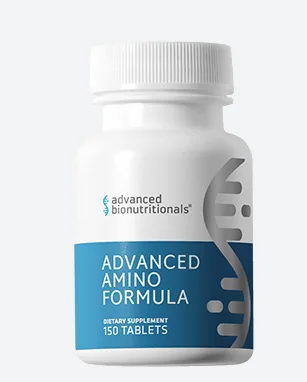 Advanced Amino Formula
A dietary supplement from Advanced Bionutritionals combining eight essential amino acids to support protein intake, muscle health, physical performance, and recovery.
View product details Advanced Muscle Plus
A formula containing DL185 dileucine, calcium HMB monohydrate (myHMB), vitamin D, and calcium, marketed for muscle health and recovery. Ingredient research and manufacturer claims are distinct from finished-product evidence.
View product details
More from Planet Wellness Report
Continue Reading

Nutrition
BCAA vs. EAA: Comparing Muscle Protein Synthesis, Recovery, and Practical Use
BCAAs are part of the EAA family. Compare amino acid completeness, muscle protein synthesis, soreness, and practical use without assuming a universal winner.
7 min read
Nutrition
Essential Amino Acids: What They Are, Why They Matter, and Food Sources
Essential amino acids must come from the diet, but that does not mean everyone needs a supplement. Learn how EAAs relate to protein, BCAAs, food quality, muscle protein synthesis, and exercise recovery.
12 min read
Nutrition
Advanced Amino Formula Review: Ingredients, Evidence, and Value
Advanced Amino Formula reviewed: five-tablet serving, eight-amino-acid blend, undisclosed leucine dose, missing histidine, research context, and purchase value.
8 min read
Evidence
Sources
- Institute of Medicine; Food and Nutrition Board. Dietary Reference Intakes for Energy, Carbohydrate, Fiber, Fat, Fatty Acids, Cholesterol, Protein, and Amino Acids — National Academies Press · DOI
- Zaromskyte G, Prokopidis K, Ioannidis T, Tipton KD, Witard OC.. Evaluating the Leucine Trigger Hypothesis to Explain the Post-prandial Regulation of Muscle Protein Synthesis in Young and Older Adults: A Systematic Review — Frontiers in nutrition (Jul 8, 2021) · DOI
- Kiera Wilkinson; Christopher P. Koscien; Alistair J. Monteyne; Benjamin T. Wall; Francis B. Stephens. Association of Postprandial Postexercise Muscle Protein Synthesis Rates With Dietary Leucine: A Systematic Review — Physiological Reports (Aug 1, 2023) · DOI
- Churchward-Venne TA, Burd NA, Mitchell CJ, West DW, Philp A, Marcotte GR, Baker SK, Baar K, Phillips SM.. Supplementation of a suboptimal protein dose with leucine or essential amino acids: effects on myofibrillar protein synthesis at rest and following resistance exercise in men — The Journal of physiology (Mar 25, 2012) · DOI
- Churchward-Venne TA, Breen L, Di Donato DM, Hector AJ, Mitchell CJ, Moore DR, Stellingwerff T, Breuille D, Offord EA, Baker SK, Phillips SM.. Leucine supplementation of a low-protein mixed macronutrient beverage enhances myofibrillar protein synthesis in young men: a double-blind, randomized trial — The American journal of clinical nutrition (Nov 27, 2013) · DOI
- Yang Y, Breen L, Burd NA, Hector AJ, Churchward-Venne TA, Josse AR, Tarnopolsky MA, Phillips SM.. Resistance exercise enhances myofibrillar protein synthesis with graded intakes of whey protein in older men — The British journal of nutrition (Feb 7, 2012) · DOI
- Guo Y, Fu X, Hu Q, Chen L, Zuo H.. The Effect of Leucine Supplementation on Sarcopenia-Related Measures in Older Adults: A Systematic Review and Meta-Analysis of 17 Randomized Controlled Trials — Frontiers in nutrition (Jul 1, 2022) · DOI
- Chengfu Xie; Ruixiang Yan; Ran Tao. Combined resistance training and amino acid-based supplementation for sarcopenia in older adults: a systematic review and meta-analysis — BMC Musculoskeletal Disorders (Jan 15, 2026) · DOI
- Robert W. Morton; Kevin T. Murphy; Sean R. McKellar; Brad J. Schoenfeld; Menno Henselmans; Eric Helms; Alan A. Aragon; Michaela C. Devries; Laura Banfield; James W. Krieger; Stuart M. Phillips. A Systematic Review, Meta-analysis and Meta-regression of the Effect of Protein Supplementation on Resistance Training-Induced Gains in Muscle Mass and Strength in Healthy Adults — British Journal of Sports Medicine (Mar 1, 2018) · DOI
- Advanced Bionutritionals. Advanced Amino Formula: official product page and Supplement Facts — Advanced Bionutritionals
- Dietary Supplements for Exercise and Athletic Performance: Fact Sheet for Health Professionals — NIH Office of Dietary Supplements