
ARTICLE
Foods High in Essential Amino Acids: Compare Real Meal Portions
Compare six food portions and four meal combinations by protein, calories, amino-acid data, and practical use.
By Planet Wellness Report · Sep 26, 2026 · 7 min read
Editorial review and publication: Felipe Lopes, Publisher & Editor. This is an editorial review, not a medical review.
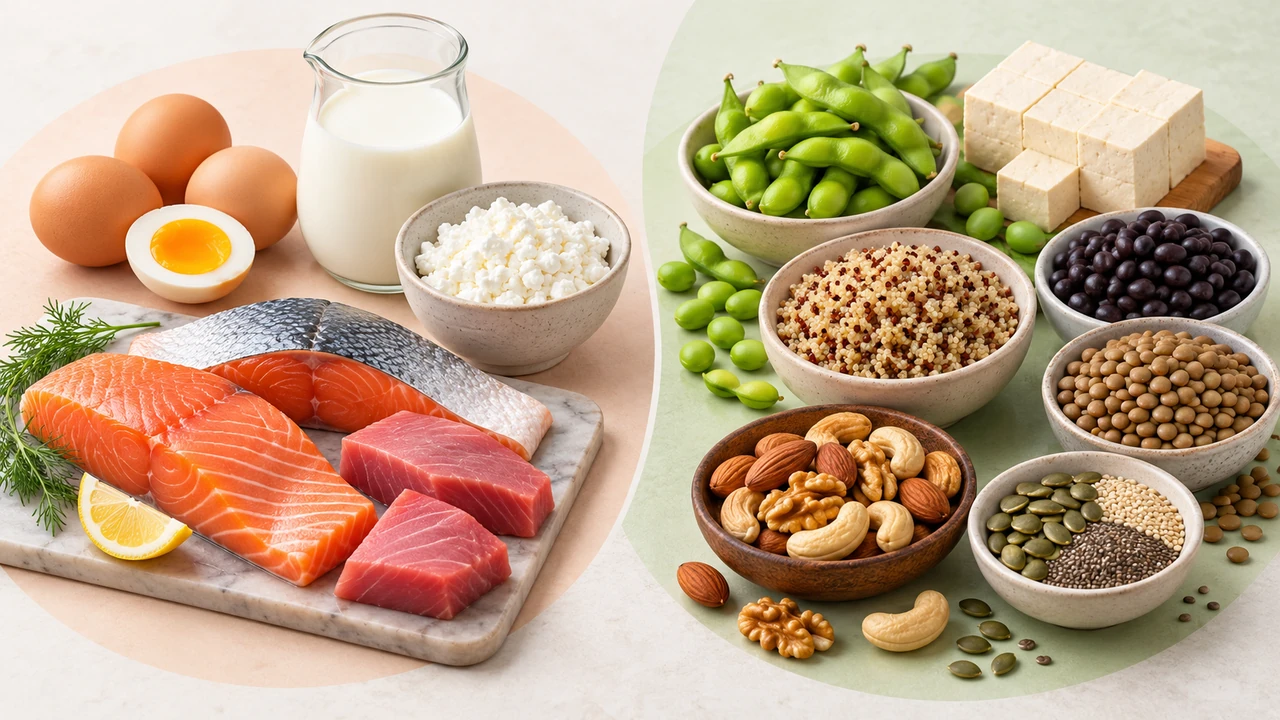
Two foods can both contain all nine essential amino acids and contribute very different amounts of protein to a meal.
A serving of rice and a serving of tofu are not interchangeable protein portions just because both contain essential amino acids.
Use this guide to compare actual food amounts, then build a few meal combinations.
The numbers describe selected foods and example portions, not a personalized diet or a guarantee that a meal meets an individual’s amino-acid requirements.
Compare the portion you will eat
Essential amino acids (EAAs) are the nine amino acids you need from dietary protein. The essential-amino-acids guide covers the definitions; this page applies them to food choices.
For everyday planning, identify a useful protein portion before worrying about the name of each amino acid.
The comparisons below use six specific USDA FoodData Central SR Legacy entries. SR Legacy is a historical dataset with a final release in 2018; it combines analytical, calculated, and literature-derived values.
These are reference foods, not a new laboratory analysis of products sold today. Values were retrieved on October 19, 2026 and scaled from 100 g to the stated edible weight. [6]
Protein is rounded to 0.1 g, calories to whole kcal, and leucine to 0.1 g.
Portions are practical examples, not recommended minimums: two large boiled eggs use 100 g edible weight; yogurt uses 170 g; chicken uses 85 g cooked meat; tofu, beans, and rice use 150 g each.
Brands, water content, cooking, and portion size can change the results.
Six foods, read on the same set of measures
Hard-boiled eggs
Example portion: 2 large eggs (100 g edible). Protein: 12.6 g. Energy: 155 kcal. Leucine: 1.1 g. FDC ID: 173424. [6]
All nine EAAs are reported in this record. Two large eggs are a useful component, but provide less protein than the yogurt or chicken portion shown. Eggs fit an ovo-vegetarian pattern; they are not suitable for someone avoiding eggs.
Plain nonfat Greek yogurt
Example portion: 170 g. Protein: 17.3 g. Energy: 100 kcal. Leucine: not reported in this entry. FDC ID: 170894. [6]
This yogurt record has no individual amino-acid values, so no leucine or nine-amino-acid quantity is estimated. That is missing data, not evidence that dairy protein lacks EAAs.
A ready-to-eat option for a dairy-containing diet. Strained yogurt and ordinary yogurt are not interchangeable database entries, and a sweetened or higher-fat product can have different calories and protein.
Roasted chicken breast
Example portion: 85 g cooked meat. Protein: 26.4 g. Energy: 140 kcal. Leucine: 2.0 g. FDC ID: 171477. [6]
All nine EAAs are reported in this record. A relatively concentrated protein portion in this comparison. Weigh cooked edible meat if using the cooked entry; raw weight and weight with bones or skin are different assumptions.
Firm calcium-set tofu
Example portion: 150 g as recorded, before additional cooking. Protein: 25.9 g. Energy: 216 kcal. Leucine: 2.1 g. FDC ID: 172475. [6]
All nine EAAs are reported in this record. A plant-based main protein option.
This entry is a relatively protein-dense firm tofu; softer or wetter tofu can provide substantially less protein per 150 g. Check the package before transferring the number to a different product.
Boiled black beans
Example portion: 150 g cooked. Protein: 13.3 g. Energy: 198 kcal. Leucine: 1.1 g. FDC ID: 173735. [6]
All nine EAAs are reported in this record. Provides protein alongside a larger food portion than chicken for a similar protein amount.
Cooked beans are not equivalent by weight to dried beans. They fit a plant-based pattern; prepare or purchase them in the form you will actually eat.
Cooked white rice
Example portion: 150 g cooked. Protein: 4.0 g. Energy: 195 kcal. Leucine: 0.3 g. FDC ID: 168878. [6]
All nine EAAs are reported in this record. A carbohydrate accompaniment with some protein.
The rice portion has all nine EAAs reported but only about 4 g total protein; it should not be treated as a protein equivalent to the tofu or chicken portion.
Presence is not the same as adequacy or digestibility
“Contains all nine” is a presence check, not a certificate that any portion meets human needs. The relative proportions, total protein eaten, and digestibility still matter.
Rice illustrates the problem: an amino acid can be present while the food remains a modest source of protein at a usual meal amount.
The term “complete protein” usually refers to an adequate indispensable-amino-acid pattern, not simply detecting nine names in a database.
Many legumes are relatively lower in sulfur amino acids, while many grains are lower in lysine.
Neither group is devoid of those amino acids.
The protein-quality guide explains digestibility and reference patterns; the plant-versus-animal comparison addresses research outcomes. [3]
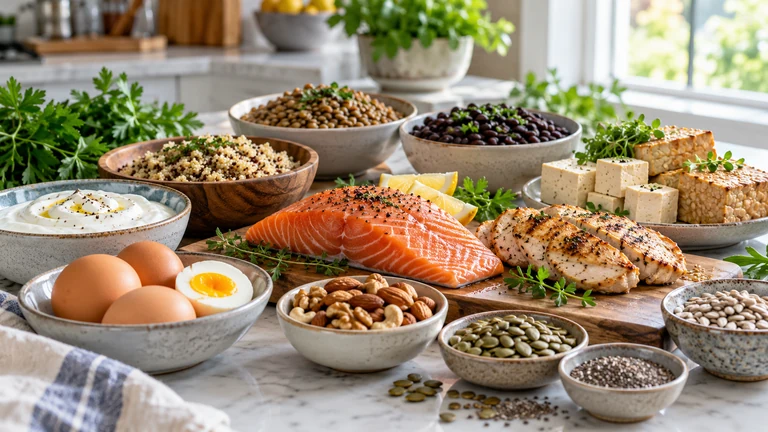
Four combinations with the assumptions visible
The following are meal components, not complete menus. Each total sums the unrounded USDA values before rounding. Vegetables, sauces, cooking oil, drinks, fruit, and any other additions are excluded.
Calories provide food-volume context, not a target to minimize. Equal protein totals would still not establish equal digestible EAA delivery or clinical outcomes.
Eggs plus yogurt
100 g edible boiled eggs + 170 g plain nonfat Greek yogurt = approximately 29.9 g protein and 255 kcal for these components. [6]
The two foods together supply considerably more protein than two eggs alone. This is one option for someone who eats eggs and dairy, not a requirement to combine them.
Chicken plus rice
85 g cooked skinless chicken breast meat + 150 g cooked white rice = approximately 30.4 g protein and 335 kcal for these components. [6]
The chicken supplies most of the protein; rice adds food energy and a smaller protein contribution. The calculation assumes roasting without added oil in the recorded chicken portion.
Tofu plus rice
150 g of the firm calcium-set tofu entry + 150 g cooked white rice = approximately 29.9 g protein and 411 kcal for these components. [6]
This example reaches a similar total protein amount to the chicken combination, with different food weights, calories, and composition. It does not prove equal muscle-building effects or apply to every tofu brand.
Beans plus rice
150 g boiled black beans + 150 g cooked white rice = approximately 17.3 g protein and 393 kcal for these components. [6]
This familiar combination contributes a complementary amino-acid pattern, but the particular portions contain less total protein than the other examples.
That is a prompt to consider the rest of the meal and day, not a verdict that beans are an inferior food.
Use complementary foods across the day
Plant proteins do not generally need to be matched in the same bite or meticulously paired at every meal for healthy adults. A varied diet with sufficient energy and protein can supply the needed amino acids across the day.
Beans with rice are a useful example of complementary profiles, not a compulsory pairing or a ratio that guarantees adequacy. [1] [2]
The practical question is whether the overall eating pattern includes substantial protein foods in amounts that meet your needs.
A small serving of grains plus occasional nuts is not automatically sufficient simply because the diet is varied.
Restrictive intake, low appetite, unusually high needs, or medical dietary constraints can warrant individualized guidance.
Keep leucine in context
Leucine is relevant to muscle protein synthesis, but it is only one of the nine EAAs. The amounts above are food-composition estimates, not a threshold every reader must hit at each meal.
A leucine number cannot establish how much muscle a meal will build; the full protein intake, training, age, and research context matter.
No leucine total is supplied for the egg-and-yogurt combination because the yogurt entry lacks that measurement.
Choose the food decision before a supplement decision
If your question is which foods contain EAAs, the next step is choosing a suitable food portion, not buying an amino-acid blend.
Foods also contribute other nutrients; supplements need a separate reason, preparation comparison, and dose assessment.
Selecting foods and portions is a separate decision from considering a supplement. Adequate protein intake is not a reason to assume extra benefit from an isolated amino-acid supplement.
Use the daily-protein-needs guide to put a portion into a daily context.
Protein and amino-acid requirements vary with body size, life stage, activity, energy intake, and health; the four combinations here cannot determine a personal daily allowance. [5] [4]
Make one useful substitution at your next meal
Identify the main protein food, check the actual portion and product label, and consider what the rest of the day contributes.
If you replace chicken with tofu or a bean-and-grain meal, compare amounts instead of swapping food names gram for gram.
A workable food choice respects dietary preferences, access, tolerance, and overall nutrition—not just the presence of nine amino-acid names.
Editorial update, October 19, 2026: added a USDA-based comparison of six food portions and four calculated meal combinations. Calculations describe selected reference foods and are not personalized dietary advice.
Was this article helpful?
Your anonymous response helps improve our editorial coverage.
Loading feedback options…
Share
Share this article
More from Planet Wellness Report
Continue Reading
Nutrition
Leucine and Muscle Protein Synthesis: What the Research Actually Shows
Leucine helps regulate muscle protein synthesis. Learn what human trials show about thresholds, protein context, exercise, age, and long-term outcomes.
6 min read
Nutrition
BCAA vs. EAA: Comparing Muscle Protein Synthesis, Recovery, and Practical Use
BCAAs are part of the EAA family. Compare amino acid completeness, muscle protein synthesis, soreness, and practical use without assuming a universal winner.
7 min read
Nutrition
Protein vs. Essential Amino Acids: What’s the Difference?
Protein and essential amino acids overlap, but they are not nutritionally identical. Learn how foods, protein powders, and EAA supplements differ—and why faster absorption does not automatically mean better results.
11 min read
Evidence
Sources
- Protein in diet — MedlinePlus / U.S. National Library of Medicine
- François Mariotti; Christopher D. Gardner. Dietary Protein and Amino Acids in Vegetarian Diets: A Review — Nutrients (Nov 4, 2019) · DOI
- FAO Expert Consultation on Protein Quality Evaluation in Human Nutrition. Dietary Protein Quality Evaluation in Human Nutrition: Report of an FAO Expert Consultation — Food and Agriculture Organization of the United Nations
- Institute of Medicine; Food and Nutrition Board. Dietary Reference Intakes for Energy, Carbohydrate, Fiber, Fat, Fatty Acids, Cholesterol, Protein, and Amino Acids — National Academies Press · DOI
- Joint FAO/WHO/UNU Expert Consultation on Protein and Amino Acid Requirements in Human Nutrition. Protein and Amino Acid Requirements in Human Nutrition: Report of a Joint FAO/WHO/UNU Expert Consultation — World Health Organization
- FoodData Central — SR Legacy food composition data — USDA Agricultural Research Service — SR Legacy entries 173424, 170894, 171477, 172475, 173735 and 168878; per-100-g values scaled to stated edible weights. Retrieved October 19, 2026.