
ARTICLE
What to Look for in a Memory Supplement: Ingredients, Doses, and Evidence
Five checks for reading a label, comparing research, and deciding whether a formula fits your goal.
By Planet Wellness Report · Nov 2, 2026 · 12 min read
Editorial review and publication: Felipe Lopes, Publisher & Editor. This is an editorial review, not a medical review.
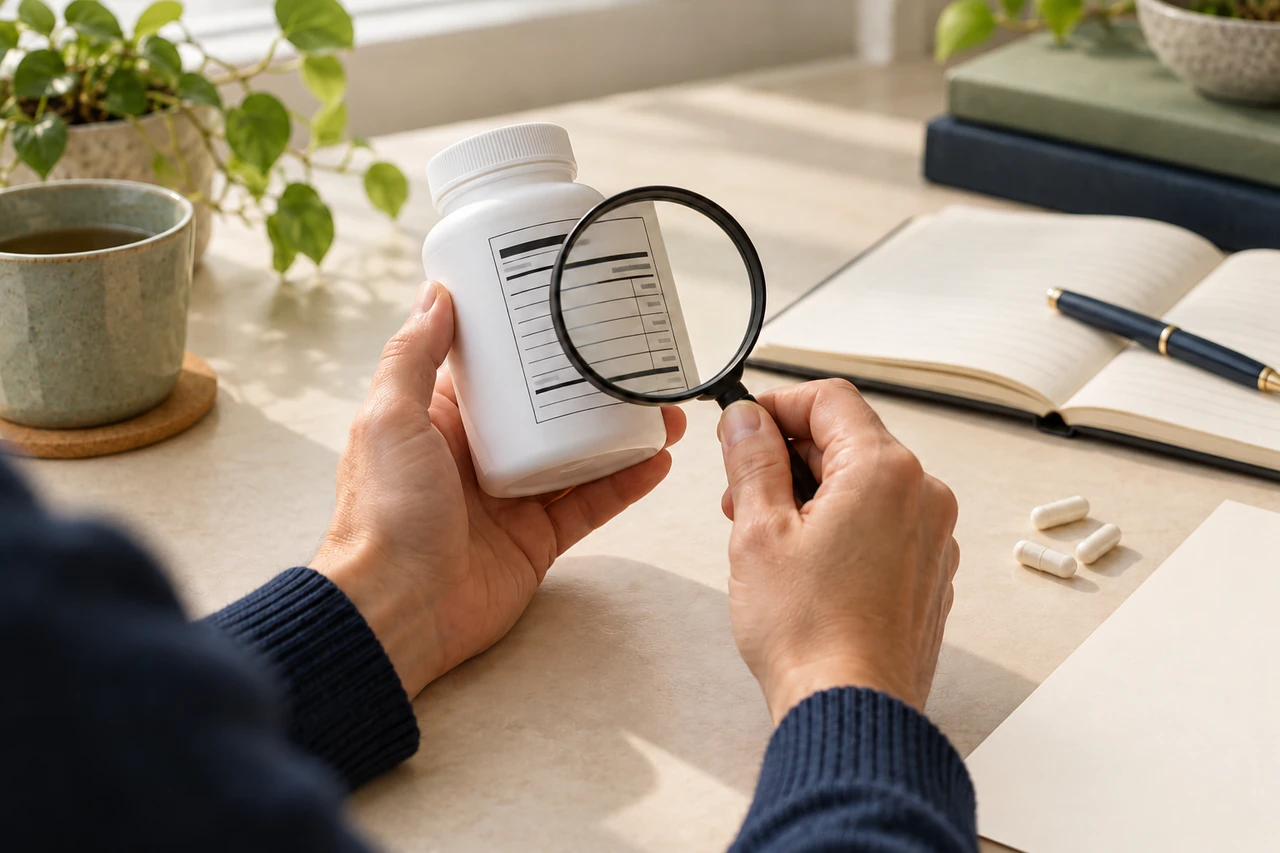
To choose a memory supplement, start with the amount of the relevant ingredient in the daily serving, the preparation used in human research, and the outcome that research measured. A long ingredient list can be useful, but recognizable names alone tell you little about whether a formula suits your goal.
The aim is a defensible purchase: a product whose disclosures let you understand what you are buying, whose evidence is relevant to you, and whose uncertainties you are willing to accept. That can include a convenient multi-ingredient formula. It can also mean asking the manufacturer one more question before paying.
Five checks before buying a memory supplement
This is our editorial decision framework, not a validated clinical instrument. Apply it to the current Supplement Facts panel and the studies offered to support the product. Check medication compatibility before treating any shortlist as suitable for you.
1. Is the ingredient clearly identified?
Look for the specific substance or botanical, the plant part when relevant, and whether it is a powder, extract, or named preparation. “Bacopa” identifies a plant; “Bacopa leaf extract standardized to a stated bacoside content” gives you more to investigate. A familiar ingredient name is the beginning of the comparison.
2. Does the label disclose the amount that actually matters?
Read the serving size first. Then distinguish the weight of a complex or carrier-containing ingredient from the amount of the constituent being studied. If a 250 mg ingredient supplies 50% of the relevant compound, the implied amount is about 125 mg. If no percentage or active quantity is disclosed, record it as unknown rather than filling the gap yourself.
3. Does the form match what was studied?
Check the extract name, standardization, daily quantity, and duration together. Matching a percentage helps describe an extract, but it may leave differences in extraction, purification, or measurement unresolved. A research-aligned amount is meaningful only in relation to a particular preparation and study; there is no universal effective dose for “memory ingredients.”
4. Were people like you studied, and was the result about memory?
Separate healthy adults, older adults, people with subjective memory complaints, people with diagnosed mild cognitive impairment, and people with dementia. Then identify the endpoint: remembering information, sustaining attention, responding faster, managing a task, or reporting fewer complaints. These are related questions with different answers.
5. Was the finished formula tested, or only its ingredients?
Ask for a controlled human study of the same combination, amounts, and intended users. If the supporting studies concern separate ingredients, describe the rationale at that level. Ingredient research can justify interest in a formula, while leaving its combined benefit and safety less certain. A useful seller should make that distinction easy to see.

Check the active dose before comparing milligrams
“Ingredient present” and “ingredient present at an amount used in relevant research” are different claims. Start a comparison with three notes: the amount per serving, the stated daily serving, and what the number represents. A complex weight, standardized extract weight, and pure-compound quantity are different units of interpretation even when all are printed in milligrams.
For a hypothetical 200 mg extract standardized to 20% of a constituent, the label implies 40 mg of that constituent. This is arithmetic, not a prediction of benefit. Two extracts with the same calculated constituent amount may still differ chemically, and the constituent may be a marker used to characterize the preparation rather than the sole source of its effects.
An extract ratio answers another question. “4:1” describes a relationship between starting botanical material and extract; it does not mean four times the memory benefit. If a label supplies only the total weight of a proprietary blend, the missing individual amounts make research comparisons harder. Ask for the details that change your decision.
Alpha-GPC: separate the preparation from its contribution
Some GPC preparations contain a stated proportion of alpha-GPC. A line reading “250 mg GPC, supplying 50% alpha-GPC” implies approximately 125 mg alpha-GPC, rather than 250 mg of it. Use the actual contribution when comparing with a study. The current Advanced Memory Formula panel provides exactly this kind of disclosure. [15]
A small crossover trial in 20 resistance-trained men tested 315 and 630 mg alpha-GPC acutely. Some Stroop performance measures improved, while N-Back and Flanker results did not differ significantly between groups. This is selected short-term task evidence in a narrow population, rather than evidence for broad everyday memory improvement. [7]
Clinical research asks a different question. A systematic review of adult-onset neurological conditions included studies using 1,200 mg/day, with some investigating alpha-GPC alongside donepezil. Those findings should not become a dosing instruction for a healthy supplement buyer. Our Alpha-GPC evidence guide examines the wider evidence and safety context. [8]
Phosphatidylserine: complex weight can leave a key blank
“Phosphatidylserine Complex 150 mg” does not necessarily disclose 150 mg pure phosphatidylserine. A complex may contain other phospholipids; without a stated PS quantity or specification, the pure PS dose remains unknown. Do not infer it from the front label or from the word “soy.” [15]
A six-month randomized trial assigned 78 Japanese adults aged 50–69 with memory complaints to 100 mg PS, 300 mg PS, or placebo daily. Overall test scores improved in all groups, with more encouraging findings in participants with lower baseline scores. Those qualified results concern stated PS amounts, not an unspecified complex weight. [10]
The practical manufacturer question is simple: “How much phosphatidylserine does the daily serving actually provide?” A clear answer improves comparability; it does not guarantee a memory benefit.
Standardized extracts: useful detail, with limits
Standardization specifies a constituent or group of constituents within an extract. It helps buyers distinguish preparations that would otherwise share the same plant name. It becomes most useful when the seller connects the full specification to the human study being cited.
Bacopa: concentration and duration change the comparison
Look for Bacopa monnieri, the plant part, extract identity, bacoside specification, and daily extract amount. Plant powder and standardized extracts should not be treated as interchangeable. Likewise, different bacoside percentages cannot, by themselves, establish equivalence across preparation and measurement methods. [1] [14]
A systematic review identified six trials in adults without dementia or significant cognitive impairment. They used three extracts at 300–450 mg/day for 12 weeks, with the clearest signals in free recall. These are study descriptions, not a universal shopping threshold. [1]
One trial randomized 54 adults aged 65 or older without dementia; 48 completed it. A standardized extract at 300 mg/day for 12 weeks improved delayed word recall and a Stroop measure, while divided attention and the working-memory task did not improve. [2]
The evidence also includes negative findings. A 2025 trial randomized 101 adults aged 40–70 with self-reported memory and attention problems to Bacumen 300 mg/day or placebo for 12 weeks. Analysis of 87 completers found no advantage on primary verbal-learning, attention, or working-memory outcomes. Secondary stress and task-fatigue findings cannot be substituted for a memory benefit. [3]
For the buyer, the useful question is whether the label identifies the preparation well enough to compare with that mixed evidence. A higher bacoside percentage alone cannot settle the question. Our Bacopa and memory article provides the fuller ingredient assessment.
Ginkgo: 24% and 6% are a starting point
A Ginkgo label may specify flavone glycosides and terpene lactones. Those details matter, but they do not identify every aspect of a studied preparation. The European Medicines Agency monograph describes a refined extract with an extraction process and constituent specifications beyond simply “Ginkgo biloba.” A matching pair of percentages does not automatically establish that a retail extract is EGb 761 or an equivalent preparation. [4]
Amount and purpose matter too. The Ginkgo Evaluation of Memory trial used 120 mg twice daily in 3,069 adults aged 75 or older with normal cognition or mild cognitive impairment. Over a median 6.1 years, it did not reduce dementia incidence. A label listing 80 mg Ginkgo cannot inherit either an equivalence claim or a prevention claim from that study. [5]
Treatment studies also should not be repurposed as healthy-adult enhancement evidence. A 2026 Cochrane review found possible small to moderate benefits for some outcomes in people with dementia at six months, while findings differed in less impaired populations and certainty was limited for several outcomes. Our Ginkgo evidence article separates these uses. [6]
Match the population and outcome to your goal
Being healthy and hoping to remember names better is different from having subjective complaints without a diagnosis. Diagnosed mild cognitive impairment is different again: measurable impairment does not make it interchangeable with dementia. Older-adult findings may be more relevant to an older buyer than a study of young athletes, but age alone still leaves health status and baseline performance unresolved.
Read “cognitive performance” as a category requiring detail. Memory outcomes can include learning a word list and recalling it later. Attention concerns selecting or sustaining focus; reaction time measures speed; executive function includes controlling responses and switching tasks. Working memory concerns briefly holding and manipulating information. A subjective improvement records the person's experience and may differ from performance on a test.
Ask which outcome was primary, whether the supplement outperformed placebo, and whether the change would matter outside the testing room. A systematic review of cognitive-performance supplement ingredients in healthy adults found substantial limitations in the evidence base. A significant result on one task deserves its own description rather than an upgrade to “improves cognition.” [17]
Acetyl-L-carnitine illustrates the population problem. Older clinical trials summarized by NIH used approximately 1.5–3 g/day for 3–12 months in people with mild cognitive impairment or mild Alzheimer's disease. Reviews have reached differing conclusions about its clinical usefulness. That literature does not establish memory enhancement for healthy adults taking a 250 mg amount within a blend. [11]
The same discipline applies to mechanisms. An early coffee-fruit study measured plasma BDNF after a single 100 mg dose; a blood biomarker is a different endpoint from remembering information. NeuroFactor or another recognizable ingredient should be judged by the relevant preparation and measured outcome. [12]
More ingredients make transparency more important
A formula with eight or ten ingredients can offer convenience and a combination a buyer prefers. It also creates more comparisons: the quantity of each ingredient, whether each extract resembles its supporting research, potential interactions, and whether the combination itself was tested.
Adding blueberry extract, luteolin, lecithin, or another botanical does not answer those questions. Give the most space to ingredients whose identity, amount, or safety actually changes the purchase. A smaller list is not automatically better, and a larger list is not a substitute for interpretable evidence.
For a finished-product claim, look for the exact formula in a controlled human trial, with the daily serving, duration, population, and relevant outcomes reported. A different two-ingredient combination cannot validate a ten-ingredient product. Without an applicable formula study, the honest description is ingredient-level evidence rather than finished-product proof. There may still be a rationale for considering it; expected benefits should remain uncertain.
Safety and quality belong in the buying decision
Bring the complete panel and your medication list to a pharmacist or clinician when checking compatibility. Ginkgo deserves particular attention with anticoagulants such as warfarin because of a potential bleeding interaction. Discuss it before surgery and during pregnancy rather than assuming an herbal ingredient is automatically suitable. [13]
Bacopa can cause digestive symptoms; potential cholinergic effects also warrant a compatibility check with medicines that affect acetylcholine. This matters when a formula combines several ingredients with related biological actions. Check the allergen statement as well: soy-derived ingredients can change suitability for someone with a soy allergy. [14] [15]
Alpha-GPC has an unresolved long-term safety signal. A large observational Korean study in adults aged 50 or older associated prescriptions with greater subsequent stroke risk. Association cannot establish causation or quantify the risk from a particular low-dose retail blend, but it belongs in a decision about sustained use. [9]
Ask what any quality testing covers: identity, stated quantities, contaminants, and the relevant batch. A purity or manufacturing claim answers a different question from a trial showing memory benefit. Verify a claimed certification with the certifier rather than treating a badge as a clinical endorsement.
How one real label looks under these checks
Advanced Memory Formula is a useful brief example because its current two-tablet serving lists individual ingredient weights and standardization for both Bacopa and Ginkgo. The panel was checked for this article on November 2, 2026. That disclosure allows a more concrete comparison than an undisclosed blend total. [15]
Three details change the interpretation. Its 250 mg GPC line supplies about 125 mg alpha-GPC; its 150 mg PS Complex leaves pure PS unspecified; and its 120 mg Bacopa at a minimum 50% bacosides cannot be declared equivalent to the 300–450 mg extracts above by concentration arithmetic alone. The 80 mg Ginkgo entry specifies at least 24% flavone glycosides and 6% terpene lactones but does not identify EGb 761. [15]
These are reasons to inspect the tradeoffs, rather than treating the ingredient list as a verdict. We did not verify a controlled human efficacy trial of the current finished formula in this research. If the convenience of a multi-ingredient formula appeals to you, our Advanced Memory Formula review examines the full label, ingredient tradeoffs, a dated price snapshot, and who the product may make the most sense for before you buy.
Decide what would make the purchase worthwhile
A multi-ingredient supplement may reasonably appeal to an adult who values convenience, prefers disclosed amounts and extract specifications, accepts that benefits may be modest or absent, and has checked medication compatibility. Someone who wants a known pure PS quantity or a close match to one specific trial may prefer a more clearly specified preparation instead.
Before buying, write one sentence identifying your goal and one identifying the main uncertainty you are accepting. For example: “I want a convenient formula for everyday memory support, and I understand that its complete blend has not been verified to improve memory.” Then decide what benefit would justify continuing and what adverse effects would prompt stopping and seeking advice. Avoid adding several new supplements at once or increasing a blend's serving to imitate one ingredient trial.
New or progressive memory difficulty that affects daily tasks deserves assessment before shopping. Medication effects and other health problems can contribute. Our memory and aging guide addresses the broader context; this label framework is for a purchase decision, not for diagnosing symptoms. [16]
Sudden confusion, new trouble speaking, or sudden weakness needs urgent medical attention. [18]
Keep a shortlist only when you can explain the ingredient, relevant amount, preparation, study population, measured outcome, and formula-level uncertainty. A defensible purchase is one you can describe accurately before opening the bottle.
Was this article helpful?
Your anonymous response helps improve our editorial coverage.
Loading feedback options…
Share
Share this article
Selected references
Recommended products
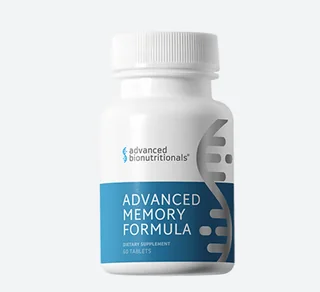 Advanced Memory Formula
Multi-ingredient memory-support formula with standardized Bacopa and Ginkgo, a source of alpha-GPC, a phosphatidylserine complex, and other ingredients in a convenient two-tablet serving.
View product detailsRead our full review for the evidence, label details, tradeoffs and buying options
More from Planet Wellness Report
Continue Reading

Focus
Advanced Memory Formula Review: Reading the Doses Behind the Ingredient List
The two-tablet formula lists individual amounts, but disclosure is uneven: its GPC line implies about 125 mg alpha-GPC, while 150 mg PS complex does not identify pure PS content. Some ingredients have human cognitive research; the current combination has no controlled efficacy trial verified in this review.
8 min read
Focus
Bacopa vs Ginkgo for Memory: Evidence, Differences, and Practical Use
Compare Bacopa and Ginkgo evidence by cognitive outcome, population, extract, duration, safety, and the limits of the 2026 network meta-analysis.
9 min read

Focus
Phosphatidylserine for Memory: What Human Research Actually Shows
Phosphatidylserine trials differ by preparation, population, and cognitive outcome. Separate exploratory findings from meaningful memory improvement.
8 min read
Evidence
Sources
- Matthew P. Pase; J. Kean; J. Sarris; C. Neale; A. B. Scholey; C. Stough. The cognitive-enhancing effects of Bacopa monnieri: a systematic review of randomized, controlled human clinical trials — Journal of Alternative and Complementary Medicine (Jul 2, 2012) · DOI
- Calabrese C, Gregory WL, Leo M, Kraemer D, Bone K, Oken B.. Effects of a standardized Bacopa monnieri extract on cognitive performance, anxiety, and depression in the elderly: a randomized, double-blind, placebo-controlled trial — Journal of alternative and complementary medicine (New York, N.Y.) · DOI
- A. L. Lopresti; S. J. Smith. The Effects of a Bacopa monnieri Extract (Bacumen®) on Cognition, Stress, and Fatigue in Healthy Adults: A Randomized, Double-Blind, Placebo-Controlled Trial — Clinical Drug Investigation · DOI
- European Medicines Agency. European Union herbal monograph on Ginkgo biloba L., folium — European Medicines Agency (Jan 28, 2015)
- DeKosky ST, Williamson JD, Fitzpatrick AL, Kronmal RA, Ives DG, Saxton JA, Lopez OL, Burke G, Carlson MC, Fried LP, Kuller LH, Robbins JA, Tracy RP, Woolard NF, Dunn L, Snitz BE, Nahin RL, Furberg CD, Ginkgo Evaluation of Memory (GEM) Study Investigators.. Ginkgo biloba for prevention of dementia: a randomized controlled trial — JAMA · DOI
- Wieland LS, Ludeman E, Chi Y, Feinberg TM, Chen IH, Chen KH, Zhu Y, Wolverson E, Amri H.. Ginkgo biloba for cognitive impairment and dementia — The Cochrane database of systematic reviews (Feb 5, 2026) · DOI
- Chad M. Kerksick. Acute Alpha-Glycerylphosphorylcholine Supplementation Enhances Cognitive Performance in Healthy Men — Nutrients (Dec 9, 2024) · DOI
- Activity of Choline Alphoscerate on Adult-Onset Cognitive Dysfunctions: A Systematic Review and Meta-Analysis — Journal of Alzheimer's Disease (Jan 1, 2023) · DOI
- Gyeongsil Lee, Seulggie Choi, Jooyoung Chang, Daein Choi, Joung Sik Son, Kyuwoong Kim, Sung Min Kim, Seogsong Jeong, Sang Min Park. Association of L-α Glycerylphosphorylcholine With Subsequent Stroke Risk After 10 Years — JAMA Network Open (Nov 1, 2021) · DOI
- Kato-Kataoka A, Sakai M, Ebina R, Nonaka C, Asano T, Miyamori T.. Soybean-derived phosphatidylserine improves memory function of the elderly Japanese subjects with memory complaints — Journal of clinical biochemistry and nutrition · DOI
- Carnitine: Fact Sheet for Health Professionals — NIH Office of Dietary Supplements
- Reyes-Izquierdo T, Nemzer B, Shu C, Huynh L, Argumedo R, Keller R, Pietrzkowski Z.. Modulatory effect of coffee fruit extract on plasma levels of brain-derived neurotrophic factor in healthy subjects — The British journal of nutrition · DOI
- Ginkgo: Usefulness and Safety — National Center for Complementary and Integrative Health
- Eric A Walker; Mark V Pellegrini. Bacopa monnieri — StatPearls Publishing
- Advanced Memory Formula — Supplement Facts — Advanced Bionutritionals
- National Institute on Aging. Memory Problems, Forgetfulness, and Aging — National Institute on Aging / National Institutes of Health
- Cindy Crawford, Courtney Boyd, Patricia A. Deuster. Dietary Supplement Ingredients for Optimizing Cognitive Performance Among Healthy Adults: A Systematic Review — Journal of Alternative and Complementary Medicine (Nov 1, 2021) · DOI
- Centers for Disease Control and Prevention. Signs and Symptoms of Stroke — Centers for Disease Control and Prevention (May 19, 2026)