
ARTICLE
Ginkgo Biloba for Memory: What the Research Actually Shows
Human trials by population, cognitive outcome, extract, and duration—including the 2026 Cochrane review.
By Planet Wellness Report · Oct 13, 2026 · 8 min read
Editorial review and publication: Felipe Lopes, Publisher & Editor. This is an editorial review, not a medical review.

Ginkgo biloba has been studied extensively, but “improves memory” is too broad a conclusion. Research in healthy adults does not establish a dependable cognitive boost. The 2026 Cochrane review found that Ginkgo probably makes little or no difference to several outcomes in mild cognitive impairment, while possible benefits in dementia were supported by lower-certainty evidence. Those are different findings in different populations.
The useful question is which preparation was tested, in whom, and for what outcome. A standardized leaf extract studied for months in people with dementia is not interchangeable with a generic supplement sold to a healthy student. This guide examines those distinctions rather than treating the ingredient name as a promise.
What Ginkgo is—and what a standardized extract means
Ginkgo biloba is a tree whose leaves are used to prepare the extracts commonly sold for cognitive wellness. Leaf extracts differ from seeds or crude plant material; NCCIH warns that fresh seeds are toxic and that adverse effects have also occurred with roasted seeds and crude Ginkgo. A botanical identity does not make every form suitable for consumption. Our Ginkgo ingredient hub provides the shorter glossary context.
EGb 761 is a specific, characterized Ginkgo leaf extract used in clinical research. Its flavone glycoside and terpene lactone composition is controlled, alongside limits on ginkgolic acids. The European Medicines Agency describes a refined, quantified dry extract with 22–27% flavone glycosides, 5–7% terpene lactones, and less than 5 parts per million ginkgolic acids. Extraction and purification are part of the identity; the percentages are not the whole preparation.
A label showing 24% flavone glycosides and 6% terpene lactones supplies useful information, but does not by itself demonstrate that the product is EGb 761 or clinically interchangeable with it. Leaf powder, tea, an unspecified extract, and a named research extract can deliver different constituent profiles. Compare the exact preparation and amount before borrowing a study’s conclusion.
Healthy adults: a reliable memory boost is not established
Laws and colleagues’ 2012 meta-analysis assessed randomized trials in healthy people. Pooled effects on memory, executive function, and attention were small, close to zero, and not statistically significant. It included memory results from 13 trials, rather than showing that every individual test or every possible preparation had been ruled out. The finding weighs against a general enhancement claim.
An earlier systematic review separated seven single-dose trials from eight studies lasting two days to 13 weeks. Some acute experiments found positive results at selected doses or testing times, but these were inconsistent or unreplicated. Testing many tasks at many time points creates more opportunities for an isolated positive result; that result needs replication before it becomes a dependable everyday benefit.
The 2026 network meta-analysis by Tiemtad and colleagues adds a comparison with Bacopa in healthy adults. It included 29 randomized trials across both plants and found no significant differences for sustained attention, selective attention, or processing speed across the compared interventions. Some memory findings favored Bacopa dose groups, but there were no direct Bacopa-versus-Ginkgo trials. Our Bacopa versus Ginkgo comparison examines that indirect evidence without assigning a universal winner.
Newer combination trials require a different conclusion
Research published later in 2026 also examined combinations. A 30-day trial randomized 117 healthy adults to Cistanche plus Ginkgo or placebo and reported favorable memory-test findings. Two exploratory trials of Ginkgo associated with phosphatidylserine reported some delayed verbal-memory and reaction-time findings, with more modest cognitive results in the second study. These are signals for the tested combinations, not evidence that Ginkgo alone caused the changes.
Neither report supplies evidence for Bacopa–Ginkgo synergy or for the commercial formulas discussed below. Different partners, preparations, and outcome measures matter. These later reports also fall after the November 2024 search cutoff of the two major 2026 reviews; publication year should not be mistaken for complete incorporation of every newer trial. They warrant follow-up without establishing dependable Ginkgo-only enhancement.
What the 2026 Cochrane review changes
Wieland and colleagues included 82 studies with 10,613 participants; 72 studies supplied extractable data. Their updated search ended in November 2024, although the review was published in February 2026. Most importantly, they analyzed clinical conditions separately. A review published recently is not necessarily a review of every trial published since its search date.
Subjective cognitive complaints: People who feel their thinking or memory has changed are not automatically diagnosed with MCI or dementia. For this group, the review was very uncertain about an effect on overall clinical status at six months. Relevant six-month cognition and daily-living data were unavailable in that comparison. Uncertainty is neither proof of benefit nor proof that the symptom is unimportant.
Mild cognitive impairment: At six months, moderate-certainty evidence indicated little or no effect on global clinical status, cognition, or instrumental daily activities. These results are more informative than inferring benefit from laboratory mechanisms or from a positive result in another population. They do not support treating MCI as a generic memory-supplement opportunity.
Dementia: At six months, Ginkgo may produce small-to-moderate benefits in global status, cognition, and daily activities, but the evidence for those benefits was low certainty. Individual trials gave substantially different estimates, and methodological problems reduced confidence. This is a qualified signal concerning symptoms and function in diagnosed dementia—not a claim that Ginkgo reverses disease, prevents it, or improves memory in everyone.
The distinction matters because participants with impairment have different baseline performance and care needs from healthy adults. Clinical scales of overall functioning are also different from learning a word list or answering a reaction-time task. A potential improvement on one clinical scale cannot be transported directly into a claim about a healthy person’s recall or productivity.
Prevention and slowing decline are separate questions
The large Ginkgo Evaluation of Memory trial randomized 3,069 older adults with normal cognition or MCI to 120 mg of extract twice daily or placebo. Over a median 6.1 years, it did not demonstrate a reduction in dementia incidence. A related analysis did not find less decline in global cognition or domains including memory, attention, and executive function. These reports concern the same cohort and should not be counted as two independent prevention experiments.
Possible short-term symptom benefits in dementia and a failure to prevent dementia can coexist. They answer different questions. Neither result establishes that buying a lower-dose combination supplement protects a healthy brain against aging. Our memory and aging guide covers the wider context and changes that deserve assessment.
Read cognitive outcomes separately
Memory tests can assess immediate recall, learning across repeated attempts, or retrieval after a delay. Working memory adds the need to hold and use information briefly. Attention concerns selecting or sustaining focus; processing speed concerns how quickly a task is completed. Executive function includes control and inhibition. A global cognition score combines abilities and may conceal differences between them.
Improved speed does not necessarily mean better accuracy or stronger memory. A self-reported change is also different from an objectively tested change. When reading a study or a product claim, identify the primary outcome, the comparison with placebo, and whether the effect matters outside the test. A positive biomarker or plausible blood-flow mechanism does not answer those questions.
Duration and dose do not create a universal regimen
Single-dose experiments ask about effects over hours; chronic trials ask about repeated exposure over weeks or months. The Cochrane review’s key clinical outcomes were assessed at six months, while the long prevention trial followed participants for years. Those durations cannot be turned into a promise that a supplement will work by a particular day.
Research doses such as 120 mg twice daily describe a particular trial, not advice to increase a retail product’s serving. Matching milligrams without matching extract identity, population, and endpoint is insufficient. A larger amount is not automatically more effective or safer, especially when changing a combination formula also changes every other ingredient.
Safety, medicines, and surgery
NCCIH describes Ginkgo leaf extracts as generally well tolerated in research, with headache, dizziness, and gastrointestinal symptoms among possible effects. It also warns of a possible increase in bleeding risk with anticoagulants such as warfarin and other drug interactions. The EMA monograph advises caution with anticoagulants and antiplatelet medicines, including aspirin or clopidogrel. Discuss your actual product and medication list with a clinician or pharmacist; do not stop prescribed medicines to make room for Ginkgo.
There is nuance behind the bleeding warning. A meta-analysis of standardized extracts did not find evidence of a higher bleeding risk from the measured hemostasis parameters, and the Cochrane review generally found little or no difference in adverse events in MCI and dementia comparisons. Those averages do not establish safety for every medication combination, bleeding disorder, or surgical situation. Before a procedure, tell the clinical team about Ginkgo and follow its individualized instructions.
NCCIH advises that use during pregnancy may be unsafe and that breastfeeding safety is poorly understood. These uncertainties are a reason to obtain appropriate advice rather than assume that a plant extract is harmless. New or worsening memory problems also deserve evaluation, particularly when they interfere with ordinary tasks; a supplement should not delay that assessment.
Comparing a commercial formula with the research
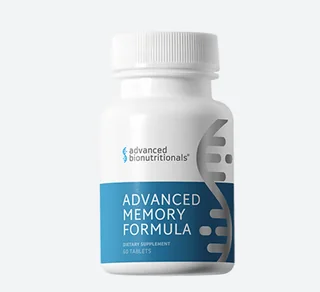
For readers already considering a broader cognitive-wellness formula, Advanced Memory Formula is a relevant label-comparison option because it contains Ginkgo. Its official two-tablet panel checked on October 13, 2026 lists 80 mg of leaf extract with at least 24% flavone glycosides and 6% terpene lactones. It also contains 120 mg of Bacopa leaf extract with at least 50% bacosides A and B, alongside other ingredients. It does not identify its Ginkgo as EGb 761.
These disclosed amounts help compare labels; they do not reproduce the preparation or exposure of the clinical trials above. A multi-ingredient formula’s effect cannot be inferred by adding together selected ingredient findings. Our Advanced Memory Formula review examines that buying decision. NeuroVera was not selected as a Ginkgo recommendation because its current official panel does not list Ginkgo.
A useful expectation for cognitive wellness
Ginkgo has a substantial research literature, but its practical meaning depends on the question. Healthy-adult enhancement remains unestablished; MCI findings are largely unhelpful on the reviewed outcomes; dementia symptom findings are possible but uncertain. Prevention and long-term decline results do not justify a protective claim. Keep those distinctions intact when comparing products.
Choose evidence that matches the person, preparation, outcome, and duration—not simply the word “memory” on a bottle. For another botanical, see our Bacopa research article. For everyday strategies beyond supplements, the memory habits guide offers a different, complementary starting point.
Was this article helpful?
Your anonymous response helps improve our editorial coverage.
Loading feedback options…
Share
Share this article
Selected references
Recommended products
More from Planet Wellness Report
Continue Reading
Focus
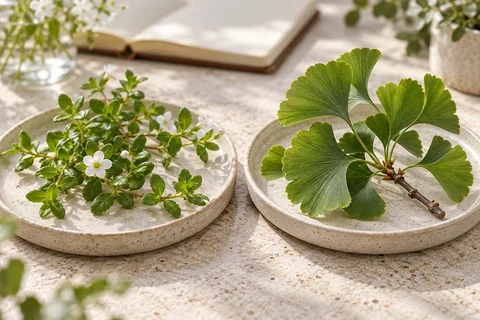
Bacopa vs Ginkgo for Memory: Evidence, Differences, and Practical Use
Compare Bacopa and Ginkgo evidence by cognitive outcome, population, extract, duration, safety, and the limits of the 2026 network meta-analysis.
9 min read

Focus
Advanced Memory Formula Review: Reading the Doses Behind the Ingredient List
The two-tablet formula lists individual amounts, but disclosure is uneven: its GPC line implies about 125 mg alpha-GPC, while 150 mg PS complex does not identify pure PS content. Some ingredients have human cognitive research; the current combination has no controlled efficacy trial verified in this review.
8 min read
Focus
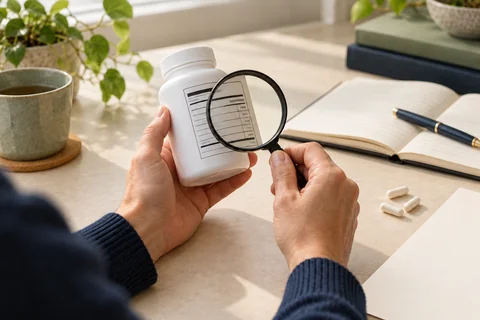
What to Look for in a Memory Supplement: Ingredients, Doses, and Evidence
Learn how to evaluate a memory supplement before buying: active amounts, standardized extracts, study populations, memory outcomes, and evidence for the complete formula.
12 min read
Evidence
Sources
- Wieland LS, Ludeman E, Chi Y, Feinberg TM, Chen IH, Chen KH, Zhu Y, Wolverson E, Amri H.. Ginkgo biloba for cognitive impairment and dementia — The Cochrane database of systematic reviews (Feb 5, 2026) · DOI
- Laws KR, Sweetnam H, Kondel TK.. Is Ginkgo biloba a cognitive enhancer in healthy individuals? A meta-analysis — Human psychopharmacology (Sep 24, 2012) · DOI
- DeKosky ST, Williamson JD, Fitzpatrick AL, Kronmal RA, Ives DG, Saxton JA, Lopez OL, Burke G, Carlson MC, Fried LP, Kuller LH, Robbins JA, Tracy RP, Woolard NF, Dunn L, Snitz BE, Nahin RL, Furberg CD, Ginkgo Evaluation of Memory (GEM) Study Investigators.. Ginkgo biloba for prevention of dementia: a randomized controlled trial — JAMA · DOI
- Snitz BE, O'Meara ES, Carlson MC, Arnold AM, Ives DG, Rapp SR, Saxton J, Lopez OL, Dunn LO, Sink KM, DeKosky ST, Ginkgo Evaluation of Memory (GEM) Study Investigators.. Ginkgo biloba for preventing cognitive decline in older adults: a randomized trial — JAMA (Dec 23, 2009) · DOI
- Canter PH, Ernst E.. Ginkgo biloba is not a smart drug: an updated systematic review of randomised clinical trials testing the nootropic effects of G. biloba extracts in healthy people — Human psychopharmacology · DOI
- Kellermann AJ, Kloft C.. Is there a risk of bleeding associated with standardized Ginkgo biloba extract therapy? A systematic review and meta-analysis — Pharmacotherapy · DOI
- Ginkgo: Usefulness and Safety — National Center for Complementary and Integrative Health
- European Medicines Agency. European Union herbal monograph on Ginkgo biloba L., folium — European Medicines Agency (Jan 28, 2015)
- Advanced Memory Formula — Supplement Facts — Advanced Bionutritionals
- Tiemtad P, Ingkaninan K, Temkitthawon P, Thimkorn P, Rattanachaisit N, Teaktong T, Dhippayom T.. Comparative effects of Bacopa monnieri and Ginkgo biloba on cognitive functions: A systematic review and network meta-analysis — Phytomedicine : international journal of phytotherapy and phytopharmacology (Feb 2, 2026) · DOI
- Committee on Herbal Medicinal Products. Assessment report on Ginkgo biloba L., folium — European Medicines Agency (Jan 28, 2014)
- Gao Y, Yang B, Wang W, Meng Y, Luo R, Chen L, Du J.. Cistanche tubulosa-Ginkgo biloba combination enhances memory via cortico-cerebellar reorganization: a randomized controlled trial — Frontiers in pharmacology (Mar 2, 2026) · DOI
- Hawkins K, Davis J, Matias CA, Wilson G, Lowery R, Misiano P, Petrangolini G, Wilson J.. Health Benefits of a Standardized Ginkgo biloba Extract Associated With Phosphatidylserine in Alleviating Mental Stress and Cognitive Performance: Results From Two Exploratory Randomized Trials — Food science & nutrition (Jun 11, 2026) · DOI