
ARTICLE
How to Improve Memory Naturally: Evidence-Based Habits for Better Cognitive Health
A practical guide to sleep, exercise, active learning, stress management, nutrition, and other habits that can support memory without relying on brain-booster promises.
By Planet Wellness Report · Sep 22, 2026 · 14 min read
Editorial review and publication: Felipe Lopes, Publisher & Editor. This is an editorial review, not a medical review.
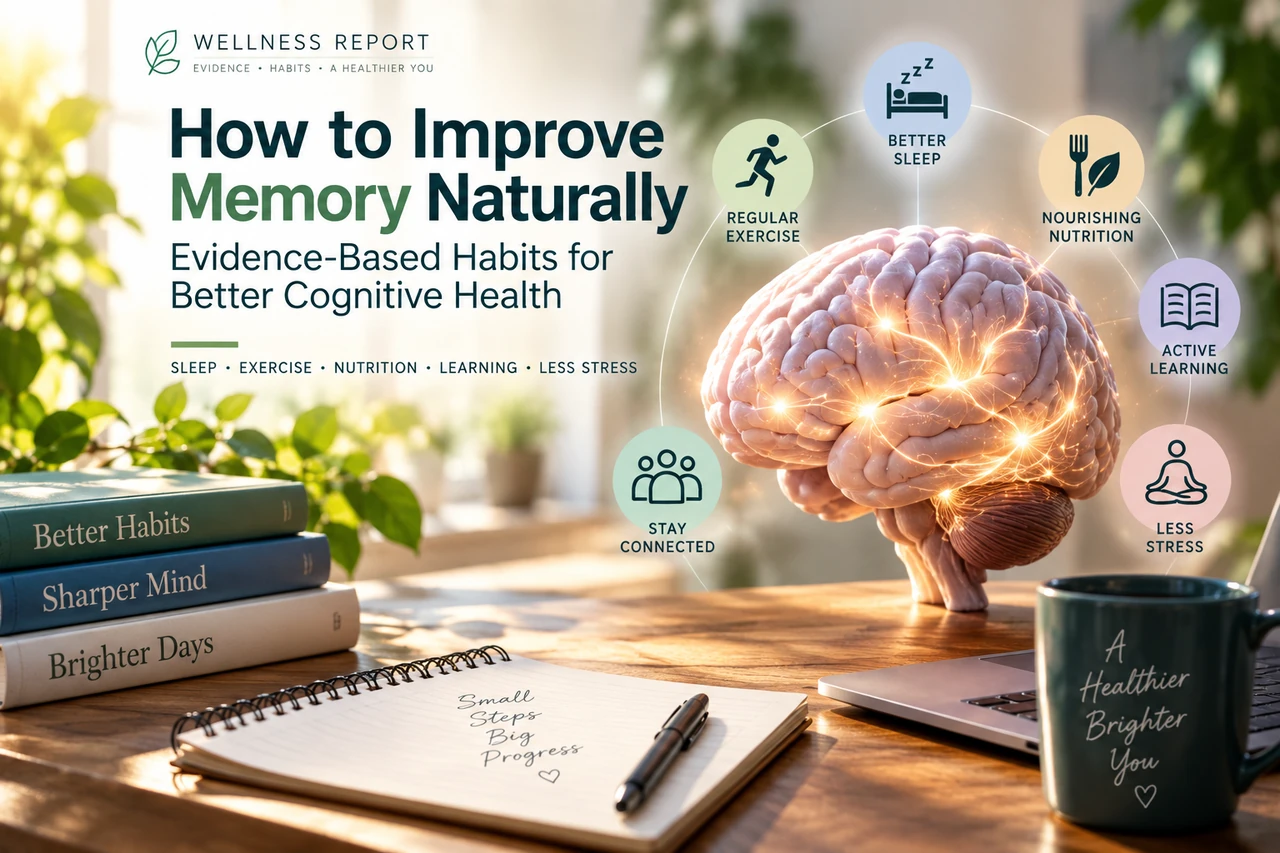
How to Improve Memory Naturally: The Short Answer
If you want to improve memory naturally, start with the conditions that help the brain learn and retrieve information well: get adequate sleep, stay physically active, pay attention when learning, practice recalling information instead of only rereading it, space learning across multiple sessions, and support your overall physical and mental health. None of these habits creates perfect memory, but together they provide a more realistic foundation than searching for a single food, supplement, or brain hack.
Memory is not one isolated ability. Remembering something requires information to be noticed and encoded, retained over time, and later retrieved when it is needed. A problem at any of those stages can feel like poor memory. For example, information that never received enough attention in the first place may not have been encoded strongly enough to recall later. That is one reason better memory often begins with better learning habits rather than trying to force the brain to store more information.
How Memory Works in Everyday Life
A useful way to think about memory is as three connected processes: encoding, consolidation, and retrieval. Encoding happens when information is first processed. Consolidation refers to the biological processes that help stabilize memories after learning. Retrieval is the ability to access that information later. These processes overlap, and memory is more complicated than a three-step diagram, but the framework helps explain why attention, sleep, practice, and stress can all influence whether something is remembered.
Encoding: You Have to Notice It Before You Can Remember It
Divided attention makes learning harder. Reading while repeatedly checking messages, switching between tabs, or listening only partially to a conversation gives the brain less consistent information to work with. This can later feel like forgetfulness even when the larger problem occurred during encoding. When something matters, reducing avoidable interruptions and engaging actively with the material can improve the quality of the initial learning experience.
Consolidation: Learning Continues After the Study Session Ends
Memories are not necessarily fixed the moment learning stops. The brain continues to process and stabilize information over time, and sleep is an important part of that process. This does not mean that one perfect night guarantees that everything you studied will be remembered, but it does mean that sacrificing sleep to create more study time can work against the learning process you are trying to improve.
Retrieval: Remembering Is a Skill You Can Practice
Retrieval is not simply the final test of whether learning worked. Trying to recall information can itself strengthen learning. That is why a short self-test, explaining an idea without notes, or writing down what you remember can be more useful than repeatedly looking at the same page and feeling increasingly familiar with it.
Prioritize Sleep
Sleep supports several cognitive processes involved in learning and memory. Research on sleep restriction consistently shows that inadequate sleep can impair aspects of cognitive performance, while experimental and observational research links sleep with memory consolidation and next-day functioning. The exact effects depend on the person, the type of memory being tested, how much sleep is lost, and whether sleep disruption is acute or ongoing.
For everyday memory, the practical lesson is straightforward: do not routinely treat sleep as expendable learning time. A consistent opportunity for adequate sleep is more useful than studying late into the night while progressively losing attention. If sleep problems are persistent, improving memory may require addressing the sleep problem itself rather than adding another learning technique.
Exercise Regularly
Physical activity is one of the better-supported lifestyle strategies for overall cognitive health. A large umbrella review published in 2025 brought together evidence from systematic reviews of randomized trials and found favorable effects of exercise on general cognition, memory, and executive function. The average effects on individual cognitive outcomes were not enormous, but they were meaningful enough to support exercise as part of a broader cognitive-health strategy.
You do not need a special memory workout. Walking, cycling, swimming, resistance training, sports, dancing, and other forms of physical activity can all contribute to health when they are appropriate for the individual. Studies differ in exercise type, intensity, frequency, participant age, and cognitive tests, so the evidence does not justify promising that one particular routine will produce a specific improvement in memory.
The larger advantage of exercise is that it affects many systems relevant to brain health at the same time, including cardiovascular fitness, metabolic health, mood, sleep, mobility, and vascular function. That makes regular physical activity more defensible as a long-term habit than treating exercise as a short-lived memory hack.
Practice Remembering Instead of Only Rereading
One of the most practical ways to improve learning is retrieval practice: deliberately trying to produce information from memory before looking at the answer. Instead of reading the same notes for the fourth time, close them and write down what you remember. Answer practice questions. Explain the concept aloud. Create a few questions for yourself and return to them later.
A systematic review of distributed practice and retrieval practice found that these strategies frequently improved learning outcomes in educational settings. Much of that evidence comes from structured education rather than from studies of everyday forgetfulness in the general population, so it should not be interpreted as a treatment for memory disorders. It does, however, support a simple principle: learning improves when you repeatedly practice accessing information rather than only exposing yourself to it.
Use Active Recall
After reading a section of a book, article, or training material, look away and summarize the main ideas without checking. When learning a name, try recalling it a few minutes later rather than repeatedly rereading it. When studying something complicated, turn headings into questions and answer them from memory. The effort involved in retrieval is part of what makes the practice useful.
Space Learning Across Time
Spacing means revisiting information across separate sessions instead of concentrating all practice into one long block. The exact interval does not need to be mathematically optimized for ordinary learning. The useful idea is simply to return to information after some forgetting has begun. A topic reviewed today, again in a few days, and again later generally creates more opportunities for retrieval than reading it repeatedly in one sitting.
Reduce Distractions While You Learn
Memory cannot fully compensate for information that received very little attention. When learning matters, create periods in which one task has priority. That may mean silencing nonessential notifications, closing unrelated tabs, putting the phone out of reach, or choosing a quieter environment. The goal is not perfect concentration for hours at a time. It is to reduce unnecessary switching long enough for the brain to process the material clearly.
This is particularly important when people describe themselves as forgetful because they repeatedly lose track of conversations, instructions, or tasks while multitasking. In those cases, improving the quality of attention at the beginning may be more useful than trying to strengthen recall after the information was only weakly encoded.
Manage Stress Without Turning Stress Reduction Into a Memory Cure
Stress can influence memory in complicated ways. Human experimental studies suggest that acute stress around the time of retrieval can make it harder to access some previously learned information. The outcome depends on timing, stress intensity, the kind of memory being tested, and individual differences. This is one reason someone may know material well but struggle to recall it during a highly stressful situation.
Stress management therefore belongs in a memory-supporting routine, but it should not be sold as a guaranteed cognitive enhancer. Exercise, adequate sleep, social support, time outdoors, relaxation practices, and mindfulness can all be reasonable ways to manage stress. A meta-analysis of randomized trials has also found small cognitive benefits associated with mindfulness interventions, although the effects vary across cognitive domains and study designs.
Eat for Overall Brain and Cardiometabolic Health
There is no single memory food. The stronger nutritional argument is to support overall brain, vascular, and metabolic health with a balanced dietary pattern. Research on Mediterranean-style diets is encouraging, and some randomized-trial findings have suggested benefits for aspects of episodic and working memory. However, cognitive outcomes are not uniformly improved across studies, and observational associations cannot prove that a dietary pattern alone causes better memory.
In practice, a brain-supportive eating pattern looks much like a generally health-supportive one: vegetables and fruit, legumes, whole grains, nuts and seeds, appropriate protein sources, and unsaturated fats within a pattern that fits the person's nutritional needs. This approach is more defensible than assigning extraordinary memory effects to blueberries, fish, coffee, dark chocolate, or any other individual food.
Cardiovascular and metabolic health also matter because the brain depends on adequate blood flow and energy regulation. Managing diagnosed high blood pressure, diabetes, abnormal blood lipids, and other relevant conditions with appropriate professional care contributes to broader cognitive health. A wellness article should not turn these medical conditions into do-it-yourself memory interventions.
Stay Mentally and Socially Engaged
Learning new information, maintaining skills, reading, solving meaningful problems, participating in hobbies, and staying socially connected can all provide mental stimulation. Research in older adults suggests that cognitive training can improve trained cognitive abilities, although improvement on a specific exercise does not necessarily transfer to every form of everyday memory.
Social connection may matter as part of the larger picture as well. Longitudinal research has associated stronger social relationships with more favorable cognitive outcomes in older adults, but association does not prove that adding a certain number of social activities will prevent cognitive decline. The practical goal is not to gamify social contact. It is to avoid treating cognitive health as something that happens only inside solitary brain-training exercises.
Do Memory Supplements Work?
Supplements marketed for memory often contain botanical extracts, amino acid derivatives, phospholipids, vitamins, minerals, or combinations of several ingredients. Some individual compounds have shown promising results in selected studies, but the overall evidence for cognitive-performance supplements in healthy adults remains inconsistent and often limited by small trials, different doses, different outcome tests, and variable study quality.
A systematic review of supplement ingredients marketed for cognitive performance concluded that the available evidence was generally not strong enough to support confident consumer recommendations across the ingredients studied. That does not mean every compound is ineffective. It means that promising ingredient-level findings should not be turned into broad claims that a supplement reliably improves memory.
Bacopa monnieri and Ginkgo biloba are examples of ingredients commonly associated with memory products. They have both been studied, but study results, populations, preparations, and doses vary. More importantly, evidence about one standardized ingredient cannot automatically be transferred to a finished multi-ingredient formula. A product containing several recognizable brain-health ingredients still needs evidence for its own formulation before claims about the finished product can be treated as established.
Supplements also have potential side effects and interactions. Anyone taking medications, managing a medical condition, pregnant or breastfeeding, or considering multiple cognitive supplements together should discuss their use with an appropriate health professional. Correcting a diagnosed nutrient deficiency is also a different situation from taking a nutrient above normal requirements in the hope of gaining extra memory capacity.
A Practical Memory-Supporting Routine
A realistic routine can be simple. Protect a regular sleep opportunity. Move your body most days in ways that fit your abilities. When learning something important, remove avoidable distractions, then practice retrieving the information without looking. Return to it on another day instead of trying to master everything in one sitting. Eat a varied, balanced diet and maintain appropriate care for conditions that affect overall health.
For information you repeatedly forget, make retrieval easier by connecting it to meaning. Use a person's name in conversation. Put a new fact into your own words. Associate an appointment with a calendar reminder rather than expecting memory to act as a perfect task manager. External tools such as calendars, lists, alarms, and notes are not evidence of a weak memory; they reduce unnecessary cognitive load so attention can be used where it matters.
Most importantly, judge the routine by consistency rather than intensity. One night of excellent sleep does not transform memory, just as one workout or one serving of berries does not determine cognitive health. Repeated behaviors create the environment in which learning and memory have a better chance to work well.
What Not to Do
Do not assume that difficulty remembering automatically means you need a brain supplement. Do not sacrifice sleep for more study time as a routine strategy. Do not confuse familiarity from rereading with the ability to retrieve information independently. Do not expect a brain-training game to improve every form of memory. And do not assume that occasional forgetfulness proves that something is medically wrong.
At the same time, persistent or worsening memory problems should not be dismissed as normal aging, stress, or lack of discipline without considering other explanations. Memory complaints can have many causes, some of which are treatable.
When Memory Problems Deserve Medical Attention
Occasionally forgetting a name, misplacing an item, or needing more time to recall information can happen to healthy people. More concerning changes include memory problems that are new, progressively worsening, interfere with familiar daily activities, cause repeated confusion, affect safety, or are noticed consistently by other people.
Memory changes can also be influenced by sleep disorders, depression, anxiety, medication effects, alcohol or other substances, thyroid problems, vitamin B12 deficiency, and other medical conditions. Sudden confusion or a sudden major change in cognition requires prompt medical attention rather than lifestyle experimentation. For persistent concerns, an appropriate clinical evaluation is more useful than trying to diagnose the cause through symptoms alone.
The Bottom Line
Improving memory naturally is less about finding something that boosts the brain and more about improving the conditions under which memory works. Sleep helps support consolidation. Exercise supports broader cognitive and physical health. Retrieval practice and spaced learning make learning more active. Managing distractions and stress can improve the circumstances in which information is encoded and retrieved, while a balanced diet and appropriate health care support the larger biological system.
No single habit guarantees sharper memory, and supplements remain secondary to the fundamentals. If you want a practical place to start, choose one piece of information you genuinely want to remember, learn it with full attention, try recalling it without looking, revisit it later, and give yourself enough sleep afterward. That simple cycle captures more of what memory needs than most brain-booster promises.
For readers who also want to compare cognitive-wellness supplements, the selections below offer different ingredient combinations and formats. Consider convenience, ingredient disclosure, and individual suitability alongside the memory habits discussed in this guide.
Was this article helpful?
Your anonymous response helps improve our editorial coverage.
Loading feedback options…
Share
Share this article
Selected references
Recommended products
 NeuroVera
Six-ingredient cognitive supplement in two capsules. Ingredient weights are listed, while extract standardization varies and the DHA line is marked 10%; the combination is not a verified cognitive treatment.
View product details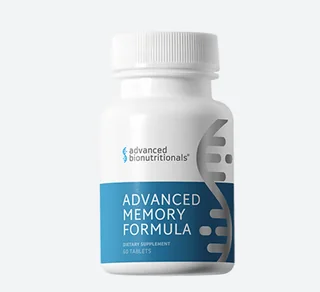 Advanced Memory Formula
Two-tablet cognitive blend with individually listed ingredients. The GPC line implies about 125 mg alpha-GPC; the PS-complex amount does not specify pure phosphatidylserine content.
View product details
More from Planet Wellness Report
Continue Reading

Focus
Memory and Aging: Everyday Habits That Support Cognitive Health
Memory can change with age without every forgotten name signaling disease. Learn what authoritative guidance says about ordinary forgetfulness, cognitive-health habits, and concerning changes.
12 min read

Focus
Bacopa vs Ginkgo for Memory: Evidence, Differences, and Practical Use
Compare Bacopa and Ginkgo evidence by cognitive outcome, population, extract, duration, safety, and the limits of the 2026 network meta-analysis.
9 min read

Focus
Ginkgo Biloba for Memory: What the Research Actually Shows
Ginkgo research does not support one broad memory promise. Understand healthy-adult findings, MCI and dementia evidence, extract differences, and safety.
8 min read
Evidence
Sources
- National Institute on Aging. Cognitive Health and Older Adults — National Institute on Aging / National Institutes of Health (Jun 11, 2024)
- National Institute on Aging. Memory Problems, Forgetfulness, and Aging — National Institute on Aging / National Institutes of Health
- Tim D. Smithies; Adam J. Toth; Ian C. Dunican; John A. Caldwell; Magdalena Kowal; Mark J. Campbell. The Effect of Sleep Restriction on Cognitive Performance in Elite Cognitive Performers: A Systematic Review — Sleep (Jul 9, 2021) · DOI
- Paula Iso-Markku; Sari Aaltonen; Urho M. Kujala; Hanna-Leena Halme; Daniel Phipps; Keegan Knittle; Eero Vuoksimaa; Katja Waller. Physical Activity and Cognitive Decline Among Older Adults: A Systematic Review and Meta-analysis — JAMA Network Open (Feb 1, 2024) · DOI
- Michelle E. Kelly; David Loughrey; Brian A. Lawlor; Ian H. Robertson; Cathal Walsh; Sabina Brennan. The Impact of Cognitive Training and Mental Stimulation on Cognitive and Everyday Functioning of Healthy Older Adults: A Systematic Review and Meta-analysis — Ageing Research Reviews (May 1, 2014) · DOI
- Claire T. McEvoy; Yue Leng; Geeske M. Peeters; Allison R. Kaup; Isabel E. Allen; Kristine Yaffe. Interventions Involving a Major Dietary Component Improve Cognitive Function in Cognitively Healthy Adults: A Systematic Review and Meta-analysis — Nutrition Research (Jun 1, 2019) · DOI
- Nur Hani Zainal; Michelle G. Newman. Mindfulness Enhances Cognitive Functioning: A Meta-analysis of 111 Randomized Controlled Trials — Health Psychology Review (Jun 1, 2024) · DOI
- Matteo Piolatto; Federico Bianchi; Matteo Rota; Alessandra Marengoni; Aliakbar Akbaritabar; Flaminio Squazzoni. The Effect of Social Relationships on Cognitive Decline in Older Adults: An Updated Systematic Review and Meta-analysis of Longitudinal Cohort Studies — BMC Public Health (Feb 11, 2022) · DOI
- Ben Singh et al.. Effectiveness of exercise for improving cognition, memory and executive function: a systematic umbrella review and meta-meta-analysis — British Journal of Sports Medicine (Jun 3, 2025) · DOI
- Emma Trumble, Jason Lodge, Allison Mandrusiak, Roma Forbes. Systematic review of distributed practice and retrieval practice in health professions education — Advances in Health Sciences Education (May 1, 2024) · DOI
- Cadu Klier, Luciano Grüdtner Buratto. Stress and long-term memory retrieval: a systematic review — Trends in Psychiatry and Psychotherapy (Jul 1, 2020) · DOI
- Jialei Fu, Li-Juan Tan, Jung Eun Lee, Sangah Shin. Association between the mediterranean diet and cognitive health among healthy adults: A systematic review and meta-analysis — Frontiers in Nutrition (Jul 28, 2022) · DOI
- Cindy Crawford, Courtney Boyd, Patricia A. Deuster. Dietary Supplement Ingredients for Optimizing Cognitive Performance Among Healthy Adults: A Systematic Review — Journal of Alternative and Complementary Medicine (Nov 1, 2021) · DOI