
COMPARISON
Bacopa vs Ginkgo for Memory: Evidence, Differences, and Practical Use
A comparison of research questions and preparations, with no universal winner or assumed synergy.
By Planet Wellness Report · Oct 13, 2026 · 9 min read
Editorial review and publication: Felipe Lopes, Publisher & Editor. This is an editorial review, not a medical review.
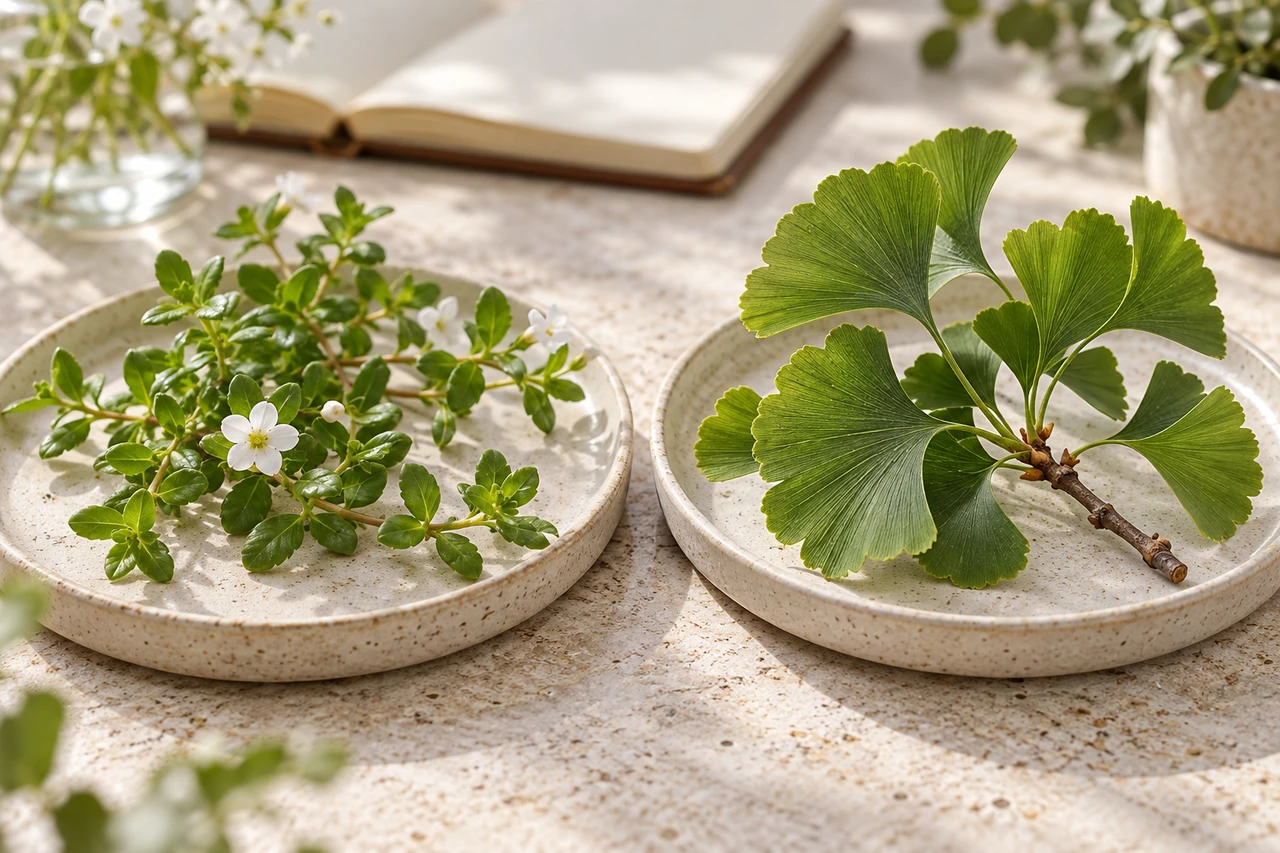
Side by side
Quick comparison
INGREDIENT
- Bacopa Monnieri
Bacopa monnieri is a botanical traditionally used in Ayurvedic practices and commonly included in cognitive wellness supplements.
- Ginkgo Biloba
Ginkgo biloba is a botanical ingredient commonly used in supplements focused on cognitive and circulatory wellness.
Bacopa and Ginkgo are not interchangeable “memory herbs,” and the evidence does not establish one universal winner. Bacopa has some encouraging findings on selected memory tasks in adults without dementia, alongside a newer trial with null primary cognitive results. Ginkgo has a larger clinical literature in cognitive impairment and dementia, but that does not establish dependable enhancement in healthy adults.
The 2026 network meta-analysis favored Bacopa dose groups on some memory outcomes in healthy adults. It compared separate trials indirectly, rather than testing the plants against each other in a head-to-head trial. The practical comparison starts with the population, cognitive goal, preparation, and duration—not a ranking treated as a prescription.
The two plants and their research identities
Bacopa monnieri, also called waterhyssop or brahmi, is commonly studied as an extract characterized partly by bacosides. Ginkgo biloba is a tree whose leaf extracts include flavone glycosides and terpene lactones. EGb 761 identifies a particular characterized Ginkgo preparation. Botanical names identify the plants; they do not establish equivalence among finished extracts.
A quick comparison by the same criteria
Research format and populations
Bacopa: Many memory trials involve repeated supplementation in adults without dementia, sometimes including older adults or people reporting everyday cognitive concerns. Ginkgo: Trials span healthy volunteers, subjective complaints, diagnosed MCI, and dementia. Those groups need separate interpretation. Both literatures contain randomized placebo-controlled trials, but the 2026 comparison had no direct botanical-versus-botanical trials.
Cognitive outcomes
Bacopa: Free recall and delayed memory have some encouraging signals, while broader attention and working-memory findings are mixed. Ginkgo: Healthy-adult enhancement is inconsistent; clinical studies often assess global cognition, overall status, and daily functioning. Neither profile warrants collapsing all outcomes into “better focus and memory.”
Timing and preparation
Bacopa: The older review’s trials generally lasted 12 weeks and used specific extracts at 300–450 mg daily. Ginkgo: Both acute experiments and longer clinical trials exist; six-month clinical findings and multiyear prevention findings answer different questions. Bacopa bacoside specification and Ginkgo flavone/terpene specifications help describe preparations, but nominal milligrams are not an equivalence test.
Healthy adults versus clinical impairment
Bacopa: Some selected memory outcomes are promising, without a consistent overall cognitive effect. Clinical impairment evidence should not be assumed from those trials. Ginkgo: Healthy-adult benefit is unestablished; the 2026 Cochrane review found little or no probable benefit on key MCI outcomes and possible lower-certainty symptom benefits in dementia. Neither botanical is established here as preventing dementia.
Safety and practical fit
Bacopa: Digestive complaints and headaches are relevant tolerability considerations, with medication and pregnancy questions requiring care. Ginkgo: Medication interactions, bleeding-risk context, and procedures need particular attention. Practical fit for either starts with a clearly disclosed preparation and a realistic research question; combining more ingredients does not establish greater effectiveness.
What Bacopa research generally shows
The older systematic review identified six trials in adults without significant cognitive impairment, all lasting 12 weeks. Its most consistent signal was free recall, while other abilities were less well studied or less convincing. That is a reason to investigate preparation-specific learning and recall effects, rather than claim that Bacopa improves all cognition. Our full Bacopa article examines individual trials and outcomes.
The 2025 Bacumen trial supplies an important counterweight. It randomized 101 adults aged 40–70 with self-reported memory and attention problems to 300 mg daily or placebo for 12 weeks. Analysis of 87 completers found no advantage on the primary verbal-learning, attention, and working-memory measures. Secondary stress and task-fatigue findings do not convert that primary null result into a memory success.
What Ginkgo research generally shows
The 2012 healthy-adult meta-analysis found no significant pooled improvement in memory, executive function, or attention. The 2026 Cochrane review tells a more differentiated clinical story: uncertain effects in subjective complaints; little or no probable improvement in key MCI outcomes; and possible small-to-moderate dementia symptom/function benefits supported by low-certainty evidence. Our Ginkgo research article explains these populations and the distinction between symptoms and prevention.
The large GEM trial did not show reduced dementia incidence over approximately six years. Therefore, more clinical Ginkgo research does not mean stronger evidence for a healthy person seeking better recall, and a possible symptom effect does not mean disease prevention. Age alone does not make a healthy participant equivalent to someone with diagnosed cognitive impairment.
What the 2026 network meta-analysis actually compared
Tiemtad and colleagues combined 29 randomized trials involving 2,107 healthy adults. Their search ended in November 2024. They categorized Bacopa as 300 to under 600 mg/day or at least 600 mg/day, and Ginkgo as 60 to under 240 mg/day or at least 240 mg/day. These are analytical dose groups across preparations, not a dosing plan for a retail bottle.
In the network, the higher-dose Bacopa group favored working memory and short-term memory relative to the compared groups. For delayed memory, the lower-dose Bacopa group favored results relative to lower-dose Ginkgo and placebo. Sustained attention, selective attention, and processing speed did not show significant differences. This domain-specific pattern does not support the simpler claim that Bacopa is proven better for every aspect of cognition.
The absence of direct comparisons is central. A network can link each treatment to a common comparator such as placebo and estimate a contrast. Its interpretation depends on whether trial populations, preparations, durations, and methods are sufficiently comparable. Statistical ranking is not a probability that an individual buyer benefits, nor a substitute for a head-to-head trial with the same tests and follow-up.
The published abstract supplies the dose categories and pooled findings, but does not establish equivalence among every included extract or a clinically meaningful improvement in daily functioning. The favorable rankings also predate the 2025 Bacumen trial because of the search cutoff. Consider the newer null trial alongside the network, rather than ignoring it or treating the two reports as if they evaluated identical evidence.
Memory is several questions, not one score
Working memory means holding information while using it, such as keeping intermediate numbers in mind. Short-term memory concerns brief retention; delayed memory concerns retrieving learned material later. Recall is a task format, often retrieving words without prompts, and can be immediate or delayed. Global cognition combines multiple abilities, particularly in clinical assessments. A gain in one does not establish a gain in the others.
This explains why two summaries can sound contradictory while addressing different outcomes. A delayed-recall result, an attention-speed result, and an overall clinical score should not be placed in one winner column. Improvements within a treatment group are also insufficient if placebo improves similarly. The between-group comparison is the relevant test of an added effect.

How long they are studied—and why more milligrams is not enough
For Bacopa, much of the memory literature concerns weeks of repeated use, particularly 12-week studies. That is different from immediate stress or mood experiments. For Ginkgo, acute healthy-volunteer experiments and chronic impairment trials coexist, without a reliable same-day enhancement conclusion. Trial length describes the research design, not a guaranteed time to noticeable results.
A Bacopa label’s bacoside percentage depends on the preparation and measurement specification. A Ginkgo label’s constituent percentages do not necessarily identify EGb 761 or its purification process. Comparing only 300 mg versus 240 mg overlooks that these are chemically different interventions. Do not escalate a product to imitate a network dose category, especially a blend containing other ingredients.
Older adults, MCI, and dementia need their own comparison
For someone examining dementia symptoms, the Ginkgo clinical literature is the more relevant evidence category to discuss with a qualified clinician. Its possible benefits remain qualified by low certainty and substantial variation across trials. For MCI, the Cochrane findings are less supportive. Bacopa’s healthy-adult memory literature does not establish an alternative treatment for either diagnosis.
For an older adult without impairment, use studies that actually enrolled that population and tested the desired ability. For progressive or function-limiting symptoms, identifying the cause matters more than selecting a botanical. Our memory and aging guide provides that broader context, while memory habits addresses a different practical question.
Safety: compare the real circumstances
Bacopa commonly raises digestive-tolerance questions; the 2025 trial also reported more headaches and digestive complaints than placebo, without serious adverse reactions. Reviews describe potential medicine interactions and insufficient pregnancy/breastfeeding safety information. Proposed interactions drawn from laboratory or animal evidence should not be represented as quantified risks for every user.
Ginkgo may interact with medicines, including a bleeding-risk concern with anticoagulants and antiplatelet drugs. Inform a clinician before surgery or other procedures, and have a pharmacist assess the full medication list. Research averages showing little difference in adverse events do not remove these individual checks. Pregnancy may be unsafe and breastfeeding information is limited. Do not interrupt prescribed medicines to use either botanical.
Can Bacopa and Ginkgo be combined?
There is direct human research on a combination, but it does not establish synergy. A randomized placebo-controlled study of 85 healthy participants examined a product containing 120 mg Ginkgo and 300 mg Bacopa for four weeks. It found no significant cognitive advantages across the tested processes at two or four weeks. This result concerns that product, duration, and population; it does not rule out every possible longer regimen.
Crucially, a combination-versus-placebo study does not isolate whether the two plants interact favorably or outperform each alone. Demonstrating an added combination benefit would require appropriate separate-ingredient comparison groups as well as the combination. Animal combination findings and a network ranking of separate extracts cannot supply that missing human evidence.
Commercial formulas: examples to compare, not trial substitutes
The official Advanced Memory Formula panel checked on October 13, 2026 lists both plants per two-tablet serving: Ginkgo leaf extract 80 mg, at least 24% flavone glycosides and 6% terpene lactones; Bacopa leaf extract 120 mg, at least 50% bacosides A and B. It does not identify the Ginkgo as EGb 761. These disclosures make it a relevant broader comparison option, without matching the amounts or complete preparations of the trials above.
The current NeuroVera panel lists Bacopa whole-herb extract 100 mg per two capsules, without a bacoside specification, and no Ginkgo. It is therefore a Bacopa-containing cognitive-wellness option, not an equivalent substitute for either standardized single extract. Our Advanced Memory Formula review and NeuroVera review address their wider ingredients and buying terms. Neither formula inherits proof of benefit from this comparison or from combining recognizable botanicals.
Which literature fits your question?
For learning and delayed recall in otherwise healthy adults, Bacopa’s preparation-specific literature is a relevant place to start, with the recent null trial included. For global symptoms and functioning in diagnosed dementia, Ginkgo has more directly applicable trials, with uncertainty and clinician-led care kept explicit. For an immediate focus boost or dementia prevention, neither literature justifies a reliable promise here.
The practical choice may also be to postpone a supplement decision until symptoms, medicines, or extract disclosure are clearer. If comparing products, favor transparency about preparation, amount, and tolerability over a winner claim or a larger blend. The evidence supports asking more precise questions about both plants; it does not support one universal winner or guaranteed synergy.
Was this article helpful?
Your anonymous response helps improve our editorial coverage.
Loading feedback options…
Share
Share this article
Selected references
Recommended products
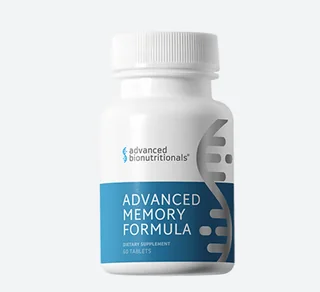 Advanced Memory Formula
Two-tablet cognitive blend with individually listed ingredients. The GPC line implies about 125 mg alpha-GPC; the PS-complex amount does not specify pure phosphatidylserine content.
View product details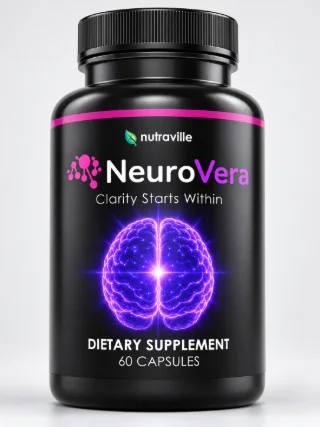 NeuroVera
Six-ingredient cognitive supplement in two capsules. Ingredient weights are listed, while extract standardization varies and the DHA line is marked 10%; the combination is not a verified cognitive treatment.
View product details
More from Planet Wellness Report
Continue Reading

Focus
Advanced Memory Formula Review: Reading the Doses Behind the Ingredient List
The two-tablet formula lists individual amounts, but disclosure is uneven: its GPC line implies about 125 mg alpha-GPC, while 150 mg PS complex does not identify pure PS content. Some ingredients have human cognitive research; the current combination has no controlled efficacy trial verified in this review.
8 min read
Focus
What to Look for in a Memory Supplement: Ingredients, Doses, and Evidence
Learn how to evaluate a memory supplement before buying: active amounts, standardized extracts, study populations, memory outcomes, and evidence for the complete formula.
12 min read

Focus
Ginkgo Biloba for Memory: What the Research Actually Shows
Ginkgo research does not support one broad memory promise. Understand healthy-adult findings, MCI and dementia evidence, extract differences, and safety.
8 min read
Evidence
Sources
- Tiemtad P, Ingkaninan K, Temkitthawon P, Thimkorn P, Rattanachaisit N, Teaktong T, Dhippayom T.. Comparative effects of Bacopa monnieri and Ginkgo biloba on cognitive functions: A systematic review and network meta-analysis — Phytomedicine : international journal of phytotherapy and phytopharmacology (Feb 2, 2026) · DOI
- Wieland LS, Ludeman E, Chi Y, Feinberg TM, Chen IH, Chen KH, Zhu Y, Wolverson E, Amri H.. Ginkgo biloba for cognitive impairment and dementia — The Cochrane database of systematic reviews (Feb 5, 2026) · DOI
- Laws KR, Sweetnam H, Kondel TK.. Is Ginkgo biloba a cognitive enhancer in healthy individuals? A meta-analysis — Human psychopharmacology (Sep 24, 2012) · DOI
- DeKosky ST, Williamson JD, Fitzpatrick AL, Kronmal RA, Ives DG, Saxton JA, Lopez OL, Burke G, Carlson MC, Fried LP, Kuller LH, Robbins JA, Tracy RP, Woolard NF, Dunn L, Snitz BE, Nahin RL, Furberg CD, Ginkgo Evaluation of Memory (GEM) Study Investigators.. Ginkgo biloba for prevention of dementia: a randomized controlled trial — JAMA · DOI
- Matthew P. Pase; J. Kean; J. Sarris; C. Neale; A. B. Scholey; C. Stough. The cognitive-enhancing effects of Bacopa monnieri: a systematic review of randomized, controlled human clinical trials — Journal of Alternative and Complementary Medicine (Jul 2, 2012) · DOI
- A. L. Lopresti; S. J. Smith. The Effects of a Bacopa monnieri Extract (Bacumen®) on Cognition, Stress, and Fatigue in Healthy Adults: A Randomized, Double-Blind, Placebo-Controlled Trial — Clinical Drug Investigation · DOI
- Gościniak A, Stasiłowicz-Krzemień A, Szeląg M, Pawlak J, Skiera I, Kwiatkowska H, Nowak N, Bernady K, Trzaskoma P, Zimak-Krótkopad O, Cielecka-Piontek J.. Bacopa monnieri: Preclinical and Clinical Evidence of Neuroactive Effects, Safety of Use and the Search for Improved Bioavailability — Nutrients (Jun 5, 2025) · DOI
- Nathan PJ, Tanner S, Lloyd J, Harrison B, Curran L, Oliver C, Stough C.. Effects of a combined extract of Ginkgo biloba and Bacopa monniera on cognitive function in healthy humans — Human psychopharmacology · DOI
- Ginkgo: Usefulness and Safety — National Center for Complementary and Integrative Health
- European Medicines Agency. European Union herbal monograph on Ginkgo biloba L., folium — European Medicines Agency (Jan 28, 2015)
- Advanced Memory Formula — Supplement Facts — Advanced Bionutritionals
- NeuroVera: Official Product Information — Nutraville