
ARTICLE
How to Choose a Mitochondrial Supplement: Ingredients, Doses, and Evidence
By Planet Wellness Report · Nov 4, 2026 · 11 min read
Editorial review and publication: Felipe Lopes, Publisher & Editor. This is an editorial review, not a medical review.

To choose a mitochondrial supplement, start with the full label, then compare each ingredient's form and daily amount with human research that measured an outcome you care about. Finally, check whether the complete formula has been tested. A long ingredient list can make a product convenient; it cannot tell you how much more energetic you will feel.
This guide is for adults comparing formulas before buying. It separates three questions that supplement marketing often blends together: does an ingredient participate in energy metabolism, does taking it change a measurable biological marker, and does supplementation improve fatigue or daily function?
Those are different levels of evidence. You can use the same buying framework whether you prefer a single ingredient or a ready-made combination.
What Does a Mitochondrial Supplement Actually Do?
Mitochondria help cells convert fuel into usable energy. CoQ10 participates in mitochondrial electron transport, and vitamin B3 contributes to NAD-related metabolism. These biological roles explain why such ingredients appear in products marketed for cellular energy. They do not establish that extra intake produces a noticeable benefit in someone whose needs are already met. [1,2]
“Mitochondrial supplement” is a shopping category, not a diagnosis or a standardized formula. Two bottles using that phrase may contain substantially different ingredients and amounts. Evaluate the actual intervention rather than treating the category name as evidence.
Everyday tiredness does not identify mitochondrial dysfunction. Fatigue can have many causes, and persistent or unexplained symptoms deserve assessment. These products should not be selected as self-treatment for mitochondrial disease or persistent fatigue. Our everyday energy guide helps put the broader complaint in context. [3]
Five Things to Check Before Buying
1. Which ingredients are included?
Write down the ingredients you actually want to evaluate before looking at the number on the front of the bottle. A shorter formula may fit a narrow goal; a combination may fit someone who deliberately wants its fixed ingredients together. More components also mean more potential overlap with products you already take.
Treat an unfamiliar ingredient as a question to investigate, not an automatic advantage. A mitochondrial theme does not make every ingredient equally relevant to your goal.
2. Are the individual doses disclosed?
Look for the amount of each ingredient per serving and the number of capsules in that serving. A proprietary blend's total weight cannot reveal every component's dose. Individual disclosure makes comparison possible, although it does not by itself establish effectiveness. [4]
Make a simple comparison sheet for each shortlisted product: serving size; ingredient and preparation; amount per labeled daily serving; relevant human study; medication concerns; and total cost per serving. Mark missing information as unknown rather than filling it with a marketing claim.
3. Do the preparations match human research?
An ingredient name is only the beginning of a match. Check chemical form, extract standardization, delivery method, and whether the stated weight refers to the active compound or a salt or complex. CoQ10 described only as “coenzyme Q10,” for example, should not automatically be called ubiquinol.
Keep the study population, duration, and formulation beside the dose. A human trial of a different preparation is useful background, but it does not certify that every product bearing the ingredient name will give the same result.
4. What outcomes were actually measured?
Look for outcomes that answer your question: a fatigue scale, an exercise test, or a measure of everyday function. Changes in blood concentration or a signaling protein answer narrower biological questions.
One randomized study illustrates the distinction: 23 untrained men took PQQ 20 mg/day or placebo while completing six weeks of endurance training. A marker associated with mitochondrial biogenesis increased, but aerobic performance did not improve more than with placebo. A marker changed; the measured performance advantage was absent. [5]
5. Has the complete formula been tested?
Ask for a controlled human trial of the same finished formulation, at its marketed serving, in an applicable population. A bibliography containing separate ingredient trials does not answer that request.
If no applicable trial is available, the product can still be considered for practical reasons such as convenience and transparent labeling. The uncertainty should remain part of the buying decision. Neither “clinically studied ingredients” nor a plausible mechanism proves that the mixture improves energy, and combining ingredients does not establish synergy.

Key Ingredients Found in Mitochondrial Supplements
Coenzyme Q10
CoQ10 has human fatigue research beyond a mechanistic rationale. A 2022 meta-analysis included 13 randomized trials and 1,126 participants and found an overall reduction in fatigue scores. Populations and interventions varied. Its CoQ10-only subgroup was statistically favorable; the compound-formulation subgroup was not. That does not establish that every combination fails, but it prevents transferring the pooled result to any blend containing CoQ10. [6]
A review published online in late 2025 and in a 2026 journal issue included 24 studies in healthy adults. Blood CoQ10 rose consistently, while exercise-performance effects were small and inconsistent. This is another reason to distinguish absorption from a benefit you can use. [12]
For shopping purposes, ask which preparation and outcome support the specific dose on the label. Our CoQ10 and energy guide examines the evidence in more detail.
PQQ
PQQ's mitochondrial positioning is ahead of strong evidence for everyday energy benefits. An early open-label study gave 17 adults 20 mg/day for eight weeks and reported improvements in questionnaire measures including fatigue. Without a placebo group, those changes cannot establish that PQQ caused the improvement. The training trial described above also shows why mitochondrial markers and performance must remain separate. [5,7]
Use our PQQ and mitochondrial health guide for the fuller research context, including the distinction between human findings and laboratory mechanisms. If you are choosing between these two ingredients, our CoQ10 vs PQQ comparison addresses that narrower decision.
Acetyl-L-carnitine
Check that a citation actually studied acetyl-L-carnitine, rather than assuming all carnitine preparations are interchangeable. Carnitine research includes selected clinical populations and mixed findings; it should not be treated as a universal energy prescription. The NIH fact sheet distinguishes supplement forms and describes the limits of the evidence. [8]
Our acetyl-L-carnitine and fatigue guide covers the population-specific studies. When comparing a combination, evaluate its amount against the particular intervention of interest rather than accepting “contains carnitine” as a sufficient match.
Alpha-lipoic acid
Check whether the label specifies R-alpha-lipoic acid and whether the cited research used the same preparation. Also check the endpoint: research in diabetic peripheral neuropathy concerns a specific condition, not ordinary energy. A 2024 Cochrane review found little or no effect on neuropathy symptoms at six months. That result does not establish an energy benefit or settle the effect of a different formula. [9]
Niacinamide and other ingredients
Niacinamide is a form of vitamin B3. Its role in NAD metabolism is real, but it is not interchangeable with every other NAD-related compound or evidence of rejuvenation. A high percentage Daily Value is a nutrient comparison, not a percentage increase in energy. [2]
Formulas may also include magnesium, D-ribose, curcumin, quercetin, resveratrol, or pepper extract. Apply the same checks to each: identity, amount, preparation, applicable outcome, and suitability. Their presence does not show that they compensate for a smaller amount of another ingredient.
Exploring a multi-ingredient mitochondrial formula?
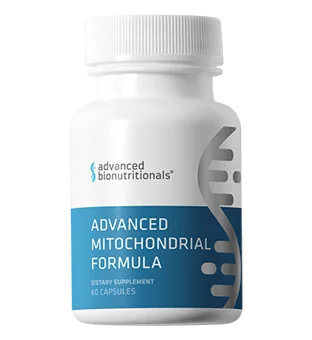
See how Advanced Mitochondrial Formula brings several commonly discussed ingredients into one serving, and what its label reveals about the evidence and tradeoffs.
Explore the formula and our review
Single-Ingredient Supplements vs Multi-Ingredient Formulas
A single-ingredient product usually gives you more control over that ingredient's amount and makes it easier to avoid unwanted additions. It may be the more straightforward option when your clinician has identified a specific ingredient to consider or when you want to compare one preparation with a particular study.
A multi-ingredient formula can simplify shopping, reduce the number of bottles, and provide fixed quantities together. Those are legitimate practical advantages for someone who wants the listed combination. They are different from demonstrating greater effectiveness or better value.
The tradeoff is flexibility: changing one ingredient's dose changes the others too. A broad formula is less attractive if several ingredients are irrelevant to your goal, conflict with your medicines, or duplicate an existing supplement. There is no universal winner between the two formats.
How to Compare Supplement Labels and Doses
First normalize the serving. A “50 mg” amount per two capsules is 25 mg per capsule; a 60-capsule bottle at that serving contains 30 servings. Compare products at their labeled daily use, then calculate price per serving rather than price per bottle.
Next compare a real label with a real study. Advanced Mitochondrial Formula lists CoQ10 50 mg per two capsules without identifying it as ubiquinol. One small placebo-controlled trial studied ubiquinol at 100 or 150 mg/day for 12 weeks in otherwise healthy adults with mild fatigue. It reported improvements in selected subjective fatigue measures after cognitive tasks. The analysis included 62 participants, and the study received industry funding. The formula's 50 mg and unspecified preparation do not reproduce that intervention. [10,11]
Similarly, the label lists PQQ disodium salt 5 mg, while the six-week training trial reported PQQ 20 mg/day. Before calculating a dose ratio, verify whether both quantities use the same chemical and mass basis. More fundamentally, that trial did not show an added aerobic-performance benefit, so matching its amount would not turn its result into a positive one. [5,11]
These examples are comparison tools, not dosing instructions. A lower amount is not automatically ineffective, and a higher one is not automatically better. Do not multiply the serving of a combination to chase one research dose: every other ingredient would increase too.
Safety, Quality, and Medication Considerations
Check the entire formula with a pharmacist if you take medicines. NCCIH notes that CoQ10 can interact with warfarin or insulin and may be incompatible with some cancer treatments; digestive upset and insomnia can occur. A combination also needs review for its other ingredients. [1]
Niacinamide (nicotinamide) and nicotinic acid are forms of vitamin B3 with different adverse-effect profiles. The U.S. adult upper limit of 35 mg/day applies to both forms of supplemental niacin, but it was based on flushing caused by nicotinic acid. Niacinamide does not cause that flushing, and NIH describes its adverse effects mainly at substantially higher intakes. [2]
The product's 200 mg of niacinamide exceeds that upper limit; this comparison alone does not establish that the serving is toxic. It also does not establish safety for every consumer or for the complete mixture. Add up vitamin B3 from other supplements, and review the full formula with a pharmacist if you take medicines or have a medical condition. [2]
Pregnancy, breastfeeding, kidney or liver disease, cancer treatment, and planned procedures are reasons for an individual suitability check. Smaller amounts than those used in a trial do not guarantee medication compatibility. [4]
For quality, look for verifiable independent testing and find out what was tested. A quality seal may address identity, composition, or contaminants; it does not prove a clinical benefit. U.S. dietary supplements are not FDA-approved for effectiveness before sale. We have not independently verified a third-party certification or batch analysis for the example product. [4]
A Real-World Example: Advanced Mitochondrial Formula
The official manufacturer-linked Supplement Facts panel rechecked November 4, 2026 lists two capsules per serving and 30 servings per container. It discloses individual amounts, including niacinamide 200 mg, magnesium 45 mg, acetyl-L-carnitine 190 mg, CoQ10 50 mg, R-alpha-lipoic acid 50 mg, and PQQ disodium salt 5 mg. These are label facts, not measured benefits. [11]
For a shopper who prefers a ready-made combination, the useful features are the two-capsule format and the ability to inspect the individual quantities. The questions to carry forward are preparation matching, whether those fixed amounts fit your purpose, total intake from other products, and medication suitability.
We did not verify a controlled human efficacy trial of this exact current finished formula in this research. Separate ingredient studies cannot establish its effect on fatigue, longevity, or everyday energy. Its ingredient count also does not demonstrate synergy.
If a ready-made combination appeals to you, our full Advanced Mitochondrial Formula review examines the complete label, evidence limitations, suitability considerations, and dated buying-cost information.
Who Might Consider a Multi-Ingredient Formula?
It may suit an adult who understands the evidence limits, deliberately wants several of the included ingredients together, accepts the fixed amounts, and has checked suitability. Reducing the number of separate bottles can matter even when superior clinical results have not been established.
It is a weaker fit when you want to reproduce one specific intervention, need to adjust ingredients separately, or would mainly be paying for compounds you do not want. If unexplained fatigue is driving the purchase, assessment is a more useful next step than assuming a cellular-energy formula addresses the cause. [3]
What to Know Before Making a Purchase
Choose the formula you can explain: what each relevant ingredient is, what amount you would take, which human result applies, and what remains uncertain. Keep an unverified point visible instead of treating it as a product advantage.
Compare total cost at the serving you actually intend to use, including shipping and tax. Check the current return conditions and recurring-payment selection. Convenience may justify a combination for some shoppers, but savings over separate products require a real like-for-like calculation.
Before deciding, compare the formula's ingredients, serving cost, and current purchase terms with your priorities. Our Advanced Mitochondrial Formula review brings those considerations together and links to the available buying options. Its price snapshot is dated; confirm the current offer and label before ordering.
Planet Wellness Report may earn a commission from qualifying purchases through product links. Affiliate relationships do not determine how the evidence is evaluated or the conclusions of this guide.
Was this article helpful?
Your anonymous response helps improve our editorial coverage.
Loading feedback options…
Share
Share this article
Selected references
Recommended products
More from Planet Wellness Report
Continue Reading

Energy
Advanced Mitochondrial Formula Review: Many Ingredients, Which Dose Matches?
This two-capsule formula discloses individual amounts, including CoQ10 50 mg, acetyl L-carnitine 190 mg and PQQ disodium salt 5 mg. That supports a label audit, but several ingredient studies use different doses or populations and do not establish an energy benefit from this combination.
7 min read

Energy
CoQ10 vs PQQ for Mitochondrial Health: Evidence, Energy, and Practical Use
Compare CoQ10 and PQQ by human evidence, fatigue, exercise, cognition, safety, and combination research—without assuming a universal winner.
9 min read

Energy
Acetyl-L-Carnitine for Energy and Fatigue: What Human Research Actually Shows
Acetyl-L-carnitine has fatigue research in selected clinical and older populations. See what the findings mean for healthy adults, exercise, and safety.
8 min read
Evidence
Sources
- Coenzyme Q10 — National Center for Complementary and Integrative Health
- Niacin — Health Professional Fact Sheet — NIH Office of Dietary Supplements
- U.S. National Library of Medicine. Fatigue — MedlinePlus / U.S. National Library of Medicine
- Dietary Supplements: What You Need to Know — NIH Office of Dietary Supplements
- Hwang PS, Machek SB, Cardaci TD, Wilburn DT, Kim CS, Suezaki ES, Willoughby DS.. Effects of Pyrroloquinoline Quinone (PQQ) Supplementation on Aerobic Exercise Performance and Indices of Mitochondrial Biogenesis in Untrained Men — Journal of the American College of Nutrition (Dec 20, 2019) · DOI
- I-Chen Tsai; Chih-Wei Hsu; Chun-Hung Chang; Ping-Tao Tseng; Ke-Vin Chang. Effectiveness of Coenzyme Q10 Supplementation for Reducing Fatigue: A Systematic Review and Meta-Analysis of Randomized Controlled Trials — Frontiers in Pharmacology (Aug 24, 2022) · DOI
- Masahiko Nakano; Tetsuro Yamamoto; Hisayoshi Okamura; Akira Tsuda; Yasuyuki Kowatari. Effects of Oral Supplementation with Pyrroloquinoline Quinone on Stress, Fatigue, and Sleep — Functional Foods in Health and Disease (Aug 31, 2012) · DOI
- Carnitine: Fact Sheet for Health Professionals — NIH Office of Dietary Supplements
- Baicus C, Purcarea A, von Elm E, Delcea C, Furtunescu FL.. Alpha-lipoic acid for diabetic peripheral neuropathy — The Cochrane database of systematic reviews (Jan 11, 2024) · DOI
- Kei Mizuno; Akihiro T. Sasaki; Kyosuke Watanabe; Yasuyoshi Watanabe. Ubiquinol-10 Intake Is Effective in Relieving Mild Fatigue in Healthy Individuals — Nutrients (Jun 2, 2020) · DOI
- Advanced Mitochondrial Formula — Supplement Facts — Advanced Bionutritionals
- Deng H, Song T, Yin M, Xu K, Zhong Y, Mohd NB, Naharudin MNB, Yusof A, Fan X.. Coenzyme Q10 supplementation increases blood concentrations but shows limited and inconsistent effects on exercise performance: a systematic review and meta-analysis — The British journal of nutrition · DOI