
ARTICLE
Acetyl-L-Carnitine for Energy and Fatigue: What Human Research Actually Shows
Human fatigue findings depend on the population, the preparation, and the outcome measured.
By Planet Wellness Report · Oct 16, 2026 · 8 min read
Editorial review and publication: Felipe Lopes, Publisher & Editor. This is an editorial review, not a medical review.
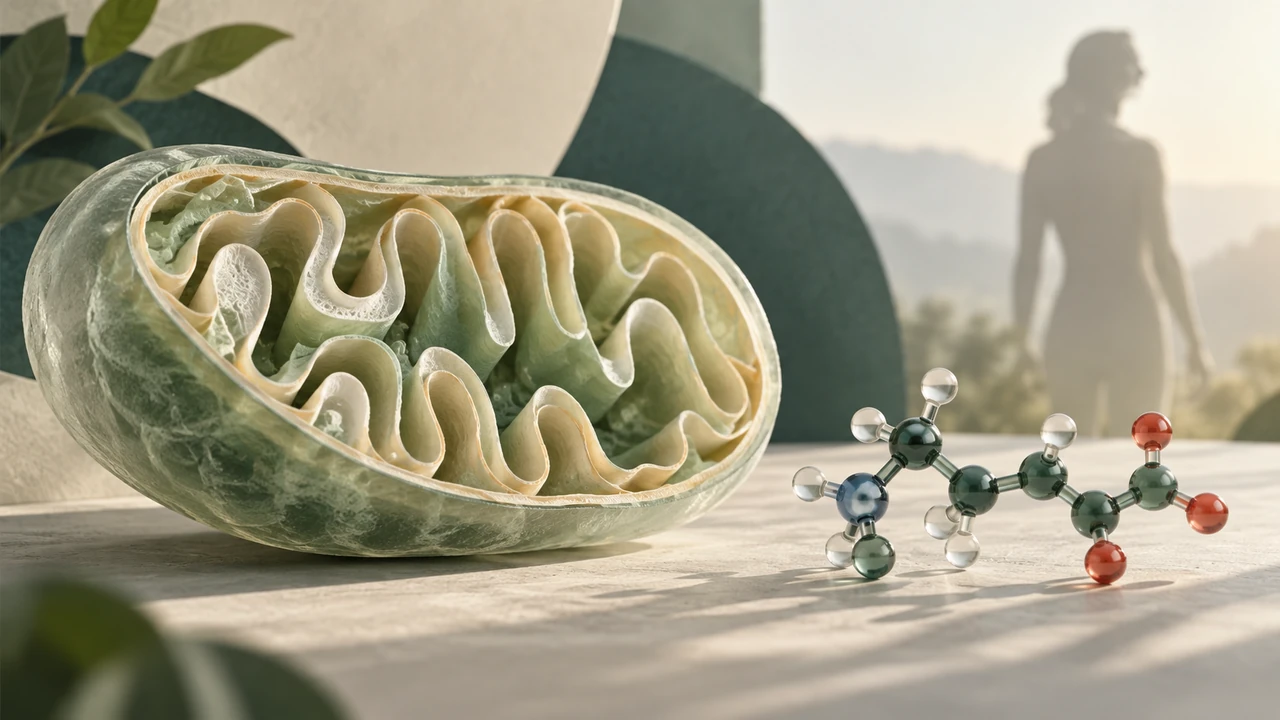
Acetyl-L-carnitine, often called ALCAR or ALC, has a real role in metabolism and a history of human research. That does not make it a dependable energy boost for every tired adult. Some trials report less physical or mental fatigue in selected older or clinical populations; the evidence does not establish a consistent benefit in well-nourished, otherwise healthy adults.
The useful question is specific: did a comparable preparation improve the kind of fatigue you experience in people like you? A questionnaire about exhaustion, a cycling test, a memory score, and a blood marker answer different questions. This guide keeps those outcomes separate rather than combining them into an undefined energy claim.
What acetyl-L-carnitine is, and what the body already makes
ALCAR is an acetylated member of the carnitine family. The body synthesizes carnitine from amino-acid precursors, and foods also supply it. Healthy adults generally make enough to meet their needs. True deficiency can occur with genetic disorders, certain diseases, or medication-related changes, but ordinary tiredness does not establish a deficiency. Treating a diagnosed deficiency is a different decision from adding an over-the-counter supplement. [1]
In the carnitine shuttle, carnitine helps move long-chain fatty-acid groups across the inner mitochondrial membrane for oxidation. The acetyl group carried by ALCAR is a shorter chemical unit, and carnitine metabolism also helps manage acyl groups. ALCAR has been investigated in the central nervous system because it can enter the brain. These roles explain scientific interest; they do not measure a noticeable change in motivation, stamina, or fatigue. [1,9]
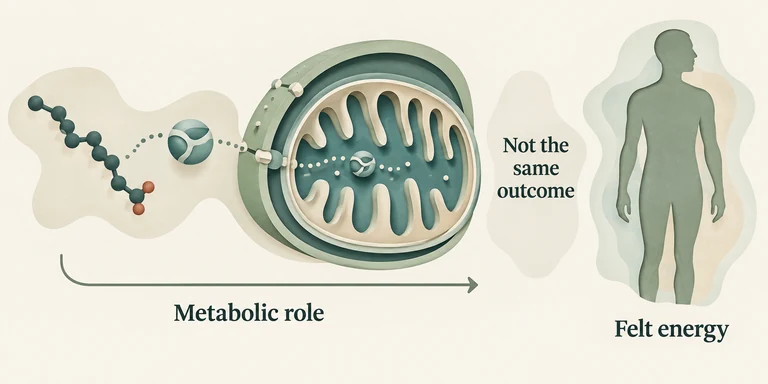
ALCAR versus L-carnitine: related forms, different interventions
A label that says L-carnitine, levocarnitine, L-carnitine L-tartrate, or propionyl-L-carnitine does not automatically describe an ALCAR intervention. The forms share carnitine biology, but their preparations, doses, and studied uses differ. Brain penetration is a pharmacological rationale, not proof that ALCAR is universally better absorbed or more effective for fatigue. [1,9]
For that reason, L-carnitine exercise or deficiency studies are context here, not direct evidence for an ALCAR capsule. Nor can a higher blood carnitine level establish that fatigue improved. Our acetyl-L-carnitine ingredient hub provides broader ingredient context; the question here is what human fatigue-related outcomes actually show.
Which fatigue outcomes have human evidence?
Subjective fatigue is the person’s report of exhaustion or reduced capacity. Physical fatigue concerns bodily effort or limitations; mental or cognitive fatigue concerns the experience of sustained mental work. Exercise performance requires an actual performance measure. Cognition means tests of abilities such as memory or attention. Muscle mass, strength, and mitochondrial biomarkers each require their own evidence. Improvement in one category cannot be counted as improvement in all of them.
A recent illustration comes from an October 2026 carnitine meta-analysis covering 20 randomized trials and 1,878 participants. It reported a pooled improvement in the vitality domain of quality of life, with considerable variation across studies and formulations. It did not establish an ALCAR-only benefit for fatigue in healthy adults; physical functioning was not significantly improved. Its publication is an early accepted version, and the formulation and population differences remain important. [10]
Older adults: a positive fatigue trial, with a narrow population
A randomized trial in 96 adults aged 71–88, published online in 2007 and in print in 2008, reported improvements with ALCAR in physical fatigue, mental fatigue, fatigue severity, and functional measures relative to the comparator group. Participants had a defined chronic-fatigue context, rather than being an unselected sample of healthy older adults. [2]
This is a relevant human signal, but one trial does not establish that all older people need supplementation or that younger adults will obtain similar results. Cognitive and functional scores were also reported; those should remain separate from fatigue. The abstract does not supply a complete dosing protocol, so it should not be used to invent a self-treatment schedule. [2]
Chronic fatigue syndrome and neurological fatigue
An exploratory study randomized 90 people with chronic fatigue syndrome into three open-label groups of 30. Over 24 weeks, participants received acetyl-L-carnitine 2 g/day, propionyl-L-carnitine 2 g/day, or both. ALCAR was associated with improvement in mental fatigue, while propionyl-L-carnitine improved general fatigue. These are different outcomes and different compounds. [3]
There was no placebo group and participants knew they were receiving treatment. Expectations, symptom fluctuation, and other changes therefore cannot be separated reliably from a supplement effect. Random assignment among active regimens does not solve the missing placebo comparison. These results are exploratory, not proof that ALCAR treats ME/CFS. The studied dose describes the experiment, not a recommendation. [3]
For multiple-sclerosis-related fatigue, a Cochrane review found insufficient evidence of a therapeutic advantage over placebo or active comparators. The completed crossover trial involved 36 participants and compared ALCAR with amantadine. The review’s 2021 version should not be mistaken for a newly performed 2021 search: its literature search ended in September 2011. Neurological fatigue needs condition-specific evaluation. [4]
Healthy adults, exercise performance, and muscle outcomes
The studies reviewed here do not establish a reproducible everyday-fatigue benefit from ALCAR alone in well-nourished healthy adults. Evidence in a disease group cannot fill that gap, and a plausible metabolic role is not a substitute for a relevant trial. Persistent tiredness does not necessarily mean there is a problem with how mitochondria use fuel.
A 2025 double-blind randomized trial in 41 trained male cyclists tested four weeks of ALCAR 1,200 mg/day plus alpha-lipoic acid 300 mg/day and vitamins B1 and B12 against placebo. Although the paper’s title uses the broader term L-carnitine, the intervention is identified as acetyl-L-carnitine. Aerobic and anaerobic performance and fatigue metrics did not show a significant group advantage. [5]
A reduction in blood lactate after one high-intensity test did not translate into better performance. Because the intervention contained several ingredients, the trial cannot isolate ALCAR’s contribution. It also cannot establish results for women, other exercise settings, or longer use. Neither this study nor the older-adult fatigue signal establishes that ALCAR builds muscle or reliably improves recovery. [5]
Depression, cognition, and neuropathy are separate evidence categories
A 2026 systematic review of ALCAR in mood disorders pooled ten randomized trials for depression severity. The overall estimate favored ALCAR, but heterogeneity was extremely high and small-study effects were detected. Depression-scale findings are not a dedicated demonstration that depression-related fatigue improves, and they are not evidence to replace prescribed treatment. [6]
ALCAR has also been studied in cognitive disorders and hepatic encephalopathy. Those clinical settings help explain its research history; changes in memory tests or disease-specific symptoms cannot be presented as improved mental stamina in healthy readers. The critical review of cognition emphasizes the need to judge the individual disorder and study design. [9]
Peripheral-neuropathy studies assess pain, nerve function, or disability rather than ordinary energy. A Cochrane review of diabetic neuropathy found uncertainty about pain reduction and limitations in the evidence. Pain findings from one cause of neuropathy should not be generalized to another, or repackaged as fatigue relief. [8]
Cancer-related fatigue: a trial with a clinically important harm signal
In a placebo-controlled trial with 409 evaluable women receiving taxane-based breast-cancer chemotherapy, ALCAR 3,000 mg/day did not improve the fatigue outcome relative to placebo. Neuropathy was significantly worse with ALCAR at week 24, although the primary week-12 neuropathy comparison was not significant. [7]
This is randomized evidence in a specific treatment context, not a case report and not a claim that ALCAR causes neuropathy in everyone. It is a strong reason to discuss ALCAR with the oncology team before using it during cancer treatment. Positive findings in other neurological settings do not override this result. [7]
Safety, sleep, thyroid conditions, and medication checks
Carnitine supplements can cause nausea, abdominal cramps, diarrhea, and a fishy odor, particularly around 3 g/day. NIH also advises caution for people with seizure disorders and notes that some anticonvulsants and certain antibiotics affect carnitine status. These are carnitine-family cautions; they do not quantify the risk from a particular low-dose ALCAR preparation. Pregnancy and breastfeeding do not have an established safe ALCAR fatigue regimen. [1]
Insomnia was reported in a 2025 retrospective fibromyalgia add-on study. Because it was not a randomized placebo comparison and people had other treatment, it cannot establish how often ALCAR itself causes sleep disruption. Evidence reviewed here does not support a precise frequency claim for restlessness. New sleep problems or agitation are reasons to discuss suitability rather than interpret the sensation as proof of improved energy. [12]
L-carnitine has been investigated as an antagonist of thyroid-hormone action. That is relevant context for a medication review, especially with thyroid disease or thyroid replacement, but it does not establish the size of an interaction for every ALCAR supplement. Review the complete product with a clinician or pharmacist; do not stop or adjust thyroid medicine, anticonvulsants, or other prescribed treatment yourself. [11]
A formula containing ALCAR: where the label fits
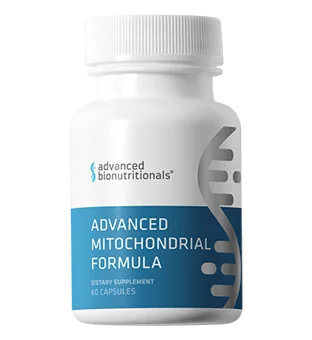
If a multi-ingredient capsule with clearly listed amounts fits your preferences, Advanced Mitochondrial Formula is one option to consider after checking that it is suitable for you. The official label checked October 16, 2026 lists acetyl L-carnitine 190 mg per two-capsule serving, alongside CoQ10 50 mg, PQQ disodium salt 5 mg, and other ingredients. That confirms inclusion, not a clinically established fatigue effect. [13]
Its ALCAR quantity and combined preparation differ from the gram-level interventions described above. Ingredient trials do not establish the effect of this finished formula, and combining ingredients does not demonstrate synergy. Our Advanced Mitochondrial Formula review covers the bottle and its practical tradeoffs separately.
What to take from the human research
Human studies give researchers reasons to keep investigating ALCAR, including positive fatigue signals in selected older and chronic-fatigue populations. Important gaps remain: limited confirmation, different fatigue measures, findings tied to particular diseases, and inadequate evidence of a consistent benefit in healthy adults. ALCAR should not be described as a proven general energy enhancer.
For adjacent ingredients, see CoQ10 and energy, PQQ and mitochondrial health, and our CoQ10 versus PQQ comparison. These address different evidence categories. For daily habits and broader context, how to get more energy naturally is the more appropriate starting point.
Planet Wellness Report may earn a commission from qualifying purchases through product links. Affiliate relationships do not determine our assessment of the evidence.
Was this article helpful?
Your anonymous response helps improve our editorial coverage.
Loading feedback options…
Share
Share this article
Selected references
Recommended products
More from Planet Wellness Report
Continue Reading

Energy
Advanced Mitochondrial Formula Review: Many Ingredients, Which Dose Matches?
This two-capsule formula discloses individual amounts, including CoQ10 50 mg, acetyl L-carnitine 190 mg and PQQ disodium salt 5 mg. That supports a label audit, but several ingredient studies use different doses or populations and do not establish an energy benefit from this combination.
7 min read

Energy
CoQ10 vs PQQ for Mitochondrial Health: Evidence, Energy, and Practical Use
Compare CoQ10 and PQQ by human evidence, fatigue, exercise, cognition, safety, and combination research—without assuming a universal winner.
9 min read

Energy
PQQ and Mitochondrial Health: What Human Research Actually Shows
What do PQQ supplements actually do? Explore human research on mitochondrial markers, energy, fatigue, sleep, cognition, and exercise performance.
7 min read
Evidence
Sources
- Carnitine: Fact Sheet for Health Professionals — NIH Office of Dietary Supplements
- Malaguarnera M, Gargante MP, Cristaldi E, Colonna V, Messano M, Koverech A, Neri S, Vacante M, Cammalleri L, Motta M.. Acetyl L-carnitine (ALC) treatment in elderly patients with fatigue — Archives of gerontology and geriatrics (Jul 20, 2007) · DOI
- Vermeulen RC, Scholte HR.. Exploratory open label, randomized study of acetyl- and propionylcarnitine in chronic fatigue syndrome — Psychosomatic medicine · DOI
- Tejani AM; Wasdell M; Spiwak R; Rowell G; Nathwani S. Carnitine for fatigue in multiple sclerosis — Cochrane Database of Systematic Reviews · DOI
- de Rozas A, Pérez-Díaz JJ, Muros JJ, Sánchez-Muñoz C, Rufían-Henares JÁ, Zabala M, Salas-Montoro JA.. l-Carnitine and Alpha-Lipoic Acid Fail to Improve Anaerobic and Aerobic Performance in Trained Cyclists Despite a Reduction in Blood Lactate Concentration — Nutrients · DOI
- Kumar R, Hashempour Z, Shahriarirad S, Shahriarirad R, Hassett LC, Singh B, Croarkin PE, Veldic M, Frye MA, Pagali SR.. Current Evidence of Acetyl-L-Carnitine Use in Mood Disorders-: A Systematic Review and Meta-Analysis — Neuropsychiatric disease and treatment · DOI
- Hershman DL, Unger JM, Crew KD, Minasian LM, Awad D, Moinpour CM, Hansen L, Lew DL, Greenlee H, Fehrenbacher L, Wade JL, Wong SF, Hortobagyi GN, Meyskens FL, Albain KS.. Randomized double-blind placebo-controlled trial of acetyl-L-carnitine for the prevention of taxane-induced neuropathy in women undergoing adjuvant breast cancer therapy — Journal of clinical oncology : official journal of the American Society of Clinical Oncology · DOI
- Rolim LCSP et al.. Acetyl-L-carnitine for the treatment of diabetic peripheral neuropathy — Cochrane Database of Systematic Reviews · DOI
- Pennisi M, Lanza G, Cantone M, D'Amico E, Fisicaro F, Puglisi V, Vinciguerra L, Bella R, Vicari E, Malaguarnera G.. Acetyl-L-Carnitine in Dementia and Other Cognitive Disorders: A Critical Update — Nutrients · DOI
- Mahdi Honardoust; Rahil Ranjbar; Afsane Ahmadi; Sahar Foshati; Mohammad Ali Mohsenpour. Effect of carnitine supplementation on quality of life: a GRADE-assessed systematic review and meta-analysis of randomized controlled trials — Health and Quality of Life Outcomes (Oct 3, 2026) · DOI
- Carnitine — Memorial Sloan Kettering Cancer Center
- Acetyl-L-Carnitine as an Add-On Treatment in Fibromyalgia Syndrome: A Retrospective Analysis on 183 Patients, According to the Generalized Linear Mixed Model for Longitudinal Data — Biomedicines · DOI
- Advanced Mitochondrial Formula — Supplement Facts — Advanced Bionutritionals