
COMPARISON
CoQ10 vs PQQ for Mitochondrial Health: Evidence, Energy, and Practical Use
Different biological roles and research histories require different expectations.
By Planet Wellness Report · Oct 16, 2026 · 9 min read
Editorial review and publication: Felipe Lopes, Publisher & Editor. This is an editorial review, not a medical review.
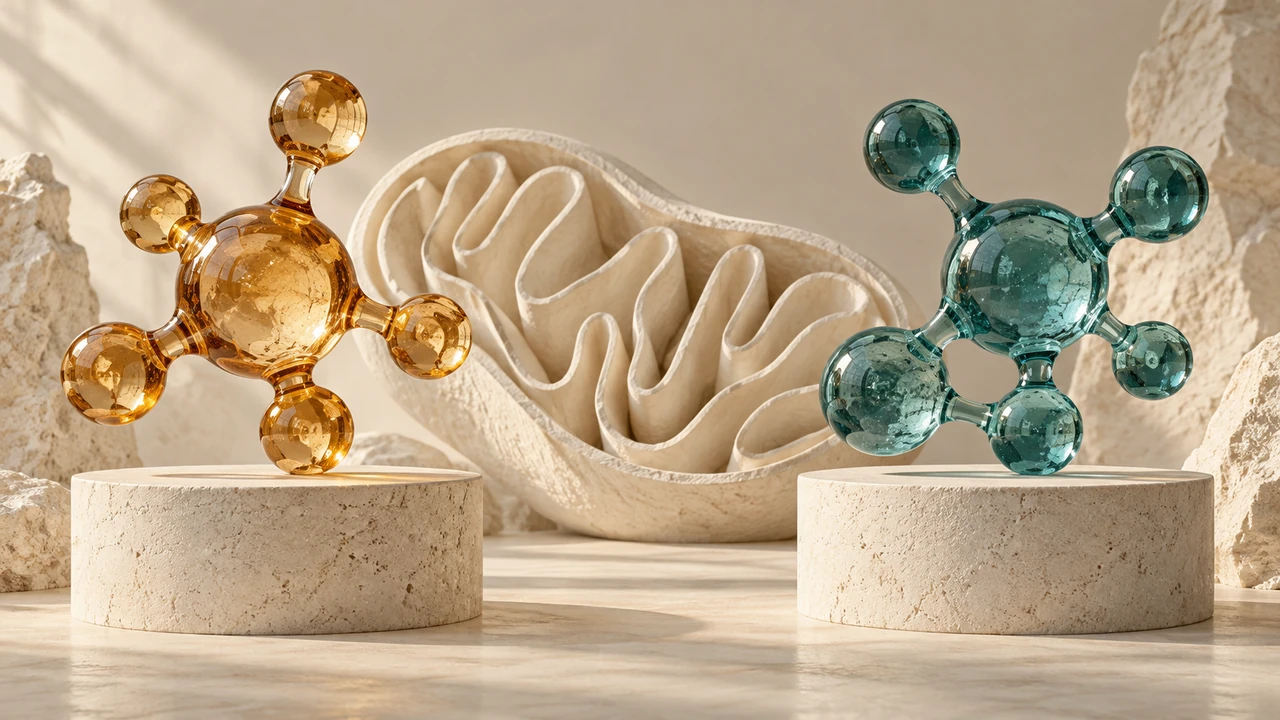
Side by side
Quick comparison
INGREDIENT
- Coenzyme Q10 (CoQ10)
A naturally occurring compound involved in mitochondrial electron transport and cellular energy production, with an antioxidant role.
- Pyrroloquinoline Quinone (PQQ)
A redox-active compound studied in relation to mitochondrial function and oxidative stress, with limited clinical supplementation evidence.
CoQ10 and PQQ both appear in mitochondrial-health supplements, but they are not equivalent compounds with interchangeable evidence. CoQ10 has an established role in human electron transport and a larger body of human clinical research. PQQ is studied for redox biology and signaling, with a smaller human evidence base. Neither description establishes a universal winner for everyday energy.
For fatigue, CoQ10 has the more developed research base, including pooled randomized evidence. That is not the same as proof that it will help a particular healthy adult. PQQ has preliminary human findings in selected cognitive tests and mitochondrial-related markers, while evidence for dependable fatigue relief remains limited. The comparison depends on the outcome and population, not the shared mitochondrial label.
Quick comparison: the differences that matter
Compound and biological role: CoQ10 is a fat-soluble quinone synthesized by the body that transfers electrons within the mitochondrial respiratory chain and participates in antioxidant defenses. Ubiquinone and ubiquinol are its oxidized and reduced forms. PQQ is a distinct redox-active compound found in small dietary amounts; its proposed effects on cellular signaling are not the same as CoQ10’s established electron-carrier role. [1,10]
Human research and fatigue: CoQ10 has randomized trials across several clinical populations and fatigue meta-analyses, with mixed relevance to healthy readers. PQQ’s human fatigue evidence includes a small uncontrolled study. Neither supplies a reliable percentage increase in everyday energy. Healthy adults should not inherit results from heart failure, fibromyalgia, depression, or neurological disease. [2,4,6]
Exercise and cognition: CoQ10’s performance literature is larger but inconsistent. PQQ has small training and acute-exercise studies that should not be read as established endurance benefits. Selected PQQ cognitive trials report positive test results; these are not proof of less cognitive fatigue or prevention of dementia. Research duration varies: examples include 4–24 weeks for CoQ10 fatigue trials, six weeks for a PQQ training trial, and 12 weeks for several PQQ cognition trials. [2,7–9,14,15]
Safety and practical use: CoQ10 has a longer clinical research history and known medication considerations. PQQ’s safety assessment concerns specified preparations and conditions of use, with less long-term human information. For both, form, amount, study duration, health conditions, and other medicines matter more than a claim that the ingredient supports mitochondria. [11,12]
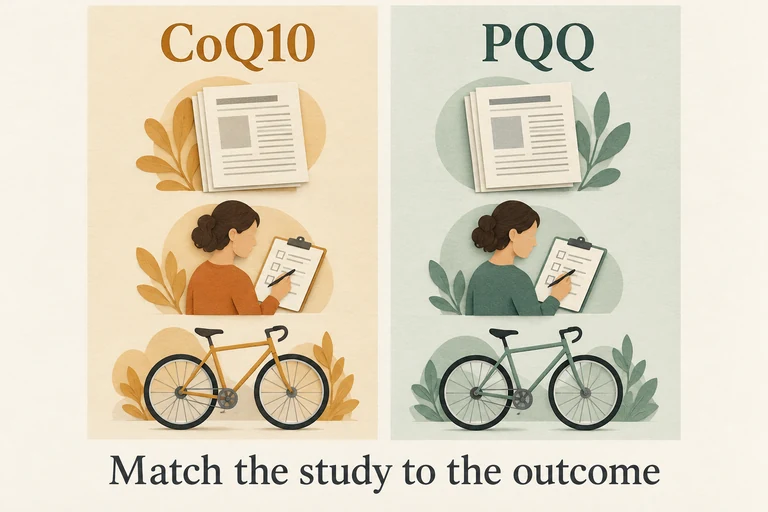
CoQ10: an established role, with outcome-specific evidence
CoQ10’s respiratory-chain role gives it a clear biological connection to ATP production. Its reduced form, ubiquinol, also participates in antioxidant protection. Supplements can raise circulating concentrations, but blood availability is not a direct measurement of fatigue relief or better muscle function. Formulation and absorption can differ, so ubiquinol should not automatically be called clinically superior to ubiquinone. [1,14]
Statins can lower circulating CoQ10, but that observation does not prove that replacing it resolves statin-associated muscle symptoms. NCCIH finds the overall evidence does not support that use. Discuss symptoms with the prescriber rather than stopping a statin. For a fuller assessment of fatigue research, see CoQ10 and energy and the CoQ10 ingredient hub. [11]
PQQ: redox and signaling interest, with a smaller human base
PQQ’s redox properties and experimental effects on mitochondrial signaling explain its appeal. Much of the biogenesis story comes from cell and animal work. A human change in a signaling protein does not demonstrate that a supplement has produced more functioning mitochondria throughout the body or a meaningful improvement in symptoms. PQQ is not a substitute for CoQ10 in the respiratory chain. [5,7,10]
An early human study in ten adults measured short-term changes in inflammatory and metabolic indicators after PQQ. It was useful exploratory physiology, not a clinical fatigue or exercise-performance trial. The study cannot answer whether a reader will feel more energetic after weeks of use. Our PQQ and mitochondrial health guide and PQQ ingredient hub explain the ingredient’s wider research context. [5]
Which one has more human evidence?
CoQ10 has the larger body of human research, including multiple systematic syntheses of fatigue, exercise, and clinical outcomes. Quantity describes how much research exists. Quality asks whether allocation, blinding, sample size, reporting, and consistency support confidence. Relevance asks whether the study measured the outcome you care about in people like you. Even a large body of research can leave a specific everyday-energy question unanswered.
We did not identify a direct randomized trial comparing CoQ10 alone with PQQ alone for everyday fatigue or energy through October 16, 2026. This is therefore an indirect evidence comparison, not a head-to-head efficacy result. Trials of a combination versus placebo do not establish which isolated ingredient works better, and the absence of a located trial is not proof that no unpublished study exists.
Subjective fatigue and clinical fatigue require different readings
The 2022 CoQ10 meta-analysis pooled 13 randomized trials with 1,126 participants. Fatigue scores favored CoQ10 overall, with a standardized difference of about −0.40. This is a pooled statistical effect across the studies, not a 40% increase in energy. Heterogeneity was substantial, and the healthy-participant subgroup did not reach statistical significance. The studies involved different illnesses, scales, preparations, and durations. [2]
A smaller placebo-controlled ubiquinol study analyzed 62 otherwise healthy people with mild daily fatigue lasting one to six months. Some subjective fatigue and sleepiness measures after cognitive tasks improved with 100 or 150 mg/day over 12 weeks. The selected participants, multiple measures, and disclosed manufacturer support limit generalization to all healthy adults. [3]
Clinical findings are also not uniform. A later CoQ10 meta-analysis in depression included only two fatigue trials and found no statistically significant pooled fatigue advantage, with considerable heterogeneity. Heart-failure or fibromyalgia research belongs to those populations and cannot validate supplementation for a healthy person who feels tired after a busy week. [4,11]
For PQQ, a commonly cited study gave 20 mg/day for eight weeks to 17 adults reporting sleep problems and fatigue. Scores improved, but there was no placebo group. Expectation and ordinary changes over time cannot be excluded. That is a weaker basis for a fatigue decision than a replicated, well-designed placebo-controlled trial, regardless of the proposed mechanism. [6]
Exercise: oxygen uptake, performance, and recovery are distinct
A recent CoQ10 systematic review included 24 studies in healthy adults. Blood CoQ10 rose reliably, while performance effects were small, inconsistent, and sensitive to analytical choices. Certainty was low to very low. Subjective fatigue signals were more favorable in some analyses, but anaerobic and strength outcomes showed little change. These results do not establish a dependable performance or recovery advantage for every athlete. [14]
In 23 untrained men, six weeks of PQQ 20 mg/day alongside endurance training increased PGC-1α protein, a marker related to mitochondrial biogenesis. It did not improve aerobic performance more than placebo. Peak oxygen consumption and test duration improved with training in both groups. The marker result therefore cannot be substituted for a PQQ-specific endurance benefit. [7]
A 2026 acute trial randomized 60 participants among PQQ, NMN, both, or placebo, with 15 per group. The key PQQ signal involved a body-listening dimension of interoception after exhaustive exercise. That is awareness of bodily signals, not established improvement in VO2, repeated performance, recovery, or long-term training adaptation. NMN is not CoQ10, so this study is also not evidence for a CoQ10–PQQ combination. [15]
Cognition, aging, and disease-specific findings
One PQQ cognition trial randomized 64 volunteers to a specified PQQ disodium preparation or placebo for 12 weeks; 58 completed it. Several computerized domains improved. Another 12-week trial using 20 mg/day reported selected memory improvements and age-dependent patterns. Multiple outcomes, modest samples, and industry affiliations make replication important. Cognitive-test gains do not establish less mental fatigue, durable daily-function benefits, or dementia prevention. [8,9]
A September 2026 CoQ10 review included 33 randomized studies with 3,317 participants in populations with a mean or median age of at least 40. Primary estimates for walking distance, strength, chair-rise performance, exercise duration, and muscle quantity were uncertain. Aging is not itself a diagnosis of CoQ10 or PQQ deficiency, and neither ingredient can be called a proven way to preserve muscle on this evidence. [16]
Can CoQ10 and PQQ be combined?
They have been studied together, but the human combination literature is limited and mainly concerns cognition. A 2024 narrative review describes two earlier randomized placebo-controlled studies using PQQ 20 mg/day plus CoQ10 300 mg/day over 12 or 24 weeks, with selected memory or attention findings. It also notes that the overall short-term-memory advantage in the longer study did not persist at week 24. Some findings depended on baseline-score subgroups. [10]
The original reports are Nakano and colleagues (2009) and Koikeda and colleagues (2011). Full original intervention reports were not available for verification in this search, and accessible summaries conflict on the longer study’s CoQ10 amount. Sample sizes for the combination arms were therefore not verified here. These reports should be treated as limited background, not as dose-matching evidence or proof of synergy. [10]
A combination performing better than placebo does not show that the two ingredients interact synergistically. Showing synergy would require a study that measures each ingredient’s effect separately and tests whether their combined effect exceeds what would be expected from adding those effects together. The located evidence does not demonstrate a CoQ10–PQQ synergy for fatigue or everyday energy. Formula logic and biological complementarity remain hypotheses, not measured clinical superiority.
Safety and practical considerations
CoQ10 can cause mild digestive symptoms or insomnia and may interact with warfarin or insulin; NCCIH also flags possible incompatibility with some cancer treatments. Its evidence in heart failure is not a reason to replace standard care. Medication compatibility matters even when the supplement is sold without a prescription. [11]
EFSA assessed a specified PQQ disodium salt for use at 20 mg/day in healthy adults, excluding children and pregnant or breastfeeding people. Human studies were limited for assessing renal safety. That conclusion is neither an efficacy endorsement nor proof of unrestricted long-term safety, suitability in kidney disease, or safety of every combined formula. Fewer documented interactions can reflect less research rather than fewer possible risks. [12]
For practical use, identify the outcome first, then compare the label with the exact preparation studied. Research doses and durations are descriptions of experiments, not a universal regimen. Persistent unexplained fatigue warrants assessment; our guide to steadier daily energy supplies the broader everyday context.
One combined product: compare the disclosed amounts
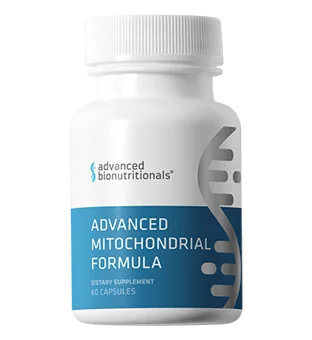
Advanced Mitochondrial Formula is a contextual option for adults who prefer a multi-ingredient capsule after checking suitability. The official label checked October 16, 2026 lists two capsules per serving: Coenzyme Q10 50 mg, pyrroloquinoline quinone disodium salt 5 mg, and acetyl L-carnitine 190 mg, among other ingredients. The panel does not specify ubiquinol, so it should not be described as a verified ubiquinol formulation. [13]
Those quantities and the finished mixture differ from the isolated interventions and combination reports discussed here. Ingredient trials do not establish the effect of this formula, and its combined design does not demonstrate synergy. The practical attraction is convenience and disclosed amounts. Read our Advanced Mitochondrial Formula review for the full product assessment.
Choosing an evidence category rather than a universal winner
If fatigue is your main concern, look for studies that measured fatigue in people like you. CoQ10 has more developed human evidence for fatigue, though its relevance to healthy adults still needs careful consideration. PQQ’s fatigue and mitochondrial-signaling evidence is at an earlier stage, and its cognitive findings answer a separate question. Neither guarantees an individual response, and taking both does not resolve the uncertainty.
ALCAR belongs to another related but distinct evidence category. Our acetyl-L-carnitine and fatigue guide examines its human studies without assuming that every mitochondrial ingredient has the same effects. The most useful choice starts with the question being tested and the person being studied.
Planet Wellness Report may earn a commission from qualifying purchases through product links. Affiliate relationships do not determine the comparison or its conclusions.
Was this article helpful?
Your anonymous response helps improve our editorial coverage.
Loading feedback options…
Share
Share this article
Selected references
Recommended products
More from Planet Wellness Report
Continue Reading

Energy
Advanced Mitochondrial Formula Review: Many Ingredients, Which Dose Matches?
This two-capsule formula discloses individual amounts, including CoQ10 50 mg, acetyl L-carnitine 190 mg and PQQ disodium salt 5 mg. That supports a label audit, but several ingredient studies use different doses or populations and do not establish an energy benefit from this combination.
7 min read
Energy
PQQ and Mitochondrial Health: What Human Research Actually Shows
What do PQQ supplements actually do? Explore human research on mitochondrial markers, energy, fatigue, sleep, cognition, and exercise performance.
7 min read
Energy
CoQ10 and Energy: What the Research Actually Shows
Does CoQ10 help energy or fatigue? Examine human trials, healthy-adult evidence, mitochondrial function, safety, and the limits of supplementation claims.
5 min read
Evidence
Sources
- Biosynthesis, Deficiency, and Supplementation of Coenzyme Q — Antioxidants (Jul 21, 2023) · DOI
- I-Chen Tsai; Chih-Wei Hsu; Chun-Hung Chang; Ping-Tao Tseng; Ke-Vin Chang. Effectiveness of Coenzyme Q10 Supplementation for Reducing Fatigue: A Systematic Review and Meta-Analysis of Randomized Controlled Trials — Frontiers in Pharmacology (Aug 24, 2022) · DOI
- Kei Mizuno; Akihiro T. Sasaki; Kyosuke Watanabe; Yasuyoshi Watanabe. Ubiquinol-10 Intake Is Effective in Relieving Mild Fatigue in Healthy Individuals — Nutrients (Jun 2, 2020) · DOI
- Effects of Coenzyme Q10 Supplementation on Depressive Symptoms and Fatigue: A Systematic Review and Meta-Analysis of Randomized Controlled Trials — Journal of Clinical Psychopharmacology (Nov 26, 2025) · DOI
- Harris CB, Chowanadisai W, Mishchuk DO, Satre MA, Slupsky CM, Rucker RB.. Dietary pyrroloquinoline quinone (PQQ) alters indicators of inflammation and mitochondrial-related metabolism in human subjects — The Journal of nutritional biochemistry · DOI
- Masahiko Nakano; Tetsuro Yamamoto; Hisayoshi Okamura; Akira Tsuda; Yasuyuki Kowatari. Effects of Oral Supplementation with Pyrroloquinoline Quinone on Stress, Fatigue, and Sleep — Functional Foods in Health and Disease (Aug 31, 2012) · DOI
- Hwang PS, Machek SB, Cardaci TD, Wilburn DT, Kim CS, Suezaki ES, Willoughby DS.. Effects of Pyrroloquinoline Quinone (PQQ) Supplementation on Aerobic Exercise Performance and Indices of Mitochondrial Biogenesis in Untrained Men — Journal of the American College of Nutrition (Dec 20, 2019) · DOI
- Shiojima Y, Takahashi M, Takahashi R, Moriyama H, Bagchi D, Bagchi M, Akanuma M.. Effect of Dietary Pyrroloquinoline Quinone Disodium Salt on Cognitive Function in Healthy Volunteers: A Randomized, Double-Blind, Placebo-Controlled, Parallel-Group Study — Journal of the American Nutrition Association · DOI
- Tamakoshi M, Suzuki T, Nishihara E, Nakamura S, Ikemoto K.. Pyrroloquinoline quinone disodium salt improves brain function in both younger and older adults — Food & function · DOI
- Ikemoto K, Mohamad Ishak NS, Akagawa M.. The effects of pyrroloquinoline quinone disodium salt on brain function and physiological processes — The journal of medical investigation : JMI · DOI
- Coenzyme Q10 — National Center for Complementary and Integrative Health
- EFSA Panel on Dietetic Products, Nutrition and Allergies. Safety of pyrroloquinoline quinone disodium salt as a novel food pursuant to Regulation (EC) No 258/97 — EFSA Journal · DOI
- Advanced Mitochondrial Formula — Supplement Facts — Advanced Bionutritionals
- Deng H, Song T, Yin M, Xu K, Zhong Y, Mohd NB, Naharudin MNB, Yusof A, Fan X.. Coenzyme Q10 supplementation increases blood concentrations but shows limited and inconsistent effects on exercise performance: a systematic review and meta-analysis — The British journal of nutrition · DOI
- Zhao C, Wu B, Sui H, Kuan G, Wei G, Yan Y.. The effects of pyrroloquinoline quinone and nicotinamide mononucleotide supplementation on interoception following acute exhaustive exercise: a randomised, double-blind, placebo-controlled study — Scientific reports · DOI
- Effects of Coenzyme Q10 Supplementation on Muscle Health and Physical Capacity in Middle-Aged and Older Adults: A Systematic Review and Meta-Analysis of Randomized Controlled Trials — Antioxidants · DOI