
ARTICLE
CoQ10 and Energy: What the Research Actually Shows
How mitochondrial biology relates to fatigue research—and where the evidence stops short of an everyday energy promise.
By Planet Wellness Report · Oct 9, 2026 · 5 min read
Editorial review and publication: Felipe Lopes, Publisher & Editor. This is an editorial review, not a medical review.
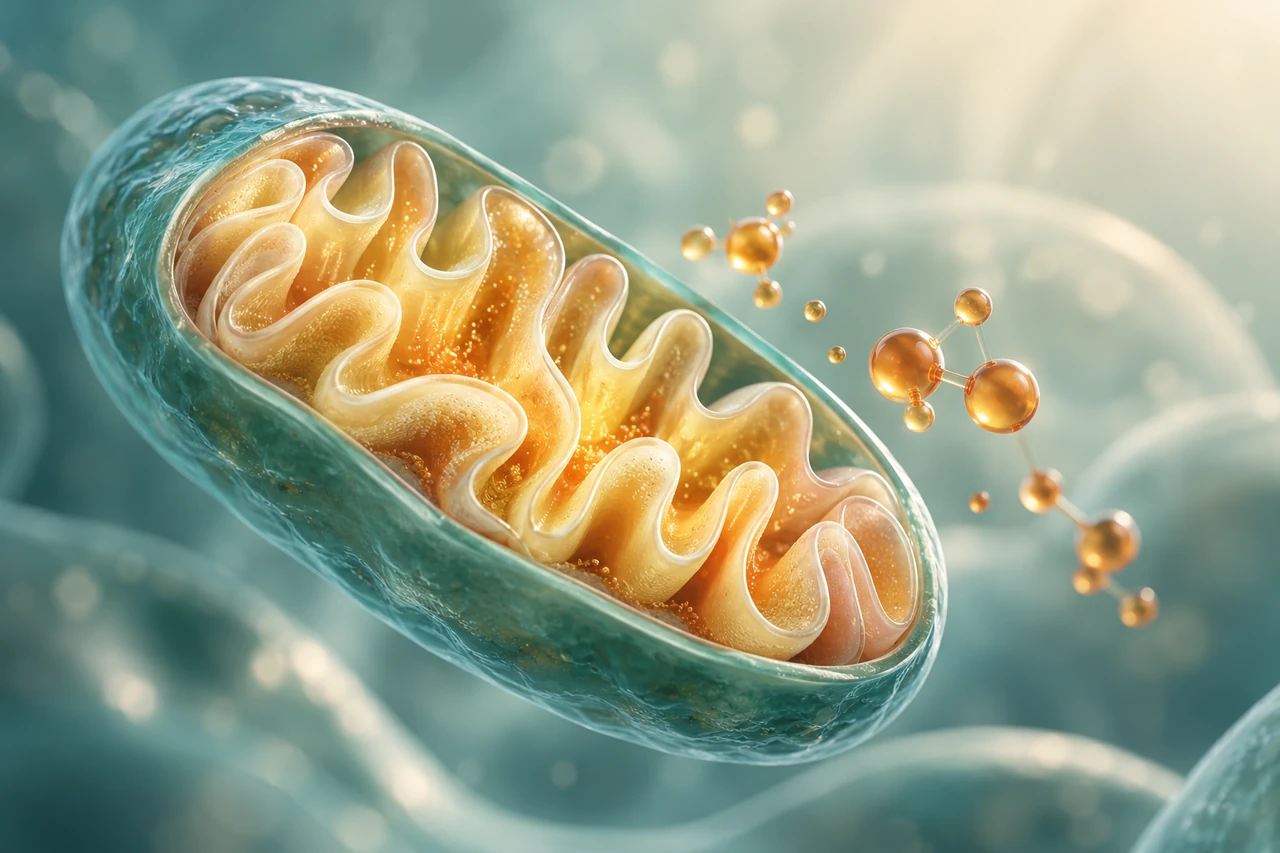
CoQ10 helps cells produce usable energy, but that biological role does not establish that a supplement will make everyone feel more energetic. Human research contains a promising fatigue signal, alongside important limits involving the people studied, the outcomes measured, and the consistency of results. The useful question is where supplementation has evidence, rather than whether mitochondria need CoQ10.
What CoQ10 does inside mitochondria
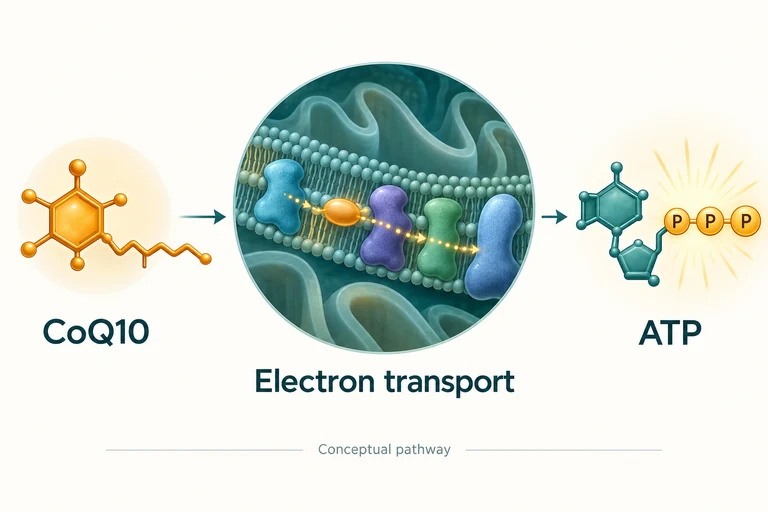
Coenzyme Q10, also called ubiquinone, is a fat-soluble compound that the body makes. It moves electrons between parts of the mitochondrial electron transport chain. That chain helps build the gradient used to make ATP, a molecule cells use to power many activities. CoQ10 also participates in antioxidant defenses. Ubiquinone and its reduced form, ubiquinol, are interconverted in the body.
ATP production and the experience of feeling energetic describe different levels of biology. A compound can be essential to a pathway without an extra supply improving that pathway in a person whose needs are already met. Changes in blood concentrations or oxidative-stress markers also cannot substitute for evidence that daily fatigue, function, or quality of life improves.
What the fatigue meta-analysis found
A 2022 review by Tsai and colleagues pooled 13 randomized trials with 1,126 participants. Fatigue scores favored CoQ10, with Hedges’ g −0.398 (95% confidence interval −0.641 to −0.155): a small-to-moderate standardized difference, not a percentage increase in energy. Heterogeneity was substantial (I² 69.5%). Participants included people with chronic fatigue syndrome, fibromyalgia, multiple sclerosis, heart failure, other conditions, and otherwise healthy adults.
Trials lasted 4–24 weeks; CoQ10-only doses ranged from 60–500 mg daily. Different scales, preparations, and populations complicate interpretation, and the authors detected potential publication bias. The healthy subgroup did not reach statistical significance. A relationship between larger doses or longer duration and greater improvement was a comparison across studies, not proof that increasing an individual’s dose improves results. These are research ranges, not a self-treatment regimen.
Healthy adults: a signal, rather than a universal benefit
In a 2020 placebo-controlled trial, Mizuno and colleagues studied otherwise healthy people who had experienced mild daily fatigue for more than one month and less than six months. The analysis included 62 participants receiving ubiquinol at 100 or 150 mg daily, or placebo, for 12 weeks. Some subjective fatigue and sleepiness measures after a cognitive task improved relative to placebo.
This was a small, selected fatigue population, rather than a demonstration that any well-rested adult gets more everyday energy. Effects depended on the measure and assessment time. Kaneka supported the study, and its relationship with the researchers was disclosed. The trial supplies a reason for further research, while leaving the size and reliability of a typical person’s benefit uncertain.
Why specific populations need separate interpretation
A more recent meta-analysis published online in 2025 examined CoQ10 in people with depression, including depression accompanying medical illness. Only two trials supplied fatigue data. The pooled fatigue result was not statistically significant, with a wide confidence interval and high heterogeneity. That result does not erase the broader 2022 finding; it shows why conclusions can change with the population and evidence set.
Older adults are represented in parts of the literature, including people with cardiovascular conditions. Results involving illness or a combination of CoQ10 with another nutrient cannot establish a general benefit from CoQ10 alone in healthy aging. Age, by itself, also does not identify who will respond.
CoQ10 status, statins, and deficiency are different questions
CoQ10 availability is influenced by its synthesis, transport, and underlying biological conditions. Rare inherited defects in its production are a clinical issue distinct from ordinary tiredness. Statins can lower circulating CoQ10 because cholesterol and CoQ10 synthesis share pathways. A lower measurement does not by itself prove that CoQ10 caused someone’s fatigue or that replacement will resolve it.
NCCIH describes the overall evidence for CoQ10 in statin-associated muscle pain as unsupportive. Muscle pain, fatigue, and exercise performance are also different outcomes. If symptoms appear while taking a statin, discuss them with the prescriber rather than stopping treatment or using a supplement as a diagnostic test.
Fatigue does not identify a mitochondrial problem
Persistent tiredness has many possible contributors. Our guide to feeling tired even after sleeping covers that broader assessment. The phrase “cellular energy” on a label cannot reveal the cause of a symptom or establish that a mitochondrial supplement addresses it.
Our articles on iron and fatigue and vitamin B12 and energy discuss different nutrient-related questions. Evidence for correcting a documented deficiency of those nutrients is not evidence for CoQ10 supplementation. Shared symptoms do not make the conditions or treatment decisions interchangeable.
Tolerability and medication context
CoQ10 is often tolerated, but NCCIH lists digestive upset and insomnia as possible mild effects. It may interact with warfarin and insulin and may be incompatible with some cancer treatments. Discuss its use with the relevant clinician or pharmacist if those treatments apply; do not assume that an antioxidant is compatible with every prescription.
Short trials with relatively few participants cannot fully define uncommon effects or long-term tolerability. A formulation used in one trial also does not establish the performance of every commercial preparation. Follow-up should focus on meaningful symptoms and function, rather than an assumption that a higher laboratory level guarantees a benefit.
How to interpret a multi-ingredient product
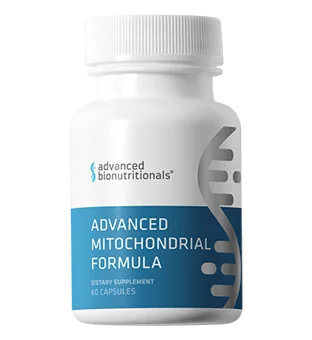
Advanced Mitochondrial Formula is an existing multi-ingredient product in our catalog that includes CoQ10. Its inclusion is a formula fact. This article evaluates CoQ10 research and does not establish that the finished formula reproduces results from a trial of CoQ10 alone. Ingredient amounts, preparations, additional compounds, and the population all matter when assessing applicability.
A practical reading of CoQ10 and energy
CoQ10 has an established biological role and some encouraging fatigue research. The evidence supports interest in selected contexts, rather than a guaranteed energy benefit for healthy adults. A possible average symptom improvement should not be turned into a promise about an individual reader, a diagnosis, or a recommendation to escalate a dose.
For daily routines, see our guide to supporting steadier energy naturally. Seek assessment when fatigue persists, worsens, or interferes with activity. Understanding its cause remains more useful than selecting a supplement solely because its ingredients participate in energy metabolism.
For readers comparing CoQ10-containing supplements, Advanced Mitochondrial Formula offers a multi-ingredient format that includes CoQ10. Review its full label, ingredient amounts, current pricing, and suitability for your circumstances when deciding whether that format is useful to you.
Was this article helpful?
Your anonymous response helps improve our editorial coverage.
Loading feedback options…
Share
Share this article
Selected references
Recommended products
More from Planet Wellness Report
Continue Reading

Energy
CoQ10 vs PQQ for Mitochondrial Health: Evidence, Energy, and Practical Use
Compare CoQ10 and PQQ by human evidence, fatigue, exercise, cognition, safety, and combination research—without assuming a universal winner.
9 min read

Energy
Advanced Mitochondrial Formula Review: Many Ingredients, Which Dose Matches?
This two-capsule formula discloses individual amounts, including CoQ10 50 mg, acetyl L-carnitine 190 mg and PQQ disodium salt 5 mg. That supports a label audit, but several ingredient studies use different doses or populations and do not establish an energy benefit from this combination.
7 min read

Energy
Acetyl-L-Carnitine for Energy and Fatigue: What Human Research Actually Shows
Acetyl-L-carnitine has fatigue research in selected clinical and older populations. See what the findings mean for healthy adults, exercise, and safety.
8 min read
Evidence
Sources
- Coenzyme Q10 — National Center for Complementary and Integrative Health
- I-Chen Tsai; Chih-Wei Hsu; Chun-Hung Chang; Ping-Tao Tseng; Ke-Vin Chang. Effectiveness of Coenzyme Q10 Supplementation for Reducing Fatigue: A Systematic Review and Meta-Analysis of Randomized Controlled Trials — Frontiers in Pharmacology (Aug 24, 2022) · DOI
- Kei Mizuno; Akihiro T. Sasaki; Kyosuke Watanabe; Yasuyoshi Watanabe. Ubiquinol-10 Intake Is Effective in Relieving Mild Fatigue in Healthy Individuals — Nutrients (Jun 2, 2020) · DOI
- Biosynthesis, Deficiency, and Supplementation of Coenzyme Q — Antioxidants (Jul 21, 2023) · DOI
- Effects of Coenzyme Q10 Supplementation on Depressive Symptoms and Fatigue: A Systematic Review and Meta-Analysis of Randomized Controlled Trials — Journal of Clinical Psychopharmacology (Nov 26, 2025) · DOI
- U.S. National Library of Medicine. Fatigue — MedlinePlus / U.S. National Library of Medicine