
ARTICLE
Vitamin B12 and Energy: Deficiency, Fatigue, and the Limits of Supplements
How B12 deficiency can affect blood cells and nerves, why anemia is only part of the picture, and what energy claims leave out.
By Planet Wellness Report · Oct 8, 2026 · 6 min read
Editorial review and publication: Felipe Lopes, Publisher & Editor. This is an editorial review, not a medical review.
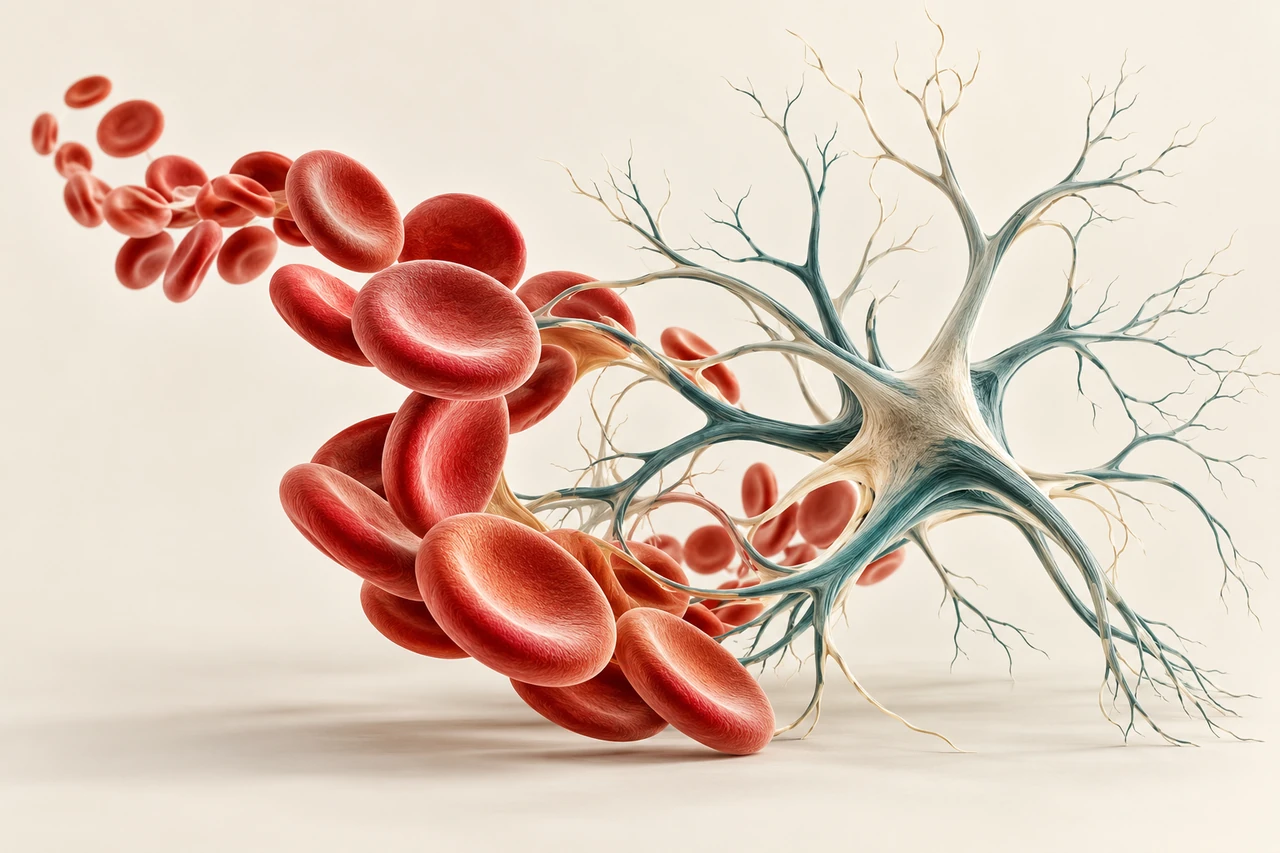
Vitamin B12 deficiency can contribute to fatigue or weakness, but taking B12 is not an established way to boost energy when your status is adequate. B12 matters for blood cell formation and the nervous system, so deficiency deserves attention beyond the question of whether you feel tired. Anemia is one possible consequence; it is not a requirement for neurological symptoms.
What vitamin B12 does for blood cells and nerves
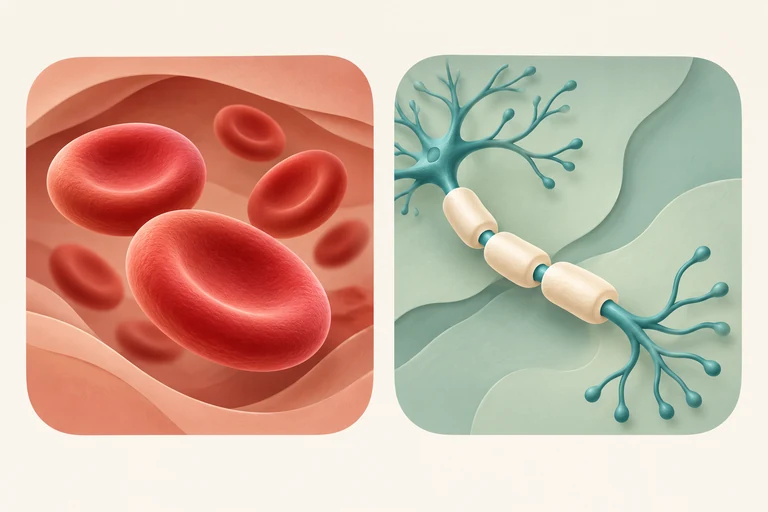
Vitamin B12, also called cobalamin, supports DNA synthesis, healthy red blood cell formation, and normal nervous system function. DNA synthesis helps developing cells divide and mature. Nerve function depends in part on maintaining myelin, the protective covering around nerve fibers. These are essential maintenance roles, not evidence that extra B12 acts as a stimulant.
When deficiency disrupts red blood cell production, anemia can develop. With less hemoglobin available to carry oxygen, a person may experience fatigue, weakness, or reduced tolerance for activity. Deficiency can also affect nerves through a separate pathway. Feeling low in energy does not tell you which process, if any, is involved.
B12 deficiency is not the same as B12-deficiency anemia
B12 deficiency means there is insufficient B12 for the body's needs. B12-deficiency anemia describes the blood-related consequence when that deficiency leads to a low hemoglobin concentration. It is often megaloblastic anemia, in which developing blood cells do not mature normally and red blood cells may be unusually large. Other conditions can also cause anemia or large red blood cells.
Neurological manifestations can occur without anemia. Possible features include numbness or tingling, difficulty with balance or walking, and cognitive difficulties. NICE advises against excluding B12 deficiency simply because anemia or enlarged red blood cells are absent. Conversely, these symptoms have other possible causes and do not establish B12 deficiency on their own.
Why fatigue cannot tell you whether B12 is low
Fatigue is nonspecific: insufficient sleep, stress, infections, medication effects, thyroid problems, depression, and other conditions can produce similar complaints. Several contributors can coexist. Our guide to why you may feel tired even after sleeping covers that broader context rather than focusing on one nutrient.
Different nutrient deficiencies can also share symptoms. Our article on iron and fatigue explores one example. Iron deficiency and B12 deficiency are distinct conditions with different causes, assessment, and replacement decisions. Evidence from an iron trial cannot establish that B12 will help the same complaint.
Similarly, difficulty concentrating is not a B12 test. The wider range of explanations is discussed in what causes brain fog. Looking for a single supplement can obscure the need to understand the pattern and cause of symptoms.
Does B12 supplementation improve fatigue or energy?
Correcting a clinically established deficiency and supplementing someone without deficiency answer different questions. Replacement addresses an unmet need; a general energy claim asks whether additional B12 improves how someone feels or performs despite adequate status. Benefit in the first setting cannot be transferred to the second.
What the fatigue research can actually establish
A 2021 systematic review by Markun and colleagues included 16 randomized trials with 6,276 participants overall. It examined B12 alone or B-vitamin combinations in people without overt B12 deficiency or advanced neurological disorders. Only one study reported effects on idiopathic fatigue, meaning fatigue without an identified cause, so the authors could not perform a fatigue meta-analysis.
The review found no overall benefit for cognition or depressive symptoms, but those findings should not be described as a pooled negative result for fatigue. The fatigue evidence was too sparse for that conclusion. It also did not evaluate treatment of overt deficiency. The appropriate message is that a reliable fatigue benefit without deficiency has not been established, rather than that every possible use has been disproven.
Why an essential nutrient is not a universal energy booster
NIH's Office of Dietary Supplements reports no apparent performance or endurance benefit from B12 supplementation in people with sufficient B12 status. Athletic performance and subjective fatigue are different outcomes, but neither supports a blanket promise of more energy. An energy blend containing several ingredients also cannot demonstrate a B12-specific effect simply because users report feeling better.
Who may have a higher risk of B12 deficiency?
Older adults may have difficulty absorbing food-bound B12. Vegans and some vegetarians may have inadequate intake without reliable fortified foods or supplements. B12 occurs naturally mainly in animal-source foods; plant-based diets need deliberate B12 provision. These circumstances raise a question about intake or absorption, not a diagnosis based on age or dietary identity.
Malabsorption can occur with autoimmune gastritis, celiac disease, and certain gastrointestinal operations, including removal of the stomach or terminal ileum. Some bariatric procedures also affect B12 availability. Metformin and acid-suppressing medicines, including proton pump inhibitors and H2 blockers, can interfere with B12 status. Medication use is context for assessment, not a reason to stop prescribed treatment yourself.
Risk factors help a clinician decide what to investigate. A person with several may still have adequate status, while someone without an obvious risk factor may need evaluation for unexplained symptoms. The useful discussion is about diet, absorption, medical history, and medicines together.
Testing needs more context than a symptom checklist
Assessment may include total or active B12 and a blood count. If results are uncertain, methylmalonic acid testing may help; interpretation depends on the clinical setting. A blood count alone cannot exclude a B12 problem. Laboratory values should be considered with symptoms and history, rather than used as online self-treatment cutoffs.
Tell the clinician about B12 tablets, multivitamins, injections, or other preparations you already use. NICE notes that supplementation can raise measured B12 without fully addressing deficiency, making interpretation harder. A change in how you feel after taking a supplement is also not a dependable way to identify the cause of fatigue.
Supplementation should match the reason it is needed
A reliable B12 source can prevent inadequate intake, especially in a vegan diet; this is different from using B12 as an energy experiment. With suspected or confirmed deficiency, a clinician selects oral replacement or injections according to the cause, symptoms, and absorption concerns. Some permanent causes require lifelong replacement. There is no single route or regimen that every fatigued reader should copy.
Follow-up matters because symptom recovery varies and persistent complaints may need another explanation. Do not assume that a commercial energy supplement supplies appropriate replacement or that a higher blood B12 result guarantees symptom resolution. Continue prescribed treatment as directed and report symptoms that worsen, return, or fail to improve.
When to seek assessment for low energy
Discuss fatigue that persists, worsens, or interferes with daily activity. Bring details about its onset, sleep, diet, medicines, supplements, gastrointestinal conditions, and previous surgery. New or worsening numbness, balance problems, or difficulty walking merit prompt assessment rather than waiting to see whether an energy product helps. These symptoms are not specific to B12, but they deserve attention.
For everyday habits, our guide to supporting steadier energy naturally covers sleep, movement, meals, and other modifiable factors. That guidance complements an assessment; it cannot confirm or rule out deficiency.
Keep B12 and energy claims in perspective
B12 deficiency is relevant to both blood cells and nerves, and anemia is not the only setting in which it matters. Fatigue alone cannot identify it. Base supplementation decisions on adequate intake, appropriate assessment, and the cause of any deficiency; additional B12 is not an established shortcut to more energy when status is already adequate.
Was this article helpful?
Your anonymous response helps improve our editorial coverage.
Loading feedback options…
Share
Share this article
More from Planet Wellness Report
Continue Reading

Energy
Why You Feel Tired Even After Sleeping: 9 Everyday Causes of Low Energy
Getting enough hours of sleep does not always mean waking refreshed. Learn nine possible contributors to low energy, what the evidence supports, and when persistent fatigue deserves medical evaluation.
11 min read

Energy
CircO2 Review: What the 420 mg Blend Reveals—and Hides
CircO2’s lozenge discloses vitamin C 100 mg, B12 1,000 mcg and a 420 mg total blend. It does not disclose individual beetroot, hawthorn, citrulline or sodium-nitrite amounts, nitrate content, or a separate elemental-magnesium dose. That prevents the dose comparisons central to its nitric-oxide positioning.
9 min read

Energy
Why You Feel Tired After Eating—and What Actually Matters
Post-meal tiredness can reflect meal size, composition, afternoon timing, or poor sleep. Learn what to compare first and when a recurring pattern needs assessment.
10 min read
Evidence
Sources
- NIH Office of Dietary Supplements. Vitamin B12 — Health Professional Fact Sheet — NIH Office of Dietary Supplements (Jul 2, 2025)
- U.S. National Library of Medicine. Fatigue — MedlinePlus / U.S. National Library of Medicine
- National Institute for Health and Care Excellence. Vitamin B12 deficiency in over 16s: diagnosis and management — National Institute for Health and Care Excellence (NICE) (Mar 6, 2024)
- Stefan Markun; Isaac Gravestock; Levy Jäger; Thomas Rosemann; Giuseppe Pichierri; Jakob M. Burgstaller. Effects of Vitamin B12 Supplementation on Cognitive Function, Depressive Symptoms, and Fatigue: A Systematic Review, Meta-Analysis, and Meta-Regression — Nutrients (Mar 12, 2021) · DOI