
ARTICLE
Why You Feel Tired After Eating—and What Actually Matters
Meal size, daily timing, sleep, and symptoms can point to different next steps.
By Planet Wellness Report · Oct 31, 2026 · 10 min read
Editorial review and publication: Felipe Lopes, Publisher & Editor. This is an editorial review, not a medical review.

Feeling tired after eating can mean heavy eyelids, a brief loss of alertness, or a more disruptive sense of weakness. Those experiences deserve different responses. Meal size and composition can contribute, but so can the time of day, insufficient sleep, alcohol, medications, and health problems. The useful first step is to identify the pattern before blaming one food.
There is no single established explanation for every after-meal slump. A 2025 scoping review of workplace research found nine eligible studies, with only one assessing blood glucose and sleepiness together. That is a limited basis for claiming that ordinary post-meal tiredness is necessarily a glucose “crash.” [1]
First, distinguish sleepiness from feeling unwell
Sleepiness means you could doze off; fatigue can mean low energy or effortful activity without an urge to sleep. An occasional mild dip that passes and does not disrupt your day is different from regularly being unable to function after lunch. Feeling faint, shaky, or sweaty belongs in a separate conversation from simply wanting a nap. [10] [16]
This article focuses on episodes linked to meals. If low energy extends across the day, our general energy guide helps organize that broader question. Timing is useful context, but a symptom occurring after a meal does not establish that food caused it.
Meal size can matter, without a simple blood-flow explanation
Digestion coordinates the movement of food, absorption, and signals from nerves and hormones. The digestive system supplies nutrients the body can use. Describing this as digestion “stealing all your energy,” or saying blood simply leaves the brain for the stomach, is an inadequate explanation of post-meal sleepiness. Normal digestive physiology does not, by itself, identify why an individual feels tired. [2]
Larger meals may amplify sleepiness in some settings. In a controlled simulator study, 12 young men ate a lighter or heavier lunch after their previous night's sleep had been restricted to five hours. The heavier lunch worsened lane drifting and an EEG measure associated with sleepiness. The difference in self-rated sleepiness did not reach statistical significance. [3]
That distinction matters: objective impairment and how sleepy someone feels need not change identically. The study was small, involved sleep-restricted men, and changed both energy load and the amounts of fat and carbohydrate. It cannot isolate calories from composition or establish an ideal lunch size for everyone. [3]
If an unusually large lunch reliably precedes a mild slump, a comfortably smaller portion of similar food is a reasonable comparison. Preserve adequate food across the day rather than turning the observation into skipped meals or ongoing restriction. There is no need to calculate a research meal's calorie count to try this.
Carbohydrates are part of a mixed-meal response
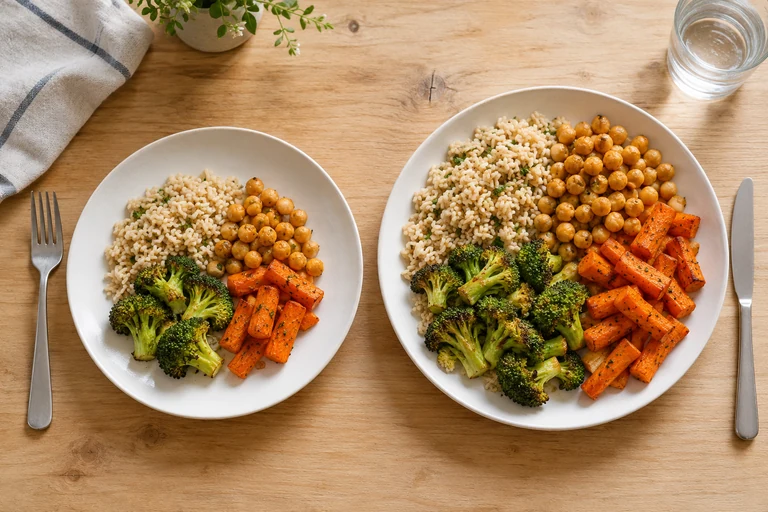
Carbohydrate amount and digestibility influence the glucose response after eating. Food structure, processing, and fiber also matter; a refined carbohydrate eaten alone is a different context from carbohydrate within a meal containing beans, vegetables, protein, and fat. Glycemic index describes a standardized response to a food, not a guaranteed sleepiness score for a mixed lunch. [5]
Protein and fat can alter gastric emptying and hormonal responses, while some fibers slow digestion or absorption. The effects depend on the meal and person. These physiological changes do not establish a universal rule to add protein and fat whenever you feel sleepy. Adding more food may also make a meal larger. [5]
Direct sleepiness evidence is less tidy than a “carbs equal crash” rule. Two small experiments involving ten men each compared food forms and meal constituents. High-fat, high-carbohydrate, and mixed meals did not produce significantly different sleep latencies—the time it took participants to fall asleep during testing. This does not prove composition never matters; it shows why one macronutrient cannot explain every episode. [4]
A mixed meal can be satisfying and nutritionally useful without guaranteeing alertness afterward. If you compare compositions, keep the portion and time reasonably similar. Otherwise, replacing a very large pasta meal with a small salad changes several things at once and tells you little about carbohydrate itself.
Why the turkey-and-tryptophan story is incomplete
Tryptophan is used to make serotonin, but its access to the brain depends partly on competition with other amino acids. A protein-containing meal supplies those competitors too. Research on carbohydrate, amino-acid availability, and sleep does not justify treating turkey—or any single tryptophan-containing food—as a reliable sedative. [6]
The full meal, its size, its timing, and the person's sleep context complicate that biochemical story. A proposed pathway is different from evidence that the pathway explains your afternoon drowsiness. [6]
The afternoon dip can coincide with lunch
For some people, sleep tendency increases during the afternoon because of the body's daily timing system. The so-called post-lunch dip can occur even without lunch. Its presence and size vary between people and across performance measures; it is not a fixed appointment everyone experiences at the same clock time. [7]
That creates an attribution problem. If lunch usually happens just before your least alert part of the day, the meal and the circadian dip occur together. Food may add to the effect, but timing alone cannot tell you how much each contributed.
Notice whether you were already getting sleepy before eating, or whether the same afternoon lull appears on days with different lunches. You do not need to skip a meal to test the clock. Comparing ordinary days is safer and more useful than deliberately provoking hunger or sleep loss.
A short night changes the starting point
Sleep deficiency can cause daytime sleepiness, slower reactions, and difficulty concentrating. A quiet period after eating may make that existing tendency more noticeable. In the meal-size driving study, participants were already sleep-restricted; the results should not be read as food acting independently of sleep. [8] [3]
If episodes cluster after short or disrupted nights, examine sleep opportunity before redesigning lunch. Our sleep-quality guide helps with that next step. Regularly dozing despite adequate sleep opportunity deserves assessment rather than repeated dietary experiments. [8]
A normal glucose response is different from a glucose disorder
Blood glucose normally changes after food, and insulin helps coordinate its use and storage. A rise followed by a decline does not automatically mean glucose became abnormally low. Likewise, feeling sleepy cannot identify diabetes or insulin resistance. Meal-related glucose research and research on subjective alertness measure different outcomes. [5] [1]
Postprandial hypoglycemia, sometimes called reactive hypoglycemia, means genuinely low glucose after eating in an appropriate clinical context. In someone without diabetes, evaluation relies on Whipple's triad: compatible symptoms, a low plasma glucose concentration during those symptoms, and improvement when glucose is restored. Symptoms alone do not confirm it. [9]
Shakiness, sweating, dizziness, or faintness warrant attention when recurrent, especially with glucose-lowering medication. They still have more than one possible explanation. People taking insulin or medicines that can cause hypoglycemia should follow their established monitoring and treatment plan rather than use this article's observation approach instead. [9] [10]
Buying a continuous glucose monitor is not a necessary first step for an otherwise healthy person with mild after-meal sleepiness. A device trace does not diagnose the cause, and accuracy at low values limits its diagnostic use. A clinician can decide whether testing is appropriate from the symptoms, history, and medication context. [9]
A short walk may help glucose without resolving sleepiness
A systematic review and meta-analysis of eight crossover trials, involving 116 participants with or without type 2 diabetes, found smaller post-meal glucose excursions with exercise after eating than with inactivity or exercise before the meal. The included trials had high risk of bias and tested acute responses. [12]
That supports a glucose-related benefit in the studied conditions. It does not show that a lower glucose curve eliminates post-meal fatigue or proves that glucose caused the symptom. For a mild, familiar slump, a brief comfortable walk can be an optional change of activity if appropriate for your health and mobility. There is no fatigue-specific walking dose established by this evidence. [12]
If you feel faint, significantly dizzy, or otherwise unwell, do not try to walk the symptoms off. Stop the activity and seek appropriate help.
Check what came with the meal
Caffeine can temporarily increase alertness, but it does not replace adequate sleep. Progressively adding coffee may make the underlying pattern harder to see and can compromise later sleep. If an afternoon coffee becomes a nightly sleep problem, see our caffeine-timing guide. Caffeine is a context to examine, not the main treatment for post-meal tiredness. [13]
Alcohol consumed with lunch can reduce alertness and contribute to sedation. It can also affect later sleep; a systematic review found changes in sleep architecture after alcohol, so feeling initially relaxed should not be equated with better restorative sleep. Note alcohol separately rather than attributing the whole effect to the plate of food. [17] [14]
Hydration is relevant after heat, exercise, or limited access to fluids. A controlled study in young women found greater perceived fatigue with mild dehydration, but it did not establish dehydration as a general cause of post-meal sleepiness. Address an obvious fluid gap and respect any medical fluid restrictions; extra water is not a universal remedy. [15]
Four questions when a meal leaves you unusually tired
The following is an editorial decision framework, not a validated clinical instrument. Use it for a mild, familiar pattern without warning symptoms; disruptive or worsening episodes should move directly to assessment.
1. Was the meal unusually large?
Compare it with your own usual comfortable meal, not someone else's portions. If size is the clearest difference, try a manageable portion of similar food on another ordinary day while maintaining adequate intake overall. Avoid changing the ingredients, caffeine, and sleep schedule at the same time.
2. Does the pattern depend on what you ate?
Look for repetition before removing a food group. If a particular lunch seems different, compare a similar-sized alternative at a similar time. Include the whole meal and drink in the comparison. An improvement can guide a practical choice without proving a food intolerance or a glucose disorder.
3. Were you already short on sleep or in an afternoon dip?
Record whether sleepiness started before lunch and whether the previous night was unusually short or disrupted. A recurring afternoon lull across different meals points toward a broader timing or sleep question, though it cannot establish the cause. Protecting sleep may be more informative than eliminating another ingredient.
4. Is the response disproportionate, persistent, or accompanied by other symptoms?
Being unable to stay awake, repeatedly needing to abandon work, or feeling shaky and faint is not the same as a mild passing dip. The next step is a clinical discussion, particularly if the pattern is new, worsening, or occurs despite adequate sleep.
Keep observation brief and useful
For a few days, jot down meal time, approximate size, main foods, the previous night's sleep, alcohol, caffeine timing, and how strong and long-lasting the episode felt. A short note such as “slightly sleepy for half an hour” is enough. Calorie counting, continuous glucose data, and repeated symptom checking are unnecessary for this exercise.
For example, suppose a large takeaway lunch after a short night leaves you sleepy at 2 p.m. On another day, a smaller serving of the same food after better sleep feels easier. That comparison changed two factors, so it cannot tell you which mattered. A further ordinary-day comparison with similar sleep and a different portion is more informative, if symptoms remain mild.
The goal is to find one manageable adjustment or prepare a clearer account for a clinician. Stop recording when it no longer helps. Do not delay care to finish the exercise, and do not deliberately recreate severe symptoms.
When the pattern deserves assessment
Arrange a healthcare appointment when fatigue follows nearly every meal, worsens, disrupts normal activity, or continues despite adequate sleep and reasonable meals. Persistent daytime sleepiness also deserves attention. A clinician can review sleep, medications, nutrition, and whether another condition needs investigation; this is not automatically a nutrient or supplement problem. [8] [16]
Describe accompanying symptoms rather than trying to name the diagnosis. Recurrent dizziness, shakiness, sweating, or near-fainting changes the assessment. Marked thirst, increased urination, or unexplained weight change are reasons to discuss glucose regulation, while breathlessness with ordinary effort or unusual pallor may prompt an anemia assessment. These clues are nonspecific and do not establish either condition. [10] [11] [18]
Fainting, acute confusion, sudden severe weakness, chest pain, or significant difficulty breathing warrants urgent medical attention. Do not drive or operate machinery while struggling to stay awake. Changing lunch or adding caffeine does not make unsafe levels of sleepiness safe for driving or operating machinery. [19] [8]
A useful next step is specific: compare a portion if the pattern is mild and meal-size related, protect sleep if you were already sleep-deprived, or seek assessment when episodes are disruptive or accompanied by other symptoms. Post-meal tiredness alone does not establish a need for a specific supplement or mitochondrial-support product. Understanding the episode should come before choosing a product.
Was this article helpful?
Your anonymous response helps improve our editorial coverage.
Loading feedback options…
Share
Share this article
More from Planet Wellness Report
Continue Reading

Energy
Why You Feel Tired Even After Sleeping: 9 Everyday Causes of Low Energy
Getting enough hours of sleep does not always mean waking refreshed. Learn nine possible contributors to low energy, what the evidence supports, and when persistent fatigue deserves medical evaluation.
11 min read

Energy
How to Get More Energy Naturally: Identify the Problem First
Low energy can mean dozing off, feeling depleted, struggling to start, or thinking unclearly. Use type and timing to choose a first check before supplements.
6 min read

Energy
How Much Caffeine Is Too Much? Effects on Energy, Focus, and Sleep
How much caffeine is too much depends on more than a single number. Explore what the evidence says about daily intake, alertness, focus, anxiety, sleep, timing, and signs that it may be time to cut back.
13 min read
Evidence
Sources
- Hisashi Kaneda; Itsuki Kageyama; Yoshiyuki Kobayashi; Kota Kodama. The Influence of Food Intake and Blood Glucose on Postprandial Sleepiness and Work Productivity: A Scoping Review — Nutrients (Oct 14, 2025) · DOI
- Your Digestive System & How it Works — NIDDK
- L. A. Reyner; S. J. Wells; V. Mortlock; J. A. Horne. 'Post-lunch' sleepiness during prolonged, monotonous driving - effects of meal size — Physiology & Behavior (Feb 28, 2012) · DOI
- W. C. Orr; G. Shadid; M. J. Harnish; S. Elsenbruch. Meal composition and its effect on postprandial sleepiness — Physiology & Behavior · DOI
- Kenneth Pasmans; Ruth C. R. Meex; Luc J. C. van Loon; Ellen E. Blaak. Nutritional strategies to attenuate postprandial glycemic response — Obesity Reviews · DOI
- David Benton; Anthony Bloxham; Chantelle Gaylor; Anthony Brennan; Hayley A. Young. Carbohydrate and sleep: An evaluation of putative mechanisms — Frontiers in Nutrition (Sep 21, 2022) · DOI
- Timothy H. Monk. The post-lunch dip in performance — Clinics in Sports Medicine · DOI
- Sleep Deprivation and Deficiency: How Sleep Affects Your Health — NHLBI
- Maria S. Rayas; Marzieh Salehi. Non-Diabetic Hypoglycemia — Endotext / NCBI Bookshelf (Jan 27, 2024)
- Low Blood Glucose (Hypoglycemia) — NIDDK
- Symptoms & Causes of Diabetes — NIDDK
- Tobias Engeroff; David A. Groneberg; Jan Wilke. After Dinner Rest a While, After Supper Walk a Mile? A Systematic Review with Meta-analysis on the Acute Postprandial Glycemic Response to Exercise Before and After Meal Ingestion in Healthy Subjects and Patients with Impaired Glucose Tolerance — Sports Medicine (Jan 30, 2023) · DOI
- Caffeine & Long Work Hours — NIOSH / CDC
- Carissa Gardiner; Jonathon Weakley; Louise M. Burke; Gregory D. Roach; Charli Sargent; Nirav Maniar; Minh Huynh; Dean J. Miller; Andrew Townshend; Shona L. Halson. The effect of alcohol on subsequent sleep in healthy adults: A systematic review and meta-analysis — Sleep Medicine Reviews · DOI
- Lawrence E. Armstrong; Matthew S. Ganio; Douglas J. Casa; Elaine C. Lee; Brendon P. McDermott; Jennifer F. Klau; Liliana Jimenez; Laurent Le Bellego; Emmanuel Chevillotte; Harris R. Lieberman. Mild dehydration affects mood in healthy young women — The Journal of Nutrition (Feb 1, 2012) · DOI
- U.S. National Library of Medicine. Fatigue — MedlinePlus / U.S. National Library of Medicine
- Information about Alcohol — NIH Curriculum Supplement Series / NCBI Bookshelf
- Anemia: Symptoms — NHLBI (Mar 24, 2022)
- Recognizing medical emergencies — MedlinePlus Medical Encyclopedia / A.D.A.M. (Jan 8, 2025)