
ARTICLE
How Much Caffeine Is Too Much? Effects on Energy, Focus, and Sleep
Caffeine can improve alertness and attention, but more is not always better. Learn how dose, timing, sensitivity, and sleep can change its effects.
By Planet Wellness Report · Sep 27, 2026 · 13 min read
Editorial review and publication: Felipe Lopes, Publisher & Editor. This is an editorial review, not a medical review.

Caffeine is one of the most widely used ways to feel more awake. A morning coffee may make it easier to start the day, and another caffeinated drink can seem useful when attention begins to fade later on. But the same substance that supports alertness can also contribute to jitters, anxiety, a racing heartbeat, or disrupted sleep when the dose, timing, or individual response does not line up well.
That makes the question "How much caffeine is too much?" more complicated than choosing one universal number. Total daily intake matters, but so do the size of each dose, when caffeine is consumed, how quickly a person metabolizes it, medications, health conditions, habitual use, and individual sensitivity.
For many healthy adults, moderate caffeine intake can fit into an ordinary diet. The goal is not necessarily to eliminate it. A more useful approach is to understand what caffeine can and cannot do, recognize signs that intake may be working against you, and use timing and dose more deliberately.
How Much Caffeine Is Too Much? The Short Answer
The U.S. Food and Drug Administration cites 400 milligrams of caffeine per day as an amount not generally associated with negative effects for most adults. That figure is useful as a broad reference point, but it should not be treated as a daily target or as a guarantee that every adult will tolerate 400 milligrams comfortably.
Some people experience unwanted effects at much lower amounts. Others may tolerate more caffeine without immediately noticing symptoms, although lack of obvious symptoms does not necessarily mean sleep or other aspects of health are unaffected.
The FDA specifically notes that body weight, medications, certain medical conditions, and individual sensitivity can influence how much caffeine is too much for a particular person. Pregnancy, trying to become pregnant, and breastfeeding are also situations in which individualized guidance from a healthcare professional is appropriate.
Why 400 Milligrams Is Not a Personal Caffeine Target
A population-level reference is easy to turn into a personal rule: if up to 400 milligrams is generally considered acceptable for most adults, it can sound as though consuming 399 milligrams is automatically fine. That is not what the guidance means.
Caffeine response exists on a spectrum. One person may drink coffee in the afternoon and notice little obvious effect, while another may feel restless after a much smaller amount in the morning. Habitual caffeine intake can also change the subjective experience because regular users may become less aware of some of its noticeable effects.
Instead of treating 400 milligrams as a quota to fill, it makes more sense to view it as one piece of context. Your actual pattern should also account for sleep, anxiety or jitteriness, heart-related symptoms, digestive discomfort, headaches, medications, and how much caffeine is coming from all foods, drinks, supplements, and medications combined.
How Caffeine Makes You Feel More Alert
Caffeine is a central nervous system stimulant. One of its major actions involves blocking adenosine receptors. Adenosine is involved in the biological pressure to sleep that generally builds across time spent awake. By interfering with adenosine signaling, caffeine can temporarily reduce the feeling of sleepiness and increase alertness.
That distinction is important: caffeine can change how sleepy or alert you feel, but it does not replace sleep. It cannot restore all of the biological functions that adequate sleep provides, and using caffeine after insufficient sleep can create a situation in which the immediate feeling of tiredness improves while the underlying need for sleep remains.
Does More Caffeine Mean More Energy?
Not necessarily. People often use the word energy to describe alertness, motivation, reduced sleepiness, or the ability to concentrate. Caffeine can influence some of those sensations, but it does not create dietary energy in the way calories from food do, nor does increasing the dose produce unlimited improvements in performance.
If one cup of coffee helps someone feel more alert, it is tempting to assume that two or three cups will produce proportionally greater benefits. In practice, unwanted effects can increase as intake rises. At some point, more stimulation may mean more restlessness, shakiness, distraction, gastrointestinal discomfort, or difficulty sleeping rather than better daytime functioning.
This is one reason the lowest amount that reliably produces the desired effect may be a more practical strategy than continually increasing intake.
Caffeine and Focus: Can It Improve Concentration?
Caffeine can support some aspects of short-term attention. A 2025 systematic review and meta-analysis of randomized, double-blind, placebo-controlled trials found small acute improvements in attention accuracy and reaction time among rested, healthy adults.
That does not mean caffeine is a universal concentration enhancer. The research examined acute effects under controlled conditions, and attention in everyday life is also influenced by sleep, interruptions, stress, workload, motivation, nutrition, health, and the demands of the task itself.
Higher caffeine intake should therefore not be interpreted as a shortcut to progressively better focus. If stimulation begins producing anxiety, physical restlessness, or poor sleep, the overall effect on concentration may eventually move in the opposite direction.
Caffeine and Sleep: Where the Tradeoff Becomes Important
Sleep is one of the clearest reasons to think about caffeine timing rather than only daily totals. A person can stay below a general daily intake reference and still consume caffeine late enough for it to interfere with nighttime sleep.
A 2023 systematic review and meta-analysis covering 24 studies found that caffeine consumption was associated, on average, with less total sleep, lower sleep efficiency, longer time to fall asleep, more time awake after sleep onset, and changes in sleep stages. The size of the effect varied across studies, doses, and timing.
An earlier controlled study also found that a 400-milligram caffeine dose could disrupt sleep even when consumed six hours before bedtime. That study used a relatively large fixed dose and a small sample, so it should not be converted into a universal rule that everyone must stop caffeine exactly six hours before bed.
How Late Is Too Late for Caffeine?
There is no single caffeine cutoff that works for everyone. The answer depends partly on dose and partly on how an individual processes caffeine. A small amount early in the afternoon is not equivalent to a large pre-workout drink at the same time, and two people consuming the same beverage may not experience the same nighttime effects.
The 2023 meta-analysis estimated that timing needed to avoid measurable reductions in total sleep differed substantially according to the amount consumed. Those estimates are useful for illustrating that larger doses generally require more distance from bedtime, but they should not be treated as exact personal countdown timers.
A practical approach is to work backward from your usual bedtime. If you regularly struggle to fall asleep, wake frequently, or feel that sleep became lighter after introducing afternoon or evening caffeine, moving your last caffeinated drink earlier is a reasonable experiment.
Signs You May Be Consuming Too Much Caffeine
The FDA lists several possible signs of excessive caffeine intake, including increased heart rate, heart palpitations, elevated blood pressure, insomnia or sleep disruption, anxiety, jitters, upset stomach, nausea, and headache.
Not every headache, restless night, anxious feeling, or episode of stomach discomfort is caused by caffeine. These symptoms have many possible explanations. The useful question is whether they repeatedly appear or become more noticeable as caffeine intake rises or shifts later in the day.
A 2026 systematic review of 27 studies in healthy individuals found that the available evidence predominantly supported an association between caffeine and increased anxiety symptoms, with a dose-related pattern and meaningful differences between people. The review does not mean that caffeine causes an anxiety disorder, but it reinforces the importance of individual sensitivity.
The Caffeine-Fatigue Cycle
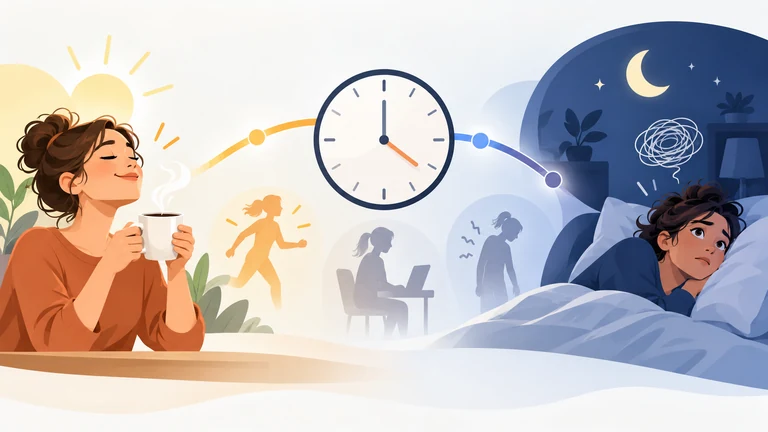
One of the more frustrating patterns can begin with an entirely reasonable decision: you sleep poorly, feel tired the next day, and use caffeine to remain alert. The difficulty comes when the caffeine needed to get through the day extends late enough to interfere with the following night's sleep.
That can create a repeating cycle: poor sleep leads to more caffeine, later caffeine contributes to poorer sleep, and the next morning begins with an even stronger perceived need for stimulation.
Caffeine is not necessarily the original cause of fatigue in this scenario. The initial problem might be a late bedtime, stress, a changing work schedule, illness, sleep disruption, or something else entirely. But once caffeine timing begins affecting sleep, it can become part of the pattern that keeps daytime tiredness going.
How Much Caffeine Is in Coffee, Tea, Soda, and Energy Drinks?
Caffeine intake can be surprisingly difficult to estimate because serving sizes and formulations vary. According to FDA examples for 12-fluid-ounce beverages, regular brewed non-specialty coffee may contain roughly 113 to 247 milligrams, caffeinated soft drinks about 23 to 83 milligrams, black tea around 71 milligrams, green tea around 37 milligrams, and energy drinks approximately 41 to 246 milligrams.
Those values are examples rather than guarantees for a particular product. Coffee brewing method, bean type, serving size, brand, and formulation can all change the amount. Energy drinks can also vary considerably, and some products combine caffeine with ingredients such as guarana that may contribute additional caffeine.
Caffeine can also appear in chocolate, bars, supplements, chewing gum, certain medications, and other products. Even decaffeinated coffee is not necessarily caffeine-free. Looking at the whole day rather than counting only cups of coffee gives a more realistic estimate of intake.
A Simple Way to Audit Your Caffeine Intake
If you are unsure whether caffeine is helping or hurting, a short intake audit can be more informative than immediately eliminating it. For several days, note what you consume, approximate caffeine amounts when available, the time of each serving, your bedtime, how easily you fall asleep, how rested you feel the next morning, and any symptoms such as jitters or palpitations.
Patterns can be more useful than one isolated day. You might discover that your total daily amount is modest but your last dose is consistently late, or that one large drink contributes far more caffeine than you expected.
This type of self-observation is not a medical test and should not be used to diagnose sleep, heart, anxiety, or fatigue disorders. It is simply a way to make an everyday habit more visible.
How to Cut Back on Caffeine Gradually
People who consume caffeine regularly can experience unpleasant withdrawal symptoms when they stop suddenly. The FDA recommends reducing intake gradually rather than abruptly when possible.
A gradual approach might involve reducing the size of one serving, mixing regular and decaffeinated coffee, replacing one caffeinated drink with a lower-caffeine option, or moving later servings earlier before removing them. The goal does not have to be zero caffeine unless that is personally appropriate.
If the main concern is sleep, changing timing may be more useful initially than focusing only on the daily total. If the concern is jitteriness or anxiety-like symptoms shortly after caffeine, reducing individual dose size may also be worth considering.
Can You Get More Daytime Energy Without More Caffeine?
Yes, but the right strategy depends on why energy feels low in the first place. Caffeine primarily changes alertness; it does not correct every cause of fatigue. If sleep opportunity is too short, more caffeine cannot replace those lost hours. If meals are consistently inadequate, caffeine does not supply the nutrients or calories the body needs.
A steadier approach to daytime energy starts with the broader routine: adequate sleep, reasonably consistent sleep and wake times, regular movement, sufficient food and fluids, appropriate breaks, and attention to persistent stress or workload. Caffeine can then be treated as one optional tool within that routine rather than the foundation holding it together.
Who Should Be More Cautious With Caffeine?
General guidance for healthy adults does not automatically apply to every situation. People who are pregnant, trying to become pregnant, or breastfeeding should discuss caffeine intake with an appropriate healthcare professional. Certain medications and health conditions can also change caffeine sensitivity or make individualized limits more important.
Children and adolescents are another distinct group. Adult caffeine thresholds should not simply be scaled down and applied to them. Guidance for younger people should come from pediatric and public-health recommendations rather than adult consumption patterns.
When to Talk to a Healthcare Professional
Consider discussing caffeine with a healthcare professional if you repeatedly experience heart palpitations, pronounced anxiety or jitteriness, significant sleep disruption, persistent nausea or digestive symptoms, headaches that appear linked to caffeine patterns, or other symptoms that concern you.
Persistent fatigue also deserves more attention than simply adding another cup of coffee. Tiredness can have many causes, including insufficient or disrupted sleep, medications, nutritional issues, mental health conditions, sleep disorders, and other medical problems. New, severe, unexplained, or ongoing symptoms should not be self-treated indefinitely with stimulants.
Pure or highly concentrated caffeine products deserve particular caution. They can deliver dangerously large amounts in very small quantities and are fundamentally different from ordinary dietary sources such as coffee or tea.
Bottom Line
For most healthy adults, the FDA cites 400 milligrams of caffeine per day as an amount not generally associated with negative effects. But the most useful personal question is not simply whether you are above or below 400 milligrams.
Pay attention to dose, timing, total intake, sleep, and how your body responds. Caffeine can provide a modest short-term boost in alertness and attention, yet consuming more does not guarantee more useful energy or better focus. For some people, the tradeoff appears as anxiety, jitters, physical symptoms, or poorer sleep.
If caffeine helps you feel alert without interfering with sleep or causing unwanted effects, there may be no reason to eliminate it. If you increasingly need caffeine to compensate for poor sleep or feel worse as intake rises, reducing the dose, moving it earlier, and looking at the underlying reason for fatigue may make more sense than reaching for another serving.
Was this article helpful?
Your anonymous response helps improve our editorial coverage.
Loading feedback options…
Share
Share this article
More from Planet Wellness Report
Continue Reading

Energy
How to Get More Energy Naturally: Identify the Problem First
Low energy can mean dozing off, feeling depleted, struggling to start, or thinking unclearly. Use type and timing to choose a first check before supplements.
6 min read

Energy
Why You Feel Tired Even After Sleeping: 9 Everyday Causes of Low Energy
Getting enough hours of sleep does not always mean waking refreshed. Learn nine possible contributors to low energy, what the evidence supports, and when persistent fatigue deserves medical evaluation.
11 min read

Energy
Why You Feel Tired After Eating—and What Actually Matters
Post-meal tiredness can reflect meal size, composition, afternoon timing, or poor sleep. Learn what to compare first and when a recurring pattern needs assessment.
10 min read
Evidence
Sources
- Spilling the Beans: How Much Caffeine is Too Much? — U.S. Food and Drug Administration (FDA)
- Kasper Kløve; Anders Petersen. A Systematic Review and Meta-analysis of the Acute Effect of Caffeine on Attention — Psychopharmacology (Sep 1, 2025) · DOI
- Christopher Drake, Timothy Roehrs, John Shambroom, Thomas Roth. Caffeine Effects on Sleep Taken 0, 3, or 6 Hours Before Going to Bed — Journal of Clinical Sleep Medicine / American Academy of Sleep Medicine (Nov 15, 2013) · DOI
- The Effect of Caffeine on Subsequent Sleep: A Systematic Review and Meta-Analysis — Sleep Medicine Reviews (Jun 1, 2023) · DOI
- The Effects of Caffeine on Anxiety Behavior in Healthy Individuals: A Systematic Review of the Literature — Stress and Health (Feb 1, 2026) · DOI