
ARTICLE
PQQ and Mitochondrial Health: What Human Research Actually Shows
Separate cellular mechanisms and biomarkers from fatigue, cognition, sleep, and performance outcomes.
By Planet Wellness Report · Oct 10, 2026 · 7 min read
Editorial review and publication: Felipe Lopes, Publisher & Editor. This is an editorial review, not a medical review.
PQQ supplements are often described as a way to support mitochondria, the structures that help cells produce usable energy. Human research gives a narrower answer: some small studies report changes in metabolic markers or cognitive tests, but those changes do not establish that PQQ reliably increases everyday energy, reduces persistent fatigue, or improves endurance.
The useful question is not whether PQQ has interesting biology. It is which outcomes have actually been measured in people, under what conditions, and how closely they match the benefit you want.
What is PQQ, and why is it linked to mitochondria?
PQQ stands for pyrroloquinoline quinone, a compound with oxidation–reduction properties. Research has explored its effects on cellular signaling, oxidative stress, and pathways involved in mitochondrial biogenesis—the processes that help cells make and maintain mitochondria. Much of the mechanistic work comes from cells and animals. It supplies a rationale for human trials rather than a direct answer about how a person will feel. [1]
Many human studies use PQQ disodium salt. Labels may describe a particular salt, branded preparation, or ingredient weight, so products and reported doses should not automatically be treated as interchangeable. PQQ is also different from CoQ10; the two are sometimes combined, but their evidence should be evaluated separately. Our CoQ10 and energy article covers that neighboring question.
A marker, a mechanism, and a benefit are different findings
A biomarker is a measurable biological signal. A change in an inflammatory protein, a urinary metabolite, or a signaling protein can show that an intervention has biological activity. It does not necessarily show improved mitochondrial number, function across tissues, or a benefit large enough to matter in daily life.
Clinical and functional outcomes answer different questions: Did fatigue improve more than with placebo? Did participants perform better on a memory test? Did exercise capacity increase? A convincing claim about PQQ benefits needs evidence that fits the outcome, not simply a mechanism that sounds plausible.

Mitochondrial-related biomarkers: an early human signal
A 2013 investigation involved 10 adults and two short PQQ exposures: a single dose of 0.2 mg/kg, and daily dosing of 0.3 mg/kg over roughly three days. Researchers examined antioxidant measures, inflammatory markers, and urinary metabolites. They reported changes in some measures, including lower C-reactive protein and interleukin-6 after the repeated exposure, while standard clinical measurements were not altered. [2]
These results are exploratory. The small sample, brief exposure, and metabolic endpoints cannot establish a durable improvement in fatigue or whole-body energy. Nor do urinary metabolite changes count mitochondria or demonstrate that a person has gained a clinically meaningful quantity of them.
Exercise: a biogenesis-related marker rose, endurance did not improve more
In a randomized trial, 23 men without endurance training experience received 20 mg/day of PQQ or placebo while completing six weeks of supervised endurance training. PQQ increased PGC-1α protein, a marker associated with mitochondrial biogenesis pathways. However, the groups did not differ significantly in aerobic performance after training. Fitness and exercise duration improved with training in both groups. [3]
That distinction is central to interpreting PQQ mitochondrial health claims. A signaling response may be interesting without providing an additional performance benefit. The study does not prove that PQQ can never help performance; it shows that the measured marker change did not translate into an advantage on the aerobic outcomes tested.
A newer 2026 randomized study assigned 60 participants to an acute dose of PQQ, NMN, their combination, or placebo before exhaustive treadmill exercise. The PQQ group showed a signal in a questionnaire domain called body listening. This concerns awareness of internal bodily signals. It is not equivalent to greater endurance, less chronic fatigue, or increased mitochondrial mass. A single-dose, exercise-specific result also does not establish lasting daily energy benefits. [4]
Fatigue and sleep: encouraging reports with a weak comparison
An open-label study of 17 adults reported improvements in questionnaires concerning fatigue, stress, sleep, and quality of life after 20 mg/day of PQQ for eight weeks. It also examined the cortisol awakening response. Participants knew they were receiving the supplement, and there was no placebo group. [5]
Without that comparison, expectation, ordinary symptom fluctuation, and changes in routine cannot be separated reliably from the supplement's effect. A correlated cortisol measure does not remove those limitations. The study is a reason to investigate further, rather than dependable evidence that PQQ treats insomnia or persistent fatigue.
The studies reviewed here do not establish a consistent benefit for diagnosed fatigue conditions. Findings in healthy volunteers, people with sleep complaints, and clinical populations should not be combined into a universal PQQ energy claim. For practical context, see how to get more energy naturally and why you may feel tired even after sleeping.
Cognition: some positive trials, with important limits
A placebo-controlled trial randomized 64 Japanese adults to 21.5 mg/day of PQQ disodium salt or placebo for 12 weeks; 58 completed the study. Researchers reported improvements on several computerized cognitive domains and other measures. The completers were predominantly older adults, and the study evaluated a specific preparation. These findings should not be generalized to every age group or formulation. [6]
A separate 2023 placebo-controlled study in adults aged 20–65 used 20 mg/day for 12 weeks. It reported improvements in composite and verbal memory, with different patterns in age subgroup analyses. Those subgroup findings are useful hypotheses, but they do not demonstrate that all younger adults gain rapid cognitive benefits. Multiple outcomes and analyses also call for replication and attention to their practical size. [7]
Several PQQ publications include researchers affiliated with ingredient manufacturers. That does not invalidate their findings, but independent replication would strengthen confidence. Short cognitive tests also cannot establish protection against dementia or a lasting improvement in day-to-day functioning.
Clinical populations and combination products need separate interpretation
A six-week trial in 34 older adults with mild cognitive impairment tested a mixture of PQQ and hydrogen-producing minerals. It reported an advantage in a specific orientation outcome and changes in brain-related measurements. The primary BDNF result requires care: a rise within the treatment group was reported, but the treatment-by-time interaction was not statistically significant. A significant before-and-after change in one group is not itself proof that the groups differed. [8]
Because this was a combination product in a clinical population, it cannot isolate PQQ's contribution or establish the same effects in healthy adults. BDNF, brain oxygenation, and imaging metabolites should also remain distinct from demonstrated everyday cognitive improvement.
Oxidative stress findings are not a general health guarantee
PQQ's redox chemistry and early human antioxidant measurements support continued research. They do not establish that a change in an oxidative stress assay produces better stamina, prevents illness, or slows aging. Different assays measure different aspects of biology; the useful test is whether a reproducible change predicts an outcome that matters to people. [2]
A 2024 review summarizes mechanisms and human findings, but it is a narrative review rather than a pooled estimate of clinical benefit. In the searches used for this article, we did not identify a dedicated, high-quality meta-analysis establishing a consistent PQQ benefit across fatigue, endurance, sleep, and cognition. This is a description of the evidence located, not a claim that every publication has been exhausted. [1]
Doses, safety, and choosing a product
Several trials used approximately 20 mg/day, but a research dose is not a universal recommendation. Formulation, population, study duration, and the actual amount supplied all matter. Higher dosing has not been shown here to deliver greater practical benefit.
EFSA's assessment of a particular PQQ disodium salt concluded that it was safe under the proposed conditions of use, including 20 mg/day for healthy adults, excluding pregnant or breastfeeding women and children. The assessment also noted that available human studies were limited for evaluating renal safety. This does not establish unrestricted safety for all products, long-term use, or people with kidney disease. Discuss supplementation with a qualified clinician if you have a medical condition, take medication, or are considering multiple supplements together. [9]
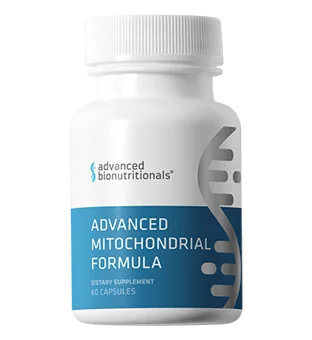
Advanced Mitochondrial Formula contains PQQ alongside other ingredients. Our Advanced Mitochondrial Formula review considers that finished product separately. A trial of PQQ alone does not validate the combination, and results at one dose do not automatically apply to the amount in a multi-ingredient formula.
What the evidence means for a decision
PQQ has a plausible research rationale and some positive human signals, particularly on selected cognitive tests. Its mitochondrial-related biomarker findings are more established as observations than as proof of better energy or performance. Fatigue and sleep evidence remains especially preliminary.
If you are comparing PQQ supplements, start with the specific outcome you want, then check whether a controlled study measured it in people like you using a comparable preparation. Keep expectations proportionate, compare the actual label, and give persistent fatigue or changing memory an appropriate assessment instead of assuming a supplement identifies or resolves the cause.
Planet Wellness Report may earn a commission from qualifying purchases through product links. Those relationships do not determine our assessment of the research or our editorial conclusions.
Was this article helpful?
Your anonymous response helps improve our editorial coverage.
Loading feedback options…
Share
Share this article
Selected references
Recommended products
More from Planet Wellness Report
Continue Reading

Energy
CoQ10 vs PQQ for Mitochondrial Health: Evidence, Energy, and Practical Use
Compare CoQ10 and PQQ by human evidence, fatigue, exercise, cognition, safety, and combination research—without assuming a universal winner.
9 min read

Energy
Advanced Mitochondrial Formula Review: Many Ingredients, Which Dose Matches?
This two-capsule formula discloses individual amounts, including CoQ10 50 mg, acetyl L-carnitine 190 mg and PQQ disodium salt 5 mg. That supports a label audit, but several ingredient studies use different doses or populations and do not establish an energy benefit from this combination.
7 min read

Energy
Acetyl-L-Carnitine for Energy and Fatigue: What Human Research Actually Shows
Acetyl-L-carnitine has fatigue research in selected clinical and older populations. See what the findings mean for healthy adults, exercise, and safety.
8 min read
Evidence
Sources
- Ikemoto K, Mohamad Ishak NS, Akagawa M.. The effects of pyrroloquinoline quinone disodium salt on brain function and physiological processes — The journal of medical investigation : JMI · DOI
- Harris CB, Chowanadisai W, Mishchuk DO, Satre MA, Slupsky CM, Rucker RB.. Dietary pyrroloquinoline quinone (PQQ) alters indicators of inflammation and mitochondrial-related metabolism in human subjects — The Journal of nutritional biochemistry · DOI
- Hwang PS, Machek SB, Cardaci TD, Wilburn DT, Kim CS, Suezaki ES, Willoughby DS.. Effects of Pyrroloquinoline Quinone (PQQ) Supplementation on Aerobic Exercise Performance and Indices of Mitochondrial Biogenesis in Untrained Men — Journal of the American College of Nutrition (Dec 20, 2019) · DOI
- Zhao C, Wu B, Sui H, Kuan G, Wei G, Yan Y.. The effects of pyrroloquinoline quinone and nicotinamide mononucleotide supplementation on interoception following acute exhaustive exercise: a randomised, double-blind, placebo-controlled study — Scientific reports · DOI
- Masahiko Nakano; Tetsuro Yamamoto; Hisayoshi Okamura; Akira Tsuda; Yasuyuki Kowatari. Effects of Oral Supplementation with Pyrroloquinoline Quinone on Stress, Fatigue, and Sleep — Functional Foods in Health and Disease (Aug 31, 2012) · DOI
- Shiojima Y, Takahashi M, Takahashi R, Moriyama H, Bagchi D, Bagchi M, Akanuma M.. Effect of Dietary Pyrroloquinoline Quinone Disodium Salt on Cognitive Function in Healthy Volunteers: A Randomized, Double-Blind, Placebo-Controlled, Parallel-Group Study — Journal of the American Nutrition Association · DOI
- Tamakoshi M, Suzuki T, Nishihara E, Nakamura S, Ikemoto K.. Pyrroloquinoline quinone disodium salt improves brain function in both younger and older adults — Food & function · DOI
- Baltic S, Nedeljkovic D, Todorovic N, Ranisavljev M, Korovljev D, Cvejic J, Ostojic J, LeBaron TW, Timmcke J, Stajer V, Ostojic SM.. The impact of six-week dihydrogen-pyrroloquinoline quinone supplementation on mitochondrial biomarkers, brain metabolism, and cognition in elderly individuals with mild cognitive impairment: a randomized controlled trial — The journal of nutrition, health & aging · DOI
- EFSA Panel on Dietetic Products, Nutrition and Allergies. Safety of pyrroloquinoline quinone disodium salt as a novel food pursuant to Regulation (EC) No 258/97 — EFSA Journal · DOI