
ARTICLE
Can You Take Magnesium and Melatonin Together? Benefits, Risks, and What to Know
What combination studies show, how to check overlapping doses, and when to get advice before adding a second sleep supplement.
By Planet Wellness Report · Nov 17, 2026 · 10 min read
Editorial review and publication: Felipe Lopes, Publisher & Editor. This is an editorial review, not a medical review.

Yes, some adults can take magnesium and melatonin together, but whether doing so is appropriate depends on the doses, other ingredients, medications, and health conditions involved. Small trials have reported sleep improvements with combined supplements; they do not establish a standard dose, a general advantage over melatonin alone, or long-term safety. [1–4]
The useful question is whether there is a reason for each ingredient—and whether the complete doses, medications, and health circumstances fit. This becomes especially important when a sleep blend already contains magnesium or melatonin.
What research shows about magnesium and melatonin together
There is research on the combination itself. It should be evaluated separately from studies of magnesium alone or melatonin alone.
A small trial tested the two ingredients together
A 2024 randomized, double-blind crossover trial recruited 35 people with sleep disturbances. It compared a supplement delivering 1.9 mg melatonin plus 200 mg elemental magnesium through a coffee-pod delivery system with placebo. Each condition lasted four weeks, separated by a seven-day washout. [1]
Several sleep outcomes favored the supplement. However, average Pittsburgh Sleep Quality Index scores remained above the threshold for poor sleep in both conditions. The study was small, short, and specific to one formulation. It also lacked magnesium-only and melatonin-only conditions, so it cannot show that adding magnesium improves on melatonin alone. [1]
That is evidence worth considering, but it is not a reason to copy the dose or assume that any two bottles will reproduce the result.
Other studies answer narrower questions
In a 2011 placebo-controlled trial, 43 older residents of one Italian long-term care facility received either placebo or 5 mg melatonin, 225 mg magnesium, and 11.25 mg zinc nightly for eight weeks. Sleep-quality scores improved more with the supplement. Because the intervention contained three active ingredients and involved a specific older population, it does not isolate the magnesium–melatonin pair or establish which ingredient produced the benefit. [2]
A 2021 trial assigned 84 women with polycystic ovary syndrome to magnesium, melatonin, both, or placebo for eight weeks. Both the melatonin-only and combined groups improved on a sleep-quality questionnaire. Unlike the two trials above, this study did include single-ingredient groups. Its findings still do not establish a general sleep advantage from adding magnesium to melatonin, and a population with PCOS cannot represent every adult with trouble sleeping. [3]
A 2019 study in 60 people with insomnia also reported improved symptom scores after a combination containing magnesium, melatonin, and B vitamins. The report does not describe a placebo for the control group. That limitation and the additional ingredients make it less informative about the effects of the pair specifically. [4]
Taken together, these studies offer preliminary support for some combined formulations. They leave unanswered the questions most shoppers face: Who needs both? Is the pair better than a well-chosen single ingredient? Which dose and formulation provide a worthwhile benefit? How does regular use perform over years?
Why their different roles do not prove an added benefit
Magnesium is a nutrient needed for normal nerve and muscle function. Melatonin is a hormone involved in signaling biological night and coordinating sleep timing. Having different roles makes a combination plausible; it does not establish that taking extra amounts of both improves sleep. [7, 8]
A 2026 systematic review of magnesium-only randomized trials found inconsistent sleep results and low or very low certainty. Possible improvements in selected subjective outcomes do not establish magnesium as a routine insomnia treatment. Our magnesium-for-sleep guide examines the individual evidence in more detail. [5]
Melatonin research also depends on the sleep problem, dose, timing, and formulation. A 2024 dose-response review found that administration timing and dose affected measured sleep outcomes, but its modeled findings are not a tested dosing schedule for magnesium plus melatonin. [6]
If your question is which ingredient fits a particular sleep problem, the magnesium vs. melatonin comparison addresses that choice. Here, the extra step is asking what adding the second ingredient actually contributes.
Doses and timing: what can you responsibly take from the studies?
Separate a nutritional target from a supplement dose
For most nonpregnant adults, recommended daily magnesium intake is 310–320 mg for women and 400–420 mg for men, depending on age. These totals include food. Nuts, seeds, beans, whole grains, and leafy greens can contribute; eating them is not equivalent to taking a concentrated bedtime supplement. [7]
The U.S. adult upper limit is 350 mg a day from magnesium supplements and medications. Magnesium naturally present in food is excluded. This limit mainly reflects gastrointestinal side effects, rather than a sharp boundary at which poisoning begins. Higher amounts may sometimes be used under professional guidance. [7]
Read the elemental magnesium amount on Supplement Facts, rather than assuming that the weight of “magnesium glycinate” or an entire blend equals elemental magnesium. Count other supplements, antacids, and laxatives. [15]
Study doses are examples, not a combination protocol
The two placebo-controlled combination trials described above used different melatonin amounts and different formulations. Neither compared a range of magnesium–melatonin doses to find an optimum. Their doses describe experiments; they do not establish a starting dose or a safe ceiling for a reader. [1, 2]
There is also no established requirement to swallow the ingredients at the same moment. Timing has particular significance for melatonin because it can shift circadian timing. CDC guidance for jet lag warns that mistimed melatonin can shift the body clock in the wrong direction; advice for jet lag should not be repurposed as a universal bedtime schedule. [10]
If melatonin has not helped, adding magnesium or increasing both amounts is not an evidence-based substitute for checking the reason for use. Ask a clinician or pharmacist to review the exact products, amounts, timing, and intended duration before combining them when medical conditions or medications are involved.
How to check the labels before combining supplements
Put every product you plan to use beside its Supplement Facts panel, including any multivitamin, sleep blend, antacid, or laxative. Check the serving size first: amounts may refer to two capsules or a measured liquid serving rather than one capsule or dropper. [15]
First, locate the declared elemental magnesium amount and add the known supplemental and medication amounts for the day. Do not use the weight of a magnesium compound as the elemental total. Keep food magnesium separate when comparing the result with the adult supplemental/medication upper limit. [7, 15]
Next, scan the full ingredient lists for duplicates. A product sold as a melatonin blend may already contain magnesium; a second sleep product may add more melatonin or other sleep-related ingredients. Count what is disclosed, and mark anything you cannot quantify as unknown—not zero.
Finally, bring the labels and your medication list to a pharmacist or clinician when interactions are a concern. A proprietary-blend total cannot tell you each ingredient's dose or establish compatibility. In a formula containing 5-HTP, for example, the medication check must cover that ingredient as well as magnesium and melatonin. The reviews below illustrate why these label differences matter. [9, 14]
Side effects and interactions to check before combining
Magnesium supplements can cause diarrhea, nausea, and abdominal cramping. Impaired kidney function increases the risk of magnesium accumulation and toxicity. Melatonin can cause sleepiness, headache, dizziness, or nausea, and long-term safety information remains limited. The absence of an established incompatibility between the two is not proof of safety for a particular person. [8, 15]
Medication interactions can matter even when the supplements do not interact directly with each other. Magnesium can interfere with absorption of tetracycline or quinolone antibiotics and oral bisphosphonates. Spacing requirements depend on the medicine; follow its directions and have a pharmacist check the schedule. [15]
Melatonin warrants review with blood thinners, seizure medicines, sedating medicines, certain antidepressants, blood-pressure or diabetes medicines, and immunosuppressants. Other sleep-promoting products can complicate its effects. Do not drive or operate machinery if you feel drowsy. Our melatonin side-effects guide covers its safety issues separately. [8, 9]
Starting two new products at once also makes an unwanted effect harder to interpret: you cannot easily tell which ingredient, dose, or extra constituent is responsible. A simpler ingredient list makes that question easier to discuss, though it does not guarantee safety.
When to get professional advice first
Check before combining these supplements if you have kidney disease, epilepsy, take blood thinners or other regular medicines, or are pregnant or breastfeeding. Older adults also need attention to next-day sleepiness; this adult discussion should not be used to choose doses for children. [8, 15]
Persistent trouble sleeping, impaired daytime functioning, or repeated awakenings deserves assessment rather than an expanding supplement routine. Cognitive behavioral therapy for insomnia (CBT-I) is a first-line approach for chronic insomnia; ordinary sleep-habit advice is not equivalent to a full course of CBT-I. [11]
If the concern is how long falling asleep “should” take, start with how to interpret sleep-onset time. A number on a clock is not, by itself, a reason to take two supplements.
How this applies to Magnesium Breakthrough and Yu Sleep
The same label check helps explain the different questions answered by our product reviews: the Magnesium Breakthrough analysis examines a disclosed magnesium total, while the Yu Sleep analysis examines a fixed liquid mixture with several unknown ingredient amounts. Neither analysis is a reason to add the other product.
Planet Wellness Report may earn a commission from purchases through affiliate links. The reviews linked below examine the products' limitations as well as their features. These are separate commercial options to evaluate—not a recommendation to buy or take them together.
Magnesium Breakthrough: consider the total before the seven forms
The regular two-capsule serving declares 500 mg elemental magnesium across seven forms, with individual form contributions undisclosed. The list includes chelate, bisglycinate, Sucrosomial magnesium, malate, orotate, taurate, and citrate. That serving already exceeds the U.S. adult supplemental/medication upper limit of 350 mg, before any other supplemental magnesium is counted. More forms do not establish better sleep or an added benefit with melatonin. [7, 12]
For someone already evaluating this product for a reason to supplement magnesium, the Magnesium Breakthrough review helps assess the disclosed amount and blend limitations. The full serving should not be treated as a default dose for this article's combination.
Yu Sleep: the melatonin amount is known; the magnesium amount is not
The manufacturer-published Supplement Facts panel retrieved on November 16, 2026 declares 0.9 mg melatonin per 2 mL serving, plus a 637 mg proprietary blend. That blend lists tart cherry concentrate, magnesium glycinate, apigenin, lemon balm, 5-HTP, L-theanine, and GABA without individual quantities. The 637 mg total is not a magnesium dose, and elemental magnesium is not separately disclosed. This is a published specification, not verification of a delivered bottle or batch. [13]
Yu Sleep therefore already combines melatonin with a magnesium ingredient and several other substances. Adding Magnesium Breakthrough would duplicate magnesium while leaving the full elemental total uncertain. The presence of 5-HTP also warrants a medication check, especially with serotonergic medicines such as certain antidepressants, because of serotonin-syndrome risk. An undisclosed amount is not reassurance against an interaction. [13, 14]
The Yu Sleep review is relevant if you are evaluating the trade-off between a fixed liquid formula and control over individual doses. Neither review establishes that taking the two products together improves sleep.
Decide whether you need both before choosing a combination
Magnesium and melatonin have been studied together, and some small trials have produced favorable results. That supports further research, not a universal sleep combination. The current evidence does not identify a standard pair of doses or show that every adult benefits from adding magnesium to melatonin. [1–4]
Start with the sleep problem, the reason for each ingredient, and the complete label. If doses are hidden, products overlap, or medications complicate the choice, get help reviewing the plan before adding another bottle.
Was this article helpful?
Your anonymous response helps improve our editorial coverage.
Loading feedback options…
Share
Share this article
Selected references
Recommended products
 Magnesium Breakthrough
Regular seven-form magnesium capsule supplement: 500 mg elemental magnesium per two capsules, with individual form contributions undisclosed. Dose suitability and other magnesium sources matter more than the number of forms.
The regular two-capsule serving supplies 500 mg elemental magnesium, above the U.S. adult supplemental/medication upper limit of 350 mg/day. Confirm dose suitability and other sources; seven forms do not establish better sleep.
View product details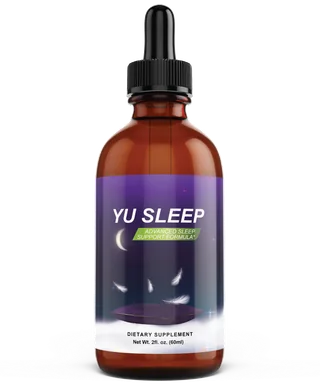 Yu Sleep
Liquid formula with owner-confirmed 0.9 mg melatonin per 2 mL serving and a 637 mg proprietary blend. The individual amounts of its seven blend ingredients are undisclosed.
Before considering a purchase: Label check, November 16, 2026: a manufacturer-published Supplement Facts image lists 2 mL per serving, 0.9 mg melatonin and a 637 mg blend, matching the review’s main quantities. Individual blend amounts remain undisclosed. Check the current bottle and medication compatibility, including 5-HTP, before buying.
Read the review and purchase limitations
More from Planet Wellness Report
Continue Reading
Sleep
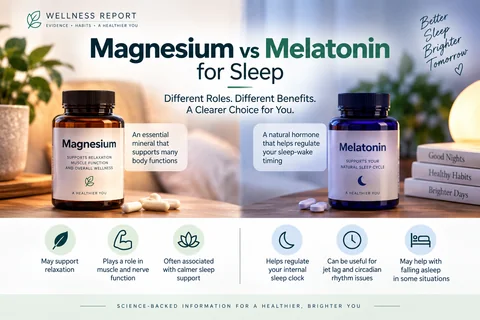
Magnesium vs Melatonin for Sleep: Which One Makes More Sense?
Magnesium and melatonin are often treated as interchangeable sleep supplements, but they play very different biological roles. Compare their evidence, potential uses, limitations, and safety.
13 min read

Sleep
How to Improve Sleep Quality Naturally: What to Change First
Trouble settling, repeated awakenings, unrefreshing sleep, or weekend shifts? Identify the pattern and choose what to address first.
6 min read

Sleep
Yu Sleep Review: A Known Melatonin Dose Inside an Undisclosed Blend
Yu Sleep’s owner-confirmed formula provides 0.9 mg melatonin in a 2 mL serving, plus a 637 mg blend whose seven ingredient amounts are hidden. Its liquid format is a preference feature; the disclosure cannot establish how much magnesium, theanine, apigenin, GABA or other blend constituents a serving supplies.
10 min read
Evidence
Sources
- Rafael M. Carlos et al.. The effects of melatonin and magnesium in a novel supplement delivery system on sleep scores, body composition and metabolism in otherwise healthy individuals with sleep disturbances — Chronobiology International (May 14, 2024) · DOI
- Mariangela Rondanelli; Annalisa Opizzi; Francesca Monteferrario; Neldo Antoniello; Raffaele Manni; Catherine Klersy. The effect of melatonin, magnesium, and zinc on primary insomnia in long-term care facility residents in Italy: a double-blind, placebo-controlled clinical trial — Journal of the American Geriatrics Society · DOI
- Mohammad Alizadeh et al.. Metabolic and hormonal effects of melatonin and/or magnesium supplementation in women with polycystic ovary syndrome: a randomized, double-blind, placebo-controlled trial — Nutrition & Metabolism (Jun 6, 2021) · DOI
- Gorica Djokic et al.. The Effects of Magnesium – Melatonin - Vit B Complex Supplementation in Treatment of Insomnia — Open Access Macedonian Journal of Medical Sciences (Aug 30, 2019) · DOI
- Adrian L. Lopresti, Stephen J. Smith, Peter D. Drummond. Magnesium Supplementation for Sleep in Adults: A Systematic Review of Randomized Controlled Trials — Journal of Dietary Supplements / Taylor & Francis (Aug 28, 2026) · DOI
- Francy Cruz-Sanabria, Simone Bruno, Alessio Crippa, Paolo Frumento, Marco Scarselli, Debra J. Skene, Ugo Faraguna. Optimizing the Time and Dose of Melatonin as a Sleep-Promoting Drug: A Systematic Review of Randomized Controlled Trials and Dose-Response Meta-Analysis — Journal of Pineal Research (Aug 1, 2024) · DOI
- Magnesium — Fact Sheet for Consumers — NIH Office of Dietary Supplements
- Melatonin: What You Need To Know — National Center for Complementary and Integrative Health (NCCIH), National Institutes of Health
- Mayo Clinic Staff. Melatonin — Mayo Clinic
- Jet Lag Disorder — Centers for Disease Control and Prevention (CDC) Yellow Book
- Insomnia: Treatment — National Heart, Lung, and Blood Institute (NHLBI), NIH (Mar 24, 2022)
- Magnesium Breakthrough — BIOptimizers
- Yu Sleep — Manufacturer-published Supplement Facts (retrieved November 16, 2026) — Yu Sleep
- Memorial Sloan Kettering Cancer Center. 5-HTP — Memorial Sloan Kettering Cancer Center
- Magnesium — Health Professional Fact Sheet — NIH Office of Dietary Supplements (Jan 6, 2026)