
ARTICLE
How Bone Density Changes With Age—and What Actually Helps Protect It
By Planet Wellness Report · Oct 24, 2026 · 9 min read
Editorial review and publication: Felipe Lopes, Publisher & Editor. This is an editorial review, not a medical review.
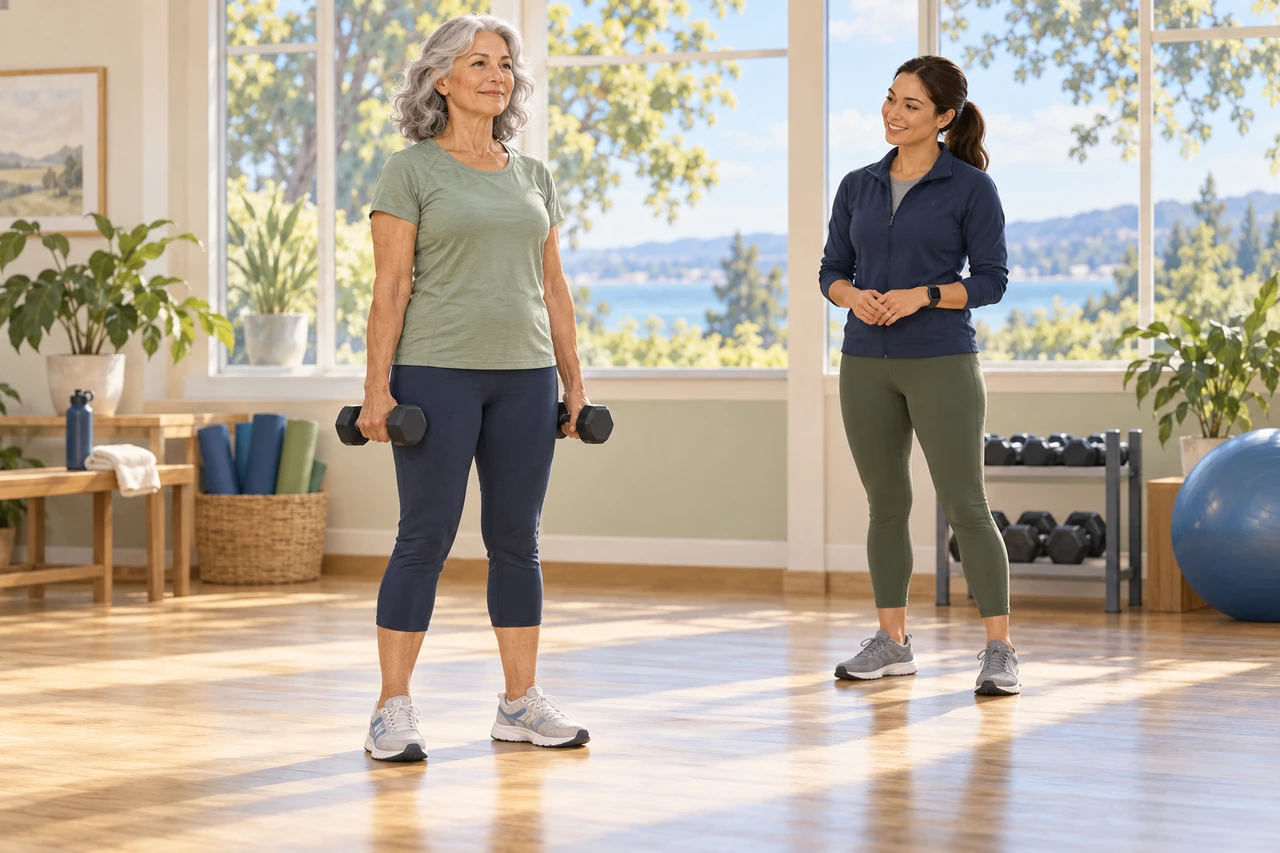
Bone is living tissue that keeps renewing itself. With age, the balance between removing old bone and replacing it can shift toward loss. Protecting bone density with age involves appropriate skeletal loading, adequate nutrition and attention to fracture risk—not simply adding calcium or buying a bone-health supplement.
Four outcomes need to stay separate: bone mineral density, bone strength, falls and fractures. A scan can improve without proving that fractures were prevented. Someone can become stronger without a measurable bone-density gain. The useful goal is to support the skeleton while addressing the circumstances that make a fracture more likely.
Bone density is one part of bone strength
Bone mineral density, or BMD, estimates how much mineral is present in a measured area of bone. A DXA scan uses low-dose X-rays, usually at the hip and lower spine, to measure it. This is a useful indicator of skeletal health, but it does not directly measure every feature that helps bone tolerate force.
Bone strength also depends on its size, shape, internal architecture and tissue properties. Think of mineral as one contributor to a structure whose arrangement matters too. That is an explanation of the distinction, not a way to estimate your own bone strength from appearance or fitness.
Fracture risk adds another layer: how much force reaches a bone, in what direction, and whether the bone can withstand it. A fall is one possible source of that force; fragile vertebrae can also fracture during ordinary activity. Lower BMD increases concern, but neither a reassuring scan nor strong muscles makes fracture risk disappear.
Why remodeling can shift toward bone loss
During remodeling, specialized cells remove small amounts of older bone and other cells form replacement tissue. Aging can leave replacement lagging behind removal, with changes in both bone amount and structure. The rate and pattern vary across people and skeletal sites.
Loss of estrogen around menopause can accelerate this imbalance. That makes menopause an important context, rather than making bone health exclusively a women's issue. Men also lose bone with age, and hormonal changes, illness and medications can matter across adult populations.
Less movement and reduced mechanical loading remove some of the stimulus that helps maintain the skeleton. Inadequate food intake, low body weight and nutrient shortfalls can add to the problem. Some conditions that alter hormones or nutrient absorption, and medicines such as long-term systemic glucocorticoids, require separate clinical attention. Age-related bone loss cannot be reduced to calcium deficiency alone.
Exercise: match the loading to the outcome
For bone, exercise is partly a question of the forces reaching a particular site. Weight-bearing activity supports body weight against gravity. Resistance exercise adds force through muscular effort against weights, bands or other resistance. Impact activities create faster loading when the feet contact the ground. These categories overlap, but they are not interchangeable.
Progressive resistance training and appropriate weight-bearing activity are central components of professional bone-health guidance. Progression means adapting the challenge over time as capacity develops. It does not mean that the heaviest possible weight or highest jump is the best starting point. Technique, previous experience, symptoms and fracture history affect what is appropriate.
In the LIFTMOR trial, 101 screened postmenopausal women with low bone mass took part in eight months of supervised high-intensity resistance and impact training or lower-intensity home exercise. The supervised group had better spine and femoral-neck BMD changes and functional results. This was a specific combined intervention in a selected population, not proof that unsupervised heavy lifting is suitable for every older adult or that fractures were reduced.
A 2023 review of 28 impact-exercise trials found benefits for some measures of bone structure and volumetric density at selected sites, with no consistent benefit everywhere. Studies spanned different ages; evidence in older men was too sparse for pooled analysis. A response at the tibia cannot simply be transferred to the spine or to every reader.
The practical hierarchy is about purpose: everyday movement reduces inactivity; an appropriately progressive resistance and weight-bearing program adds a more deliberate skeletal stimulus; higher impact is an option for suitable people, rather than an automatic next level for everyone. Combined programs can address several needs without proving that every component independently builds bone.
Walking helps, but the details matter
Walking is accessible weight-bearing activity and a useful part of an active life. It should not be dismissed as irrelevant to bone. A September 2026 network meta-analysis of 124 randomized trials in adults aged 40 and older found BMD benefits for several exercise approaches, including a combined category of brisk walking or jogging and combined aerobic-resistance exercise. Certainty varied from low to moderate.
That combined walking-or-jogging category matters: the result does not establish that any pace of walking, by itself, preserves every skeletal site. Nor do the analysis's estimated exercise doses identify a personal threshold that guarantees bone gain. Trial participants, programs and comparisons differed.
Fractures were reported in only 26 of those trials. Some exercise categories showed possible reductions with low-certainty evidence, while resistance training, combined aerobic-resistance exercise and brisk walking or jogging did not show statistically clear reductions. A neutral fracture estimate does not erase other benefits, but BMD results should not be relabeled as proven fracture prevention.
Muscle and balance contribute through different pathways
Resistance training can support both muscle and bone, yet a strength gain and a BMD change remain different measurements. Our muscle-preservation article explains the broader priorities for muscle, strength and function. Its muscle outcomes should not be treated as evidence of bone gain.
Fracture risk also depends partly on whether a fall occurs, while bone strength influences what happens when a load exceeds the skeleton's tolerance. Our balance-with-age article covers sensory input, movement responses and fall-related considerations. Better balance does not necessarily mean denser bone, and denser bone does not prevent every fall.
For someone with osteoporosis, previous vertebral fractures, recurrent falls or substantial limitations, an adapted program and professional guidance can make movement more feasible. UK exercise consensus guidance distinguishes these groups when considering impact and movement technique. Its aim is to support activity with appropriate adaptation, rather than encourage either sudden high loading or avoidable inactivity.
Nutrition supports remodeling; supplements answer a narrower question
Calcium provides mineral for bone, and persistently inadequate intake deserves attention. Start by considering the overall diet: dairy foods, calcium-fortified alternatives and calcium-set tofu are examples of useful sources, with amounts varying by product. A food-first approach means identifying a real gap before treating a tablet as the foundation of bone care.
For context, U.S. reference intakes summarized by NIH ODS are 1,000 mg of calcium daily for adults aged 19–50 and men aged 51–70, and 1,200 mg for women aged 51–70 and all adults over 70. These are total daily intakes from food and supplements for generally healthy populations, not universal supplement doses. Guidelines in other countries use different reference values.
Supplementation may help fill an intake gap when food is insufficient or clinical circumstances warrant it. More is not automatically better: calcium supplements can cause digestive effects, may increase kidney-stone risk in some circumstances and interact with medicines. Kidney disease and a history of stones are reasons to discuss an appropriate plan rather than add calcium independently.
Adequate energy and protein intake also support musculoskeletal health. Poor appetite or unintended weight loss calls for attention to the whole eating pattern. That does not establish that extra protein beyond need will increase BMD or prevent fractures, and it is not a reason to reproduce a muscle-building supplement regimen.
Vitamin D adequacy is different from taking more
Vitamin D helps calcium absorption and normal bone mineralization. Deficiency deserves appropriate evaluation and correction. A blood marker of vitamin D status, a BMD measurement and an actual fracture outcome nevertheless answer different questions. Raising the first does not guarantee improvement in the others.
In VITAL, 25,871 generally healthy midlife and older adults were not selected for vitamin D deficiency, low bone mass or osteoporosis. Vitamin D supplementation did not significantly reduce total, nonvertebral or hip fractures over a median 5.3 years. That result addresses supplementation in that population; it does not show that treating established deficiency is unnecessary.
A May 2026 review of 69 trials found little to no clinically meaningful fracture or fall benefit from calcium, vitamin D or their combination, using prespecified absolute-effect thresholds. Most trials involved community-dwelling people, and most did not enroll high-risk populations. Combined supplementation showed a small relative reduction in any fracture, but the authors judged the absolute benefit below their threshold. Evidence for some higher-risk and residential-care groups was limited.
These findings do not negate nutritional adequacy or the supportive role of calcium and vitamin D within osteoporosis care. The review excluded people receiving osteoporosis drugs. High doses or large intermittent doses should not be assumed to work better; excessive vitamin D can disturb calcium balance and cause harm. Neither a supplement purchase nor a higher blood result is a substitute for addressing overall fracture risk.
DXA and screening belong in a risk context
DXA can help identify low BMD and inform clinical decisions alongside age, prior fractures, family history, falls, smoking, alcohol exposure, medicines and relevant health conditions. Screening looks for risk before a recognized problem; evaluation after a low-trauma fracture or suspected secondary bone loss is a different clinical situation. An online T-score interpretation cannot replace either process.
The U.S. USPSTF's January 2025 recommendation supports screening women aged 65 and older, and postmenopausal women younger than 65 who have increased fracture risk after clinical risk assessment. For men, it found insufficient evidence to determine the balance of benefits and harms of population screening. That uncertainty is not advice to ignore an individual man's risk factors.
The recommendation applies to adults aged 40 and older without known osteoporosis or previous fragility fractures, and excludes secondary osteoporosis from relevant conditions or chronic bone-affecting medicines. Other professional guidelines address different populations and settings. Whether a particular reader needs DXA is therefore a conversation about context, not an instruction for everyone to arrange a scan.
Four questions behind a useful next step
The following is an editorial decision framework, not a validated clinical instrument or a fracture-risk score. Its purpose is to organize the next conversation without turning bone health into a supplement checklist.
First, is the skeleton receiving an appropriate loading stimulus? Someone who walks regularly but has no resistance activity may have a different training question from someone returning after a fracture. These are hypothetical examples, not exercise prescriptions.
Second, is nutrition adequate for remodeling? Consider reliable meals and calcium-containing foods, with individualized help for an intake gap or poor appetite. Adequacy comes before asking whether an additional supplement has demonstrated a meaningful outcome.
Third, is there a reason fracture risk may be elevated? A previous low-trauma fracture, recurrent unexplained fractures, prolonged systemic glucocorticoid use or a relevant medical condition changes the discussion. Do not stop a prescribed medicine; ask how bone protection should be addressed alongside it.
Fourth, is screening or professional assessment appropriate? Significant height loss or new severe back pain, particularly with osteoporosis risk or after minor strain, deserves prompt assessment for possible vertebral injury and other causes. These features do not diagnose a fracture. An existing fragility fracture warrants follow-up even if pain has settled, rather than waiting for another event before reassessing risk.
For someone without these concerns, the next step may be as ordinary as establishing suitable resistance activity or making calcium-containing foods more consistent. For someone at elevated risk, lifestyle measures may need to accompany evidence-based medical management. Supporting bone density is worthwhile, but protecting the skeleton means looking beyond the scan number.
Was this article helpful?
Your anonymous response helps improve our editorial coverage.
Loading feedback options…
Share
Share this article
More from Planet Wellness Report
Continue Reading
Healthy Aging
Joint Genesis Review: Where the Label and Human Evidence Diverge
Mobilee has a relevant 80 mg research connection, but conflicting labels and extract differences complicate Joint Genesis’s evidence and value.
12 min read

Healthy Aging
How Hearing Changes With Age—and Why It Matters Beyond Hearing
Hearing a sound and understanding a conversation are different. Explore age-related hearing changes, communication support and patterns that deserve assessment.
10 min read
Healthy Aging
How Muscle Mass Changes With Age—and What Actually Helps Preserve It
Muscle mass, strength and function change differently with age. Use an evidence-informed order of priorities to decide what to address first.
8 min read
Evidence
Sources
- Lu C, Li L, Zhang L, Gao Q, Meng J, Xue Y, Jiang H, Yuan T, Qian H, Bao N, Luo Z, Yang X.. Effect of exercise on bone health in middle aged and older adults: hierarchical network meta-analysis of randomised trials — BMJ (Clinical research ed.) (Sep 9, 2026) · DOI
- Massé O, Mercurio CM, Dupuis S, Al Sahwi M, Arruda A, Dallaire G, Desforges K, Dugré N, Williamson D.. Calcium, vitamin D, or combined supplementation to prevent fractures and falls: systematic review and meta-analysis — BMJ (Clinical research ed.) (May 20, 2026) · DOI
- Watson SL, Weeks BK, Weis LJ, Harding AT, Horan SA, Beck BR.. High-Intensity Resistance and Impact Training Improves Bone Mineral Density and Physical Function in Postmenopausal Women With Osteopenia and Osteoporosis: The LIFTMOR Randomized Controlled Trial — Journal of bone and mineral research : the official journal of the American Society for Bone and Mineral Research (Oct 4, 2017) · DOI
- LeBoff MS, Chou SH, Ratliff KA, Cook NR, Khurana B, Kim E, Cawthon PM, Bauer DC, Black D, Gallagher JC, Lee IM, Buring JE, Manson JE.. Supplemental Vitamin D and Incident Fractures in Midlife and Older Adults — The New England journal of medicine (Jul 28, 2022) · DOI
- Ng CA, Gandham A, Mesinovic J, Owen PJ, Ebeling PR, Scott D.. Effects of Moderate- to High-Impact Exercise Training on Bone Structure Across the Lifespan: A Systematic Review and Meta-Analysis of Randomized Controlled Trials — Journal of bone and mineral research : the official journal of the American Society for Bone and Mineral Research (Sep 4, 2023) · DOI
- NIH NIAMS. Osteoporosis — NIH NIAMS
- NIH NIAMS. Bone Mineral Density Tests: What the Numbers Mean — NIH NIAMS
- NIH NIAMS. Exercise for Your Bone Health — NIH NIAMS
- NIH Office of Dietary Supplements. Calcium — Health Professional Fact Sheet — NIH Office of Dietary Supplements
- Office of Dietary Supplements. Vitamin D — Health Professional Fact Sheet — NIH Office of Dietary Supplements
- U.S. Preventive Services Task Force. Osteoporosis to Prevent Fractures: Screening — U.S. Preventive Services Task Force (Jan 14, 2025)
- National Osteoporosis Guideline Group. NOGG 2024: Non-pharmacological management of osteoporosis — National Osteoporosis Guideline Group
- National Osteoporosis Guideline Group. NOGG 2024: Fracture risk assessment and case finding — National Osteoporosis Guideline Group
- Brooke-Wavell K, Skelton DA, Barker KL, Clark EM, De Biase S, Arnold S, Paskins Z, Robinson KR, Lewis RM, Tobias JH, Ward KA, Whitney J, Leyland S.. Strong, steady and straight: UK consensus statement on physical activity and exercise for osteoporosis — British journal of sports medicine (Jul 15, 2022) · DOI
- LeBoff MS, Greenspan SL, Insogna KL, Lewiecki EM, Saag KG, Singer AJ, Siris ES.. The clinician's guide to prevention and treatment of osteoporosis — Osteoporosis international : a journal established as result of cooperation between the European Foundation for Osteoporosis and the National Osteoporosis Foundation of the USA (Apr 28, 2022) · DOI