
ARTICLE
How Balance Changes With Age—and What Helps Maintain It
How sensory information, movement responses and everyday surroundings shape steadiness.
By Planet Wellness Report · Oct 22, 2026 · 8 min read
Editorial review and publication: Felipe Lopes, Publisher & Editor. This is an editorial review, not a medical review.
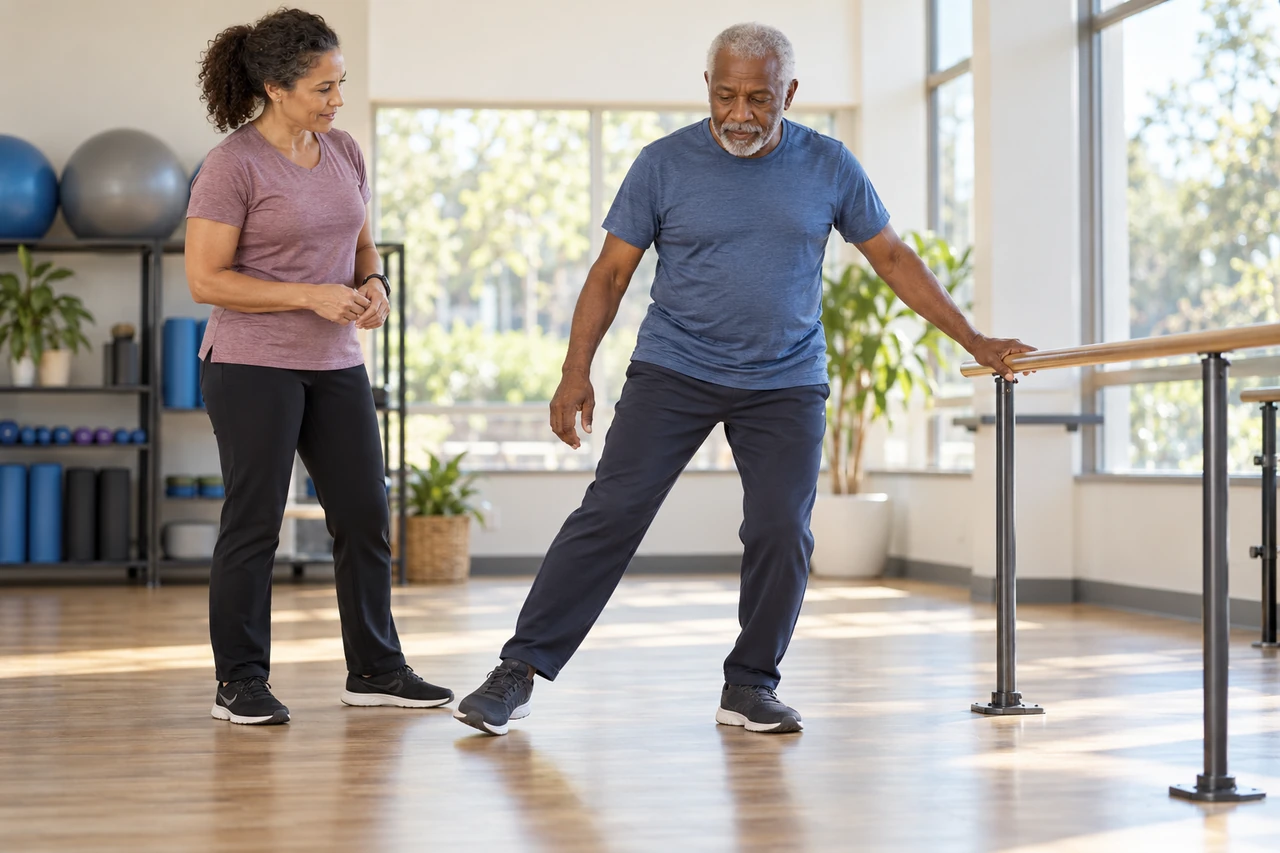
Staying steady while turning, stepping off a curb or moving through a dim room involves more than strong legs. Balance depends on how the body gathers information, interprets a changing situation and produces a useful movement response. Aging can affect several parts of that process, but a change in steadiness should not automatically be dismissed as inevitable.
The useful question is which part of moving safely needs attention. Training, vision or medication review, and changes to the surroundings address different problems. Understanding those differences is more useful than looking for one exercise that promises to prevent every fall.
Balance is a system, not a single muscle
Your eyes provide information about the surroundings and movement. The vestibular system in the inner ear senses head movement and position. Signals from muscles, joints and touch help the nervous system judge where the body is and how it meets the ground; the sense of body position is called proprioception.
The nervous system combines these inputs with the task at hand. Muscles then help adjust posture or move the feet. Coordination and the timing of that response matter alongside the force available. The NIDCD describes balance as a network of sensory signals and bodily responses, rather than an ability located in one organ.
Imagine turning to answer someone while walking across an unfamiliar room. You are changing direction, moving your head and interpreting the floor ahead. That ordinary situation makes different demands from standing still facing forward. Becoming better at one balance task does not establish equal improvement in every setting.
Why steadiness may change with age
Changes in vision or sensation can make the available information less clear. Changes in strength, power or reaction time can affect the response. Gait—the pattern of walking—also matters when someone needs to turn, change speed or negotiate an obstacle. These components can change together, but they need not change equally in every person.
Illness and reduced activity can interrupt familiar movement routines. Medicines can also contribute to dizziness, drowsiness or problems with blood-pressure responses. New symptoms after a medication change deserve discussion with a healthcare professional or pharmacist; they are not a reason to stop a prescribed medicine independently.
A fall may involve several factors: reduced steadiness, an unexpected obstacle, poor visibility and the task being attempted. Finding one contributor does not show that every other part of the system is working well. Conversely, getting older does not identify the cause of a new balance problem. The World Falls Guidelines emphasize assessment across domains when risk is high.
Strength helps, but does not cover the whole task
Strength is the force muscles can produce. Power includes how quickly force is produced. Balance involves controlling body position; coordination organizes the timing of movements. Mobility concerns moving through everyday activities. The terms overlap in practice, but they are not interchangeable outcomes.
Lower-body strength can help with standing up or making a corrective step. It does not by itself resolve unclear sensory information, a new dizzy spell or difficulty coordinating a turn. Our guide to preserving muscle with age addresses the separate foundations for muscle and strength. Here, the question is how those capabilities contribute to steadiness within a wider system.
That distinction changes how to judge an exercise program. Ask whether it practices the movement challenge of interest, rather than assuming that a heavier lift proves better balance. It also explains why an assessment may consider both physical capacity and the situation in which difficulty occurs.
What training can improve—and what studies actually measure
Balance and functional exercise programs have evidence for reducing falls in community-dwelling older adults. A review informing WHO guidance included 116 studies and 25,160 participants. Balance/functional exercise and programs combining exercise types, commonly balance work with resistance exercise, reduced fall rates on average. Evidence for programs primarily consisting of walking or resistance training alone was less certain for that specific endpoint.
This does not make walking unhelpful. CDC guidance includes aerobic, strengthening and balance activities because they serve complementary purposes. A regular walk supports activity, but it is not automatically the same as a program that progressively practices control of body position and functional movements.
A 2024 evidence review for the US Preventive Services Task Force analyzed 37 exercise trials involving 16,117 participants. Exercise was associated with lower fall rates and a lower likelihood of having at least one fall. Reported harms were generally minor musculoskeletal symptoms, but reporting was incomplete. Results support appropriately selected programs, not a guarantee of safety or benefit from every unsupervised exercise.
Tai chi has relevant evidence, with important boundaries. In a trial of 670 adults aged at least 70 who had fallen or had impaired mobility, a tailored therapeutic tai ji quan program produced fewer falls than stretching and a multimodal exercise program over six months. Participants attended two hour-long classes a week for 24 weeks. That finding concerns a specific taught program and population; it does not show that any online routine delivers the same result.
Program fit and continuity matter. A separate 2024 systematic review found the most certain exercise benefits among supervised, longer-duration balance/resistance programs and group tai chi, while evidence for several non-fall outcomes was less certain. The available programs, starting ability and personal preference all matter when choosing something feasible to continue.
A better balance score is not the same as fewer fractures
A balance test measures performance under a particular set of conditions. Fall rate counts events over follow-up; the proportion of people who fall counts individuals and treats repeated falls differently. Fractures depend on injury circumstances and bone fragility as well as falling. Confidence and everyday function are additional outcomes, not substitutes for those measures.
An improvement on a test may be useful without demonstrating fewer falls. Fewer falls, in turn, does not establish that a particular exercise prevents fractures or preserves independence. The 2024 reviews found that certainty and results varied across outcomes. When comparing programs, ask which outcome was measured, in whom and for how long—not just whether the study reported an improvement.
Capacity and surroundings meet in everyday life
The same person may move comfortably in a bright, uncluttered room and have difficulty on poorly lit stairs. Lighting, obstacles, footwear and access to a suitable handrail change the demands of a movement. Visual limitations can make those environmental demands more important. These factors belong alongside training rather than being treated as evidence of personal failure.
For someone with recurrent falls or substantial difficulty, a tailored assessment of the person and home can help identify useful changes. The World Falls Guidelines recommend considering capacities and behavior within the actual environment. Moving an obstacle can address an immediate challenge; it does not establish the cause of new dizziness or replace evaluation of worsening gait.
Four questions to organize a useful conversation
This is an editorial decision framework, not a validated clinical instrument. Its purpose is to help describe a difficulty and choose a proportionate next discussion. The questions can have more than one answer; they are not categories for diagnosing yourself.
First, what movement is difficult? Rising, turning, stepping or responding quickly may place different demands on force, power and coordination. Describe the task instead of concluding that the problem must be weak muscles.
Second, has the information or setting changed? Notice whether the difficulty occurs in dim light, on unfamiliar surfaces or with new visual or dizzy symptoms. Those observations can be useful to report; they do not identify a sensory disorder at home.
Third, has movement practice changed? An illness, an interruption to classes or avoiding activity because of concern about falling may have altered the routine. Ask what adapted or supervised practice is appropriate before trying a more challenging exercise alone.
Fourth, is there something new that warrants assessment? A change in medicines, a faint, rapidly worsening walking or repeated unexplained falls moves the conversation beyond choosing a class. Note when it began and what else was happening. Do not use the framework to delay care for an abrupt change.
New symptoms deserve their own attention
New severe imbalance or sudden dizziness, especially with trouble walking, can require urgent evaluation. Sudden one-sided weakness, difficulty speaking or other possible stroke symptoms need emergency help. Fainting, rapidly worsening gait and recurrent unexplained falls also deserve prompt professional assessment; urgency depends on the circumstances and accompanying symptoms. Avoid a difficult balance exercise as a way to test whether a new symptom is serious.
For a continuing but less abrupt change, a healthcare professional can help determine which factors need further evaluation. Bring a description of the sensation and timing—spinning, lightheadedness and unsteadiness may feel different—and a list of medicines and supplements. The aim is to understand the change, not label it from an online list of causes.
Vitamin D is not a general balance treatment. Correcting a relevant deficiency is different from supplementing someone whose status is adequate. NIH ODS summarizes inconsistent fall findings and reports that some high-dose regimens increased falls. Neither a higher intake nor a better blood result automatically demonstrates safer movement. Extra vitamin D should not become a substitute for understanding the problem.
Choose a next step that matches the challenge
An ordinary goal might be feeling steadier when turning through a doorway. That goal invites questions about the movement, available information and surroundings. A new fainting episode calls for a different response. Treating those situations as the same “balance problem” would obscure what matters.
Useful support can combine appropriate practice, physical capacity, attention to sensory or medication changes and an environment that fits the person. No single component promises to prevent all falls. The practical gain is a clearer account of what is difficult and a better reason for the next step you choose.
Was this article helpful?
Your anonymous response helps improve our editorial coverage.
Loading feedback options…
Share
Share this article
More from Planet Wellness Report
Continue Reading

Energy
CircO2 Review: What the 420 mg Blend Reveals—and Hides
CircO2’s lozenge discloses vitamin C 100 mg, B12 1,000 mcg and a 420 mg total blend. It does not disclose individual beetroot, hawthorn, citrulline or sodium-nitrite amounts, nitrate content, or a separate elemental-magnesium dose. That prevents the dose comparisons central to its nitric-oxide positioning.
9 min read
Healthy Aging
Joint Genesis Review: Where the Label and Human Evidence Diverge
Mobilee has a relevant 80 mg research connection, but conflicting labels and extract differences complicate Joint Genesis’s evidence and value.
12 min read

Healthy Aging
How Hearing Changes With Age—and Why It Matters Beyond Hearing
Hearing a sound and understanding a conversation are different. Explore age-related hearing changes, communication support and patterns that deserve assessment.
10 min read
Evidence
Sources
- National Institute on Deafness and Other Communication Disorders. Balance Disorders — National Institute on Deafness and Other Communication Disorders
- MedlinePlus. Dizziness and Vertigo — MedlinePlus, U.S. National Library of Medicine
- Montero-Odasso M, van der Velde N, Martin FC, Petrovic M, Tan MP, Ryg J, Aguilar-Navarro S, Alexander NB, Becker C, Blain H, Bourke R, Cameron ID, Camicioli R, Clemson L, Close J, Delbaere K, Duan L, Duque G, Dyer SM, Freiberger E, Ganz DA, Gómez F, Hausdorff JM, Hogan DB, Hunter SMW, Jauregui JR, Kamkar N, Kenny RA, Lamb SE, Latham NK, Lipsitz LA, Liu-Ambrose T, Logan P, Lord SR, Mallet L, Marsh D, Milisen K, Moctezuma-Gallegos R, Morris ME, Nieuwboer A, Perracini MR, Pieruccini-Faria F, Pighills A, Said C, Sejdic E, Sherrington C, Skelton DA, Dsouza S, Speechley M, Stark S, Todd C, Troen BR, van der Cammen T, Verghese J, Vlaeyen E, Watt JA, Masud T, Task Force on Global Guidelines for Falls in Older Adults.. World guidelines for falls prevention and management for older adults: a global initiative — Age and ageing (Sep 1, 2022) · DOI
- Guirguis-Blake JM, Perdue LA, Coppola EL, Bean SI.. Interventions to Prevent Falls in Older Adults: Updated Evidence Report and Systematic Review for the US Preventive Services Task Force — JAMA (Jul 1, 2024) · DOI
- Li F, Harmer P, Fitzgerald K, Eckstrom E, Akers L, Chou LS, Pidgeon D, Voit J, Winters-Stone K.. Effectiveness of a Therapeutic Tai Ji Quan Intervention vs a Multimodal Exercise Intervention to Prevent Falls Among Older Adults at High Risk of Falling: A Randomized Clinical Trial — JAMA internal medicine (Oct 1, 2018) · DOI
- Sherrington C, Fairhall N, Kwok W, Wallbank G, Tiedemann A, Michaleff ZA, Ng CACM, Bauman A.. Evidence on physical activity and falls prevention for people aged 65+ years: systematic review to inform the WHO guidelines on physical activity and sedentary behaviour — The international journal of behavioral nutrition and physical activity (Nov 26, 2020) · DOI
- Pillay J, Gaudet LA, Saba S, Vandermeer B, Ashiq AR, Wingert A, Hartling L.. Falls prevention interventions for community-dwelling older adults: systematic review and meta-analysis of benefits, harms, and patient values and preferences — Systematic reviews (Nov 26, 2024) · DOI
- Centers for Disease Control and Prevention. Older Adult Activity: An Overview — Centers for Disease Control and Prevention (Dec 4, 2025)
- Centers for Disease Control and Prevention. Signs and Symptoms of Stroke — Centers for Disease Control and Prevention (May 19, 2026)
- Office of Dietary Supplements. Vitamin D — Health Professional Fact Sheet — NIH Office of Dietary Supplements