
ARTICLE
How to Increase Nitric Oxide Naturally: Foods, Exercise, and Evidence-Based Strategies
A practical look at nitrate-rich foods, exercise, oral bacteria, and the limited but sometimes useful role of supplements.
By Planet Wellness Report · Sep 22, 2026 · 13 min read
Editorial review and publication: Felipe Lopes, Publisher & Editor. This is an editorial review, not a medical review.
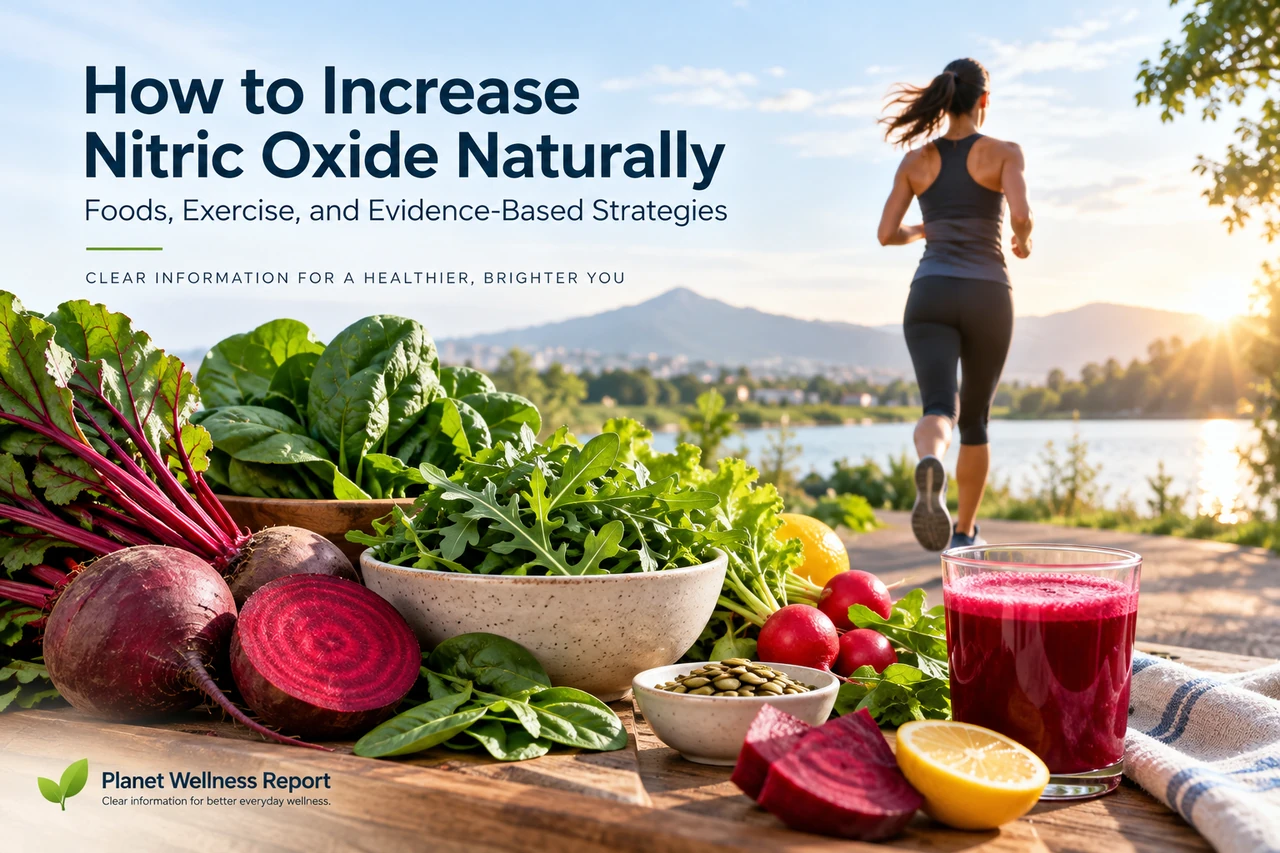
How to Increase Nitric Oxide Naturally: The Short Answer
If you want to know how to increase nitric oxide naturally, start with habits that support the body's own production systems: eat nitrate-rich vegetables regularly, stay physically active, avoid smoking, and look after your overall vascular health. Oral bacteria also help process dietary nitrate, so oral care deserves more nuance than simply trying to eliminate every microbe. Supplements can be useful in selected situations, but they are secondary to food and movement.
Nitric oxide is a short-lived signaling molecule, not a nutrient you can store or a score you should try to maximize. The body makes it through more than one pathway and regulates it continuously. A rise in nitric oxide metabolites in a study can show that a pathway responded, but it does not guarantee that someone will feel more energetic, notice better circulation, or perform better during exercise. The realistic goal is to support normal physiology, not chase the highest possible number.
How Your Body Makes Nitric Oxide
Two routes are especially relevant to everyday choices. One uses the amino acid L-arginine and enzymes called nitric oxide synthases. The other begins with nitrate from food and depends partly on bacteria in the mouth. These routes overlap with a much larger system involving blood vessels, muscles, diet, oxygen availability, and metabolic health. That is why no single food, workout, or supplement controls nitric oxide on its own.
The L-Arginine–eNOS Pathway
Cells lining the blood vessels can use L-arginine to produce nitric oxide through endothelial nitric oxide synthase, often shortened to eNOS. Blood flow across the vessel wall creates a physical signal called shear stress, which helps activate this endothelial pathway. L-citrulline also matters because the body can convert it to arginine. This biology helps explain why regular movement and certain amino acids appear in nitric oxide research, although the practical results vary among people and studies.
The Nitrate–Nitrite–Nitric Oxide Pathway
The food-based pathway is straightforward in broad terms. Dietary nitrate is absorbed, enters the circulation, and some is concentrated in saliva. Nitrate-reducing bacteria on the tongue convert part of it to nitrite. After that nitrite is swallowed, it can contribute to nitric oxide formation, particularly in conditions where oxygen is less available. This pathway is important, but it is not the body's only source of nitric oxide.
Eat More Nitrate-Rich Vegetables
Vegetables are the most practical food-first source of dietary nitrate. Arugula, also called rocket, is often especially nitrate-rich. Spinach, lettuce, celery, and beetroot can also contribute meaningful amounts. Exact nitrate content changes with the plant variety, soil, season, storage, and preparation, so a rigid ranking or universal intake target would create false precision. A better approach is to eat a varied selection of vegetables consistently.
Beetroot
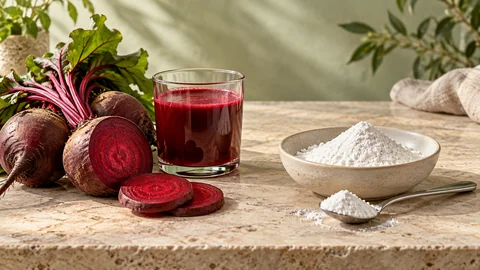
Beetroot is useful because it is familiar, versatile, and available as a whole food or concentrated juice. Its nitrate content is the main reason it appears so often in nitric oxide studies. Whole beetroot also provides fiber and other nutrients, while beetroot juice can deliver nitrate in a more compact form. Neither format is inherently necessary, and the amount of nitrate in products can differ substantially unless it is standardized.
Leafy Greens and Celery
Leafy greens make it easier to treat nitrate intake as part of an ordinary eating pattern instead of a performance ritual. Arugula can form the base of a salad, spinach can go into cooked dishes, and lettuce can add volume and variety to meals. Celery works in soups, salads, or snacks. These foods are not interchangeable in their nitrate content, but all can contribute to a vegetable-rich diet that supports health beyond one biochemical pathway.
Why Whole Foods Come First
Whole foods make sense as the foundation because they combine nitrate or citrulline with a broader nutritional package. They also fit into repeatable meals more easily than a collection of powders and capsules. This food-first framing does not mean concentrated products never have a role. It means the strongest everyday strategy is a varied diet with plenty of vegetables, while supplements should have a clear purpose rather than serve as a substitute for basic habits.
Make Nitrate-Rich Foods Easy to Use
Practicality matters more than finding a perfect recipe. Add arugula or lettuce to sandwiches and grain bowls, serve cooked spinach beside eggs or beans, roast beetroot with other vegetables, or blend a modest amount of beetroot into a smoothie whose flavor you enjoy. Celery can be included in soups and vegetable-based side dishes. Rotating among these options helps avoid turning one food into an obligation.
There is no need to make every meal nitrate-focused. A realistic pattern might include leafy greens at lunch, a cooked vegetable at dinner, and beetroot occasionally. People who dislike beetroot can still obtain dietary nitrate from greens and other vegetables. The useful habit is regular exposure within an overall balanced diet, not forcing down a concentrated product because it has been marketed as a nitric oxide booster.
What Beetroot Juice Can—and Cannot—Do
Beetroot juice is convenient when someone wants a concentrated, measurable nitrate source, which is why researchers frequently use it. Reviews of randomized trials suggest beetroot-derived nitrate may produce small improvements in some vascular markers, including flow-mediated dilation and arterial stiffness. Not every measured outcome improves, however, and a change in a vascular marker is not the same as preventing or treating cardiovascular disease.
Exercise findings are also variable. Some people and exercise protocols appear to respond better than others, and trained athletes may not respond like recreationally active adults. Product nitrate content, timing, duration, and the type of performance test can all affect results. Beetroot juice therefore cannot guarantee better circulation, more energy, or improved athletic performance, and its effects are not permanent.
Beetroot can temporarily turn urine pink or red, an effect known as beeturia, and may also redden stool. These effects are generally harmless but can nevertheless be surprising. Concentrated juices may also provide more carbohydrate or nitrate than a person expects. Anyone considering regular concentrated beetroot products while managing low blood pressure, kidney disease, or medicines that affect blood pressure should seek individualized professional guidance. Normal vegetable portions do not need to be treated like medication.
Exercise Supports Nitric Oxide Production Too
How Movement Supports Endothelial Nitric Oxide
When physical activity increases blood flow, the vessel lining experiences greater shear stress. That signal can support endothelial nitric oxide production and the vessel's normal ability to respond to changing demand. A systematic review and meta-analysis found that exercise training increased circulating nitric oxide or nitrate and nitrite measures. The included research covered aerobic exercise and high-intensity interval training, but study designs and participant groups varied.
This does not identify one best nitric oxide workout. Walking briskly, cycling, swimming, dancing, and other aerobic activities can all increase blood flow. More intense intervals may be appropriate for some people, but they are not required to support vascular health. The most useful program is one that matches a person's health, experience, and preferences closely enough to be continued. People with symptoms or medical limitations should obtain appropriate guidance before substantially increasing exercise intensity.
Acute Effects vs. Long-Term Adaptation
One exercise session changes blood flow immediately, while repeated training can produce longer-term vascular adaptations. Researchers may measure metabolites such as nitrate and nitrite, endothelial function, exercise economy, time-trial performance, or perceived effort. These outcomes are related but not equivalent. An increase in NO or NOx biomarkers does not guarantee a noticeable increase in daily energy or athletic performance, and a person can benefit from exercise even without measuring nitric oxide at all.
The Oral Microbiome's Role in the Nitrate Pathway
Why Oral Bacteria Matter
The mouth is an active part of dietary nitrate metabolism. Certain bacteria on the tongue reduce nitrate in saliva to nitrite, creating an important step between eating nitrate-rich vegetables and forming nitric oxide through this pathway. This is a useful reminder that the oral microbiome is an ecosystem. Good oral care aims to control disease and harmful buildup, not to make the mouth biologically sterile.
What Research Says About Antibacterial Mouthwash
Frequent use of strong antibacterial mouthwash may reduce nitrate-reducing bacteria in some studies. A systematic review found changes in salivary or plasma nitrite, and some included studies observed changes in blood pressure. The evidence base was small, however: it included only five human crossover studies plus three animal studies, and the mouthwash strengths and formulations differed. That is not enough to assume every rinse has the same systemic effect.
Do not stop brushing, flossing, professional dental care, or a prescribed mouthwash in an attempt to preserve nitrate-reducing bacteria. Oral disease carries clear risks, and a dentist may recommend an antibacterial rinse for a specific reason or a defined period. Follow dental guidance when mouthwash is recommended. If you use a strong antibacterial product frequently without a clinical reason, a dentist can help determine whether it is necessary and what alternatives are appropriate.
L-Citrulline vs. L-Arginine Supplements
L-Citrulline
L-citrulline is an amino acid that the body can convert to arginine, which can then contribute to nitric oxide synthesis. Watermelon is a dietary source, although the amount varies and ordinary servings should not be treated as equivalent to a research supplement. A meta-analysis of randomized trials found modest improvements in some longer-term vascular-function measures with L-citrulline, but it found no acute post-meal vascular effect and called for more research.
The case for exercise performance is less consistent. Reviews suggest that outcomes depend on the activity, participant training status, protocol, and outcome measured. Raising plasma arginine or nitric oxide metabolites does not automatically translate into faster running, greater endurance, or a better workout. L-citrulline may be reasonable as a targeted option in some contexts, but it is not required for normal nitric oxide production or for an effective exercise program.
L-Arginine
L-arginine is a direct nitric oxide precursor, but oral supplementation has produced limited and inconsistent exercise results. A meaningful portion is metabolized in the intestine and liver before reaching the wider circulation. L-citrulline can raise circulating arginine efficiently in some contexts because it follows a different route, but that does not make it universally superior. The NIH notes that arginine supplementation has shown little or no performance benefit in many studies of active adults.
Why Supplements Are Secondary
A supplement isolates one strategy while leaving the larger pattern untouched. It cannot replace vegetables, regular movement, sleep, not smoking, or management of relevant health conditions. Amino-acid supplements can also cause gastrointestinal symptoms, and both concentrated nitrate products and amino acids may be inappropriate in some medical contexts. If a supplement has no clear purpose or measurable goal, adding it simply because the label mentions nitric oxide is unlikely to be a sound evidence-based decision.
Do You Need a Nitric Oxide Supplement?
No supplement is required for the body to produce nitric oxide. Healthy adults already make it, and food provides nitrate, arginine, and citrulline within normal eating patterns. A concentrated product may offer convenience for a specific exercise protocol or research-informed objective, but convenience is not the same as necessity. It is also important to distinguish evidence about an ingredient from evidence about a finished blend containing many ingredients.
The phrase nitric oxide booster is marketing language, not proof that a product produces meaningful clinical or performance outcomes. Supplements can differ in dose, standardization, added stimulants, and quality testing. More ingredients do not necessarily mean a stronger product, and stacking beetroot, citrulline, arginine, and a pre-workout can increase cost and side effects without creating an established benefit. Start by defining the problem you are trying to solve rather than shopping for the broadest claim.
Professional guidance is especially appropriate for people who are pregnant, have kidney disease or low blood pressure, or use antihypertensive drugs, nitrate medications, or other medicines that affect circulation. Supplements and concentrated products should not be used to replace prescribed treatment. Symptoms such as chest pain, fainting, or unexplained shortness of breath require medical evaluation rather than a self-directed nitric oxide strategy.
Lifestyle Factors That Matter
Nitric oxide physiology sits inside overall vascular and metabolic health. Smoking exposes blood vessels to substances that impair normal endothelial function, while inactivity removes a regular blood-flow stimulus. Avoiding smoking and being physically active therefore support the environment in which nitric oxide signaling operates. These changes are broadly beneficial, but they should not be described as instantly normalizing nitric oxide or treating cardiovascular disease.
Sleep and metabolic health matter in the same broad sense. Adequate sleep supports recovery and many aspects of cardiometabolic regulation, but there is no predictable sleep formula that directly boosts nitric oxide for every person. Likewise, a balanced diet and appropriate management of blood sugar, blood lipids, and blood pressure support vascular health without turning nitric oxide into a single explanation for complex conditions. The durable strategy is to improve the whole pattern.
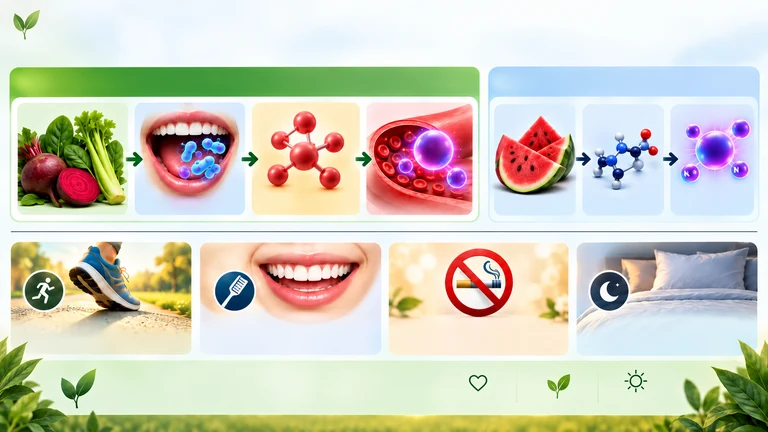
A Realistic Nitric Oxide–Supporting Routine
Begin with a repeatable food habit: include a nitrate-rich vegetable most days and vary the source across the week. Choose arugula, spinach, lettuce, celery, beetroot, or another vegetable you genuinely enjoy. Build it into meals you already eat instead of relying on a special drink. If beetroot juice is useful for convenience, treat it as one option rather than the centerpiece of your diet.
Pair that habit with regular movement. Accumulate aerobic activity through walking, cycling, swimming, sports, or other accessible forms, and add intensity only when it fits your abilities and goals. Maintain normal oral hygiene and follow professional dental advice rather than changing prescribed care based on a small mouthwash literature. Avoid smoking, prioritize adequate sleep, and view supplements as optional tools that need a specific rationale.
This routine is intentionally unremarkable. Nitric oxide is responsive to ordinary physiology, so consistency is more useful than periodically pursuing an aggressive booster stack. Give food and activity habits time to become stable before judging whether an optional supplement adds anything. If your real concern is persistent fatigue, exercise intolerance, sexual dysfunction, dizziness, or a cardiovascular symptom, seek appropriate evaluation instead of assuming low nitric oxide is the cause.
What Not to Do
Do not assume more nitric oxide is always better, combine multiple products without a reason, or treat a temporary biomarker change as proof of better health. Do not use beetroot, citrulline, or arginine to replace medical care or prescribed medication. Do not stop a prescribed mouthwash, neglect brushing, or avoid needed dental treatment. Finally, do not let performance marketing turn a helpful vegetable-and-exercise conversation into a requirement to buy something.
The Bottom Line
The most defensible ways to support nitric oxide naturally are also familiar health practices: eat nitrate-rich vegetables regularly, stay active, avoid smoking, and maintain appropriate oral and overall health. Beetroot offers a convenient nitrate source, while watermelon and L-citrulline connect with the arginine pathway. Their effects can be useful in some settings, but they vary and should not be oversold.
Food and exercise provide the foundation; supplements are optional. The evidence supports realistic expectations rather than promises of instant circulation, guaranteed performance, or a predictable energy increase. Focus on a sustainable pattern and remember that nitric oxide is one part of a complex system, not a stand-alone measure of how healthy or energized you are.
If an optional supplement fits your preferences, the selections below provide a starting point for comparing nitric oxide-related ingredients and product formats. Review the full label, dose disclosure, and medication considerations alongside the food and activity habits discussed above.
Was this article helpful?
Your anonymous response helps improve our editorial coverage.
Loading feedback options…
Share
Share this article
Selected references
Recommended products
More from Planet Wellness Report
Continue Reading
Energy
CircO2 Review: What the 420 mg Blend Reveals—and Hides
CircO2’s lozenge discloses vitamin C 100 mg, B12 1,000 mcg and a 420 mg total blend. It does not disclose individual beetroot, hawthorn, citrulline or sodium-nitrite amounts, nitrate content, or a separate elemental-magnesium dose. That prevents the dose comparisons central to its nitric-oxide positioning.
9 min read

Energy
What Is Nitric Oxide? How It Supports Circulation, Energy, and Exercise
Nitric oxide helps regulate blood vessel tone and circulation, but it is not a stimulant or a direct source of energy. Learn how the body produces it, what exercise research shows, and where beetroot and L-citrulline fit.
10 min read
Nutrition
Beetroot vs. L-Citrulline for Nitric Oxide Support: Which Fits Your Goal?
Compare beetroot and L-citrulline by nitric oxide pathways, vascular measures, exercise outcomes, and practical use—without assuming one is best for everyone.
8 min read
Evidence
Sources
- Salvador Moncada, Richard M. J. Palmer, Edward A. Higgs. Nitric oxide: physiology, pathophysiology, and pharmacology — Pharmacological Reviews (Jun 1, 1991)
- Vikas Kapil, Rukshana S. Khambata, David A. Jones et al. The Noncanonical Pathway for In Vivo Nitric Oxide Generation: The Nitrate-Nitrite-Nitric Oxide Pathway — Pharmacological Reviews (Jul 1, 2020) · DOI
- Andrew M. Jones, Anni Vanhatalo, Douglas R. Seals, Matthew J. Rossman, Barbora Piknova, Kristin L. Jonvik. Dietary Nitrate and Nitric Oxide Metabolism: Mouth, Circulation, Skeletal Muscle, and Exercise Performance — Medicine & Science in Sports & Exercise (Feb 1, 2021) · DOI
- Eric T. C. Poon, Jason C. K. Iu, Wai M. K. Sum et al.. Dietary Nitrate Supplementation and Exercise Performance: An Umbrella Review of 20 Published Systematic Reviews with Meta-analyses — Sports Medicine (May 1, 2025) · DOI
- Aitor Viribay, Javier Fernández-Landa, Alejandro Castañeda-Babarro et al.. Effects of Citrulline Supplementation on Different Aerobic Exercise Performance Outcomes: A Systematic Review and Meta-Analysis — Nutrients (Sep 1, 2022) · DOI
- Dietary Supplements for Exercise and Athletic Performance: Fact Sheet for Health Professionals — NIH Office of Dietary Supplements
- Leila Sadat Bahrami; Seyyed Mostafa Arabi; Zahra Feizy; Reza Rezvani. The effect of beetroot inorganic nitrate supplementation on cardiovascular risk factors: A systematic review and meta-regression of randomized controlled trials — Nitric Oxide (Oct 1, 2021) · DOI
- Tahereh Arefirad; Ehsan Seif; Mahdi Sepidarkish; Nami Mohammadian Khonsari; Seyedeh Azam Mousavifar; Shahrooz Yazdani; Fatemeh Rahimi; Faezeh Einollahi; Javad Heshmati; Mostafa Qorbani. Effect of exercise training on nitric oxide and nitrate/nitrite (NOx) production: A systematic review and meta-analysis — Frontiers in Physiology (Oct 4, 2022) · DOI
- Katelyn E Senkus; Kristi M Crowe-White. Influence of mouth rinse use on the enterosalivary pathway and blood pressure regulation: A systematic review — Critical Reviews in Food Science and Nutrition (Sep 23, 2019) · DOI
- Ellen T H C Smeets; Ronald P Mensink; Peter J Joris. Effects of l-citrulline supplementation and watermelon consumption on longer-term and postprandial vascular function and cardiometabolic risk markers: a meta-analysis of randomised controlled trials in adults — British Journal of Nutrition (Dec 6, 2021) · DOI