
ARTICLE
How to Improve Focus and Concentration Naturally: 10 Evidence-Informed Strategies
Practical ways to support everyday attention through sleep, fewer interruptions, movement, hydration, nutrition, breaks, and realistic stress management.
By Planet Wellness Report · Sep 21, 2026 · 12 min read
Editorial review and publication: Felipe Lopes, Publisher & Editor. This is an editorial review, not a medical review.

Learning how to improve focus and concentration can feel harder than it should. Advice often arrives as a rigid morning routine, a productivity system, a special food, or a supplement that supposedly solves distraction. In reality, focus changes throughout the day and is influenced by sleep, interruptions, workload, movement, hydration, nutrition, caffeine, stress, and the environment around you.
That does not mean every lapse in concentration reflects a lifestyle problem. Attention naturally varies with the task, time of day, motivation, health, and competing demands. Some people also face persistent concentration difficulties related to medical, psychological, sleep, or medication factors that cannot be addressed by ordinary productivity advice.
The goal is therefore not uninterrupted concentration from morning to night. A more realistic goal is to create conditions that make important tasks easier to begin, sustain, and resume while recognizing when a difficulty deserves professional attention.
What Does “Better Focus” Actually Mean?
Focus is a convenient everyday word, but it can refer to several related mental abilities. Understanding the difference helps prevent one strategy from being treated as a solution for every cognitive complaint.
Attention, Concentration, Alertness, and Memory Are Different
Attention is the ability to direct mental resources toward selected information. Concentration is the sustained application of attention to a particular task. Alertness is readiness to notice and respond, while memory involves encoding, retaining, and retrieving information. A person may be alert but easily distracted, or may understand material while studying yet have difficulty recalling it later.
These abilities interact, but they are not interchangeable. Caffeine may increase short-term alertness without resolving the reasons a task is repeatedly interrupted. Removing notifications may reduce competing demands without improving sleep-related fatigue. Effective changes depend on the actual obstacle.
1. Protect Your Sleep
Restricted sleep can affect vigilance, basic attention, reaction consistency, working memory, and the flexible allocation of attention. A systematic review involving people in cognitively demanding or safety-critical roles found that simple vigilance tasks and tasks requiring cognitive flexibility were particularly sensitive to sleep restriction. Because those populations and tasks were specialized, the findings should not be interpreted as a precise prediction of how one short night will affect every person.
Sleep Quality and Consistency Matter Alongside Duration
Time in bed is only part of the picture. Frequent awakenings, difficulty falling asleep, an uncomfortable environment, or large changes in sleep timing may leave attention less reliable the following day. Expert consensus also supports broadly consistent sleep and wake times, although ordinary life does not require a perfectly rigid schedule.
Start with repeatable basics: allow enough time for sleep, keep timing reasonably consistent, and notice whether late caffeine, noise, light, discomfort, or nighttime awakenings are disrupting rest. Persistent loud snoring, gasping, severe daytime sleepiness, or chronically unrefreshing sleep deserves medical attention rather than increasingly elaborate sleep routines.
2. Reduce Competing Distractions
An interruption does more than consume the few seconds needed to check a message. It also creates a resumption problem: you must reconstruct what you were doing, locate the next step, and restore the relevant mental context. A systematic review of laboratory experiments found that interventions designed to reduce the consequences of interruptions improved primary-task accuracy and shortened resumption delays on average.
Multitasking Usually Means Switching Between Tasks
For many complex activities, apparent multitasking is rapid switching. Each switch can introduce a small coordination cost, especially when both tasks require decisions, language, or working memory. The interruption evidence is largely laboratory-based, so it cannot tell us exactly how every workplace operates. It does support a practical principle: protect demanding work from unnecessary competing inputs when possible.
Close irrelevant tabs, silence nonessential alerts, and place the phone outside immediate reach during a demanding task. These steps are not moral judgments about technology. They simply reduce the number of cues asking attention to change direction.
3. Work in Focused Periods and Take Real Breaks
Concentration is not an unlimited resource. Short periods away from a task may reduce subjective fatigue and help restore vigor. A meta-analysis of micro-break studies found small average benefits for vigor and fatigue, but no statistically significant improvement in overall performance. Performance benefits were clearer for less cognitively demanding tasks.
Evidence Does Not Identify One Perfect Focus Interval
The research does not establish one scientifically optimal work-to-break ratio. A familiar timer method may provide useful structure, but a specific interval should not be treated as biologically ideal. Task complexity, experience, fatigue, accessibility needs, and the time required to reach meaningful engagement all matter.
Choose a work period long enough to make progress but short enough to remain realistic. During breaks, step away from the primary task rather than replacing one stream of demanding information with another. Adjust the interval based on whether attention remains stable and whether restarting becomes easier or harder.
4. Move Regularly
Regular physical activity supports general health and may produce modest benefits in some areas of cognitive function. A meta-analysis of randomized trials in sedentary adults found a small-to-moderate average benefit for executive function, with the clearest result for inhibitory control. Effects varied by age, cognitive domain, intervention length, and exercise characteristics.
Exercise Effects Are Modest and Vary Across Cognitive Domains
This evidence does not mean that one workout permanently improves concentration or that exercise treats an attention disorder. It suggests that regular, appropriate movement may be one supportive part of a broader routine. Walking, cycling, resistance exercise, recreational activity, and movement breaks can all be considered according to health, mobility, preferences, and professional guidance when needed.
5. Use Caffeine Strategically
Caffeine can improve short-term attention for some people. A meta-analysis of randomized, double-blind, placebo-controlled trials in rested, healthy adults found small average improvements in attention accuracy and reaction time after pure caffeine. The results describe acute effects under study conditions, not a guarantee that more caffeine will produce better work.
Short-Term Attention Benefits Come With Sleep and Dose Tradeoffs
Higher intake is not automatically better. In the attention meta-analysis, accuracy improved only to a point rather than continuing to rise indefinitely. Caffeine may also interfere with later sleep. A small randomized study using a substantial 400-milligram dose found sleep disruption when caffeine was consumed at bedtime and three or six hours beforehand.
Sensitivity, metabolism, habitual intake, pregnancy, medications, and health conditions can change the response. Instead of searching for a universal optimal dose, observe the amount and timing of coffee, tea, energy drinks, pre-workout products, chocolate, and caffeine-containing medicines. Avoid escalating intake to compensate indefinitely for inadequate sleep.
6. Stay Adequately Hydrated
Hydration is relevant to health, but claims about water and concentration are often more certain than the research allows. A systematic review covering attention, working memory, inhibitory control, and task switching found inconsistent results. Roughly half of the available studies reported unclear or neutral effects, while others found effects in selected executive-function domains.
Hydration Is One Possible Factor, Not a Cure-All
Addressing an obvious fluid deficit is reasonable, particularly during heat exposure, physical activity, illness, or other periods of increased fluid loss. Drinking more than you need is not a reliable focus strategy, however, and some medical conditions require individualized fluid guidance. Treat hydration as one variable to check, not as the assumed explanation for every distracted afternoon.
7. Eat Enough and Build a Balanced Dietary Pattern
The brain depends on a steady overall supply of energy and nutrients, but this basic fact does not prove that one food or meal will transform concentration. A systematic review and meta-analysis of dietary interventions in cognitively healthy adults found small average improvements in executive function and processing speed. The interventions were diverse, and some findings showed substantial heterogeneity.
No Single “Brain Food” Transforms Concentration
A practical approach is to eat enough for your needs and build meals around a generally balanced pattern that includes appropriate sources of protein, carbohydrates, fats, fruits, vegetables, and other nutrient-dense foods. Needs vary by health, activity, culture, access, and preference. Avoid interpreting ordinary concentration changes as proof that you need a supplement or that a single ingredient is missing.
If limited intake, food insecurity, digestive symptoms, unintentional weight change, or a highly restrictive diet is a concern, individualized help from a qualified healthcare professional or registered dietitian is more useful than experimenting with products marketed for mental performance.
8. Reduce Sustained Stress and Mental Overload
Concentration can become less reliable when demands accumulate without enough recovery. Complex decisions, emotional labor, caregiving, deadlines, uncertainty, and constant availability may all compete for limited mental resources. Occupational-health guidance recognizes stress and mentally demanding work among factors that can contribute to fatigue.
Subjective Mental Fatigue Is Not a Diagnosis
Feeling mentally exhausted does not by itself diagnose anxiety, depression, burnout, or another condition. It also does not require a simplified explanation involving cortisol. Notice whether concentration predictably worsens after particular demands and whether workload boundaries, recovery time, social support, or fewer simultaneous commitments change the pattern.
When stress is persistent, overwhelming, or affecting sleep, mood, relationships, or daily functioning, professional support may be more appropriate than adding another productivity technique.
9. Try Mindfulness or Attention Training
Mindfulness practices typically train people to notice where attention has gone and return it to a chosen object, such as breathing, sound, or bodily sensations. A meta-analysis of 111 randomized trials found small-to-moderate average effects across several cognitive outcomes, including executive and sustained attention.
Average Benefits Are Modest and Results Vary
Effects differed by population, control group, delivery method, analysis, and outcome. Mindfulness is therefore an option, not a universal prescription. A brief, regular practice may help some people become more aware of distraction, but it should not be presented as a substitute for clinical care or as a guaranteed way to control thoughts.
If formal meditation is uncomfortable or impractical, attention training can be simpler: read a short section without switching tasks, listen fully during a conversation, or notice an impulse to check a device before deciding whether to act on it.
10. Design the Environment for Fewer Interruptions
Willpower is an unreliable defense against an environment built for interruption. Physical and digital surroundings can either reduce or multiply the decisions required to remain on task. This strategy complements distraction reduction by making the desired behavior easier before focused work begins.
Make Resuming Important Work Easier
Keep the materials for the current task visible and unrelated materials out of immediate reach. Use notification settings, availability signals, headphones where appropriate, or a separate browser profile to reduce avoidable interruptions. When stopping, leave a short note describing the next concrete action. That cue can reduce the effort required to reconstruct the task later.
Not every interruption is optional, especially in caregiving, service, healthcare, or collaborative roles. In those settings, the goal may be to create shorter protected periods, clarify which interruptions are urgent, or improve the handoff back to the primary task rather than attempting complete isolation.
When Trouble Concentrating Deserves More Attention
Consider speaking with a qualified healthcare professional when concentration problems are persistent, worsening, substantially different from your usual baseline, or interfering with work, study, relationships, driving, or daily responsibilities. Concentration changes can occur alongside sleep disorders, medication effects, ADHD, mood conditions, substance use, pain, and other medical or psychological factors.
That list is not a diagnostic checklist. Do not stop or change prescribed medication based on concentration symptoms alone. A professional evaluation can consider timing, sleep, mood, health history, medications, substance use, and the specific situations in which the difficulty occurs.
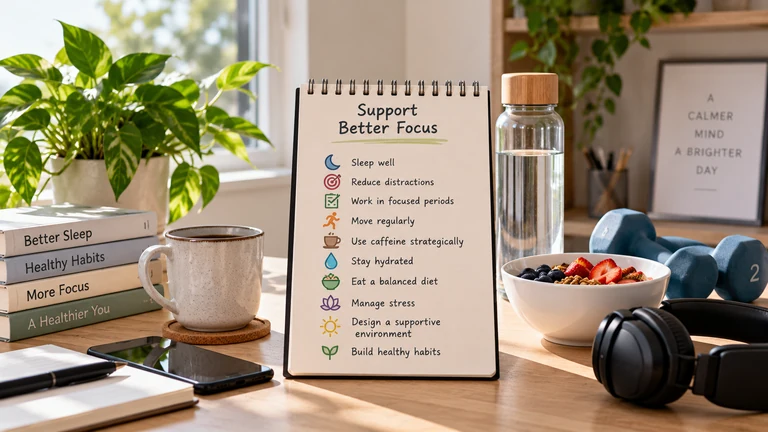
A Practical Daily Focus Checklist
Begin by identifying one important task and defining the next visible action. Reduce nonessential notifications, place unrelated devices or materials out of reach, and choose a realistic period for focused work. Leave a short resumption note whenever you stop.
Check the foundations without treating them as instant fixes: Did you have an adequate opportunity for sleep? Has your sleep timing been reasonably consistent? Are you addressing ordinary hydration and nutrition needs? Is caffeine helping short-term alertness while making later sleep harder? Have you moved recently, and would an appropriate activity or short break be useful?
Finally, account for workload. If several concerns are competing for attention, write them down, decide what can wait, and reduce simultaneous commitments where possible. Choose one or two changes to test rather than rebuilding your entire routine at once. A simple approach makes it easier to notice what is actually useful.
The Bottom Line
Improving focus and concentration is usually less about discovering one perfect method and more about reducing avoidable friction. Adequate sleep, fewer interruptions, realistic breaks, regular movement, thoughtful caffeine use, hydration, balanced nutrition, recovery from mental demands, optional mindfulness practice, and a supportive environment may each contribute.
The effects are not identical for everyone, and none of these strategies guarantees continuous concentration. Use them as practical experiments, not tests of discipline. When concentration problems persist or disrupt daily life, professional evaluation is a more appropriate next step than increasingly aggressive self-optimization.
Was this article helpful?
Your anonymous response helps improve our editorial coverage.
Loading feedback options…
Share
Share this article
Selected references
Recommended products
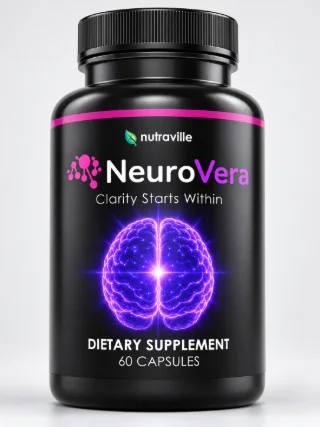 NeuroVera
Six-ingredient cognitive supplement in two capsules. Ingredient weights are listed, while extract standardization varies and the DHA line is marked 10%; the combination is not a verified cognitive treatment.
View product details Advanced Memory Formula
Two-tablet cognitive blend with individually listed ingredients. The GPC line implies about 125 mg alpha-GPC; the PS-complex amount does not specify pure phosphatidylserine content.
View product details
More from Planet Wellness Report
Continue Reading

Focus
What Causes Brain Fog? Describe the Pattern Before the Cause
Describe what brain fog is making harder, when it began, what surrounds it, and how it affects daily life. Use that pattern to choose an appropriate next step.
6 min read

Focus
NeuroVera Review: Six Ingredients, Uneven Dose Transparency
NeuroVera discloses six ingredient weights in two capsules, but those numbers vary in interpretability. Bacopa lacks bacoside standardization, lion’s mane is a powder, and the DHA entry is marked 10%. Human evidence is more relevant for Bacopa and lion’s mane than for several other components, yet it does not validate this combination.
8 min read

Focus
Caffeine and L-Theanine for Focus: Does the Combination Add Anything?
Caffeine plus L-theanine has improved selected attention tasks in small trials. Whether it consistently adds to caffeine alone is less clear. Explore the comparisons and limits.
8 min read
Evidence
Sources
- Tim D. Smithies; Adam J. Toth; Ian C. Dunican; John A. Caldwell; Magdalena Kowal; Mark J. Campbell. The Effect of Sleep Restriction on Cognitive Performance in Elite Cognitive Performers: A Systematic Review — Sleep (Jul 9, 2021) · DOI
- Tracey L. Sletten, Matthew D. Weaver, Russell G. Foster, David Gozal, Elizabeth B. Klerman, Shantha M. W. Rajaratnam, Till Roenneberg, Joseph S. Takahashi, Fred W. Turek, Michael V. Vitiello, Michael W. Young, Charles A. Czeisler. The Importance of Sleep Regularity: A Consensus Statement of the National Sleep Foundation Sleep Timing and Variability Panel — Sleep Health / Elsevier (Dec 1, 2023) · DOI
- Jingya Guo; Tianrong Chen; Zhenzhen Xie; Calvin Kalun Or. Effects of Interventions to Reduce the Negative Consequences of Interruptions on Task Performance: A Systematic Review, Meta-analysis, and Narrative Synthesis of Laboratory Studies — Applied Ergonomics (Nov 1, 2021) · DOI
- Patricia Albulescu; Irina Macsinga; Andrei Rusu; Coralia Sulea; Alexandra Bodnaru; Bogdan Tudor Tulbure. "Give Me a Break!" A Systematic Review and Meta-analysis on the Efficacy of Micro-breaks for Increasing Well-being and Performance — PLOS ONE (Aug 31, 2022) · DOI
- Shudong Tian; Zhide Liang; Fanghui Qiu; Xianliang Wang. Physical Activity on Executive Function in Sedentary Individuals: Systematic Review and Meta-analysis of Randomized Controlled Trials — PLOS ONE (Dec 7, 2023) · DOI
- Kasper Kløve; Anders Petersen. A Systematic Review and Meta-analysis of the Acute Effect of Caffeine on Attention — Psychopharmacology (Sep 1, 2025) · DOI
- Christopher Drake, Timothy Roehrs, John Shambroom, Thomas Roth. Caffeine Effects on Sleep Taken 0, 3, or 6 Hours Before Going to Bed — Journal of Clinical Sleep Medicine / American Academy of Sleep Medicine (Nov 15, 2013) · DOI
- Benjamin Katz; Kayla Airaghi; Brenda Davy. Does Hydration Status Influence Executive Function? A Systematic Review — Journal of the Academy of Nutrition and Dietetics (Jul 1, 2021) · DOI
- Claire T. McEvoy; Yue Leng; Geeske M. Peeters; Allison R. Kaup; Isabel E. Allen; Kristine Yaffe. Interventions Involving a Major Dietary Component Improve Cognitive Function in Cognitively Healthy Adults: A Systematic Review and Meta-analysis — Nutrition Research (Jun 1, 2019) · DOI
- National Institute for Occupational Safety and Health. Fatigue and Work — Centers for Disease Control and Prevention / National Institute for Occupational Safety and Health (Jul 14, 2026)
- Nur Hani Zainal; Michelle G. Newman. Mindfulness Enhances Cognitive Functioning: A Meta-analysis of 111 Randomized Controlled Trials — Health Psychology Review (Jun 1, 2024) · DOI